
See how we produce optimal AI solutions for our clients.

We teamed up with a Swiss agri-tech innovation startup to build a platform that uses satellite images, radar data, and machine learning to give farmers a clear view of their crops. The system applies machine learning for crop yield prediction and optimization, while also spotting weeds early and estimating sugar content, giving farmers actionable insights through AI solutions for sustainable and resource-efficient farming, helping boost harvests and reduce resource waste. Our client is a Swiss AI farming startup focused on improving farming using advanced technology. They use satellite and drone images to monitor fields and predict things like crop yields and the sugar content in sugarcane. By analyzing these images, they help farmers better understand the condition of their crops, identify weeds, and see if a harvest has been completed in certain areas. They committed to advancing AI-powered precision farming by combining satellite images, agriculture data analytics, and environmental information to help farmers make better decisions.
Published: September 16, 2024
EyeAI 👁️ is a SciForce product, transforming your existing cameras into a smart system for optimizing space and managing queues. Get real-time insights into visitor behavior for better space use and personalized service in retail, healthcare, HoReCa, and public safety—no new hardware needed.
Published: February 8, 2024
Our client is a U.S.-based startup specializing in automated roof measurement for the insurance industry. Their core business involves providing insurers with precise roof dimensions, structural layouts, and damage assessments based on drone imagery. To improve accuracy and reduce manual effort, they needed a custom software solution that could automatically reconstruct roofs in 3D, extract relevant measurements, and generate clean 2D plans suitable for underwriting and claims.
Published: December 8, 2025
The client is a U.S.–based company developing a computer-vision platform for sports medicine. Its goal is to help professional teams and medical staff prevent injuries by analyzing basketball footage, detecting abnormal movements, and flagging potential risks for review. The project required building a DevOps infrastructure that would let the client’s product run reliably in the cloud and evolve without deployment bottlenecks. This meant designing a secure AWS infrastructure with isolated environments for development and production, automating delivery of containerized applications through CI/CD pipelines, and managing all resources as code for consistency and repeatability. By focusing on cloud-native services, scalability, and automation, the platform established an AWS DevOps setup for scalable AI or computer vision platforms that could grow and adapt reliably.
Published: November 11, 2025
The client is a mid-sized restaurant chain with about 1200 locations in over 30 countries. Each restaurant provides full-service dining, where waiters take orders, serve food and manage table turnover. Most locations have two dining areas, which can make it hard for staff to keep track of all tables. The client wanted to improve AI for restaurant management by reducing wait times, speeding up table cleaning, and helping staff respond more quickly. Their goal was to use real-time table monitoring and smart video analytics to support better decision-making and improve the overall customer experience, showing how to track table status and wait times using AI in restaurants.
Published: August 20, 2025
The client is a private horse club that provides full-time care and boarding for pedigree horses owned by individuals. The smart farming & animal wellness club handles all daily responsibilities — feeding, cleaning, grooming, exercise, and health checks — as owners rarely visit in person. Some horses are fully owned by clients, while others are co-owned with the club as part of long-term investment agreements. Owners expect high standards of care and regular updates without having to contact staff directly. To meet this need, the club introduced an AI-powered horse care system with 24/7 video access and real-time stall condition tracking (temperature, humidity, etc.), and automatic alerts — helping owners stay informed about their horses at any time.
Published: July 30, 2025
The client is a pharmacy chain looking to deploy a computer vision system for queue detection in retail stores to optimize customer flow and improve service efficiency. The system should support queue management using AI, detecting when queues start forming and automatically alerting staff when help is needed at the counter. They also want to tell the difference between quick online order pickups and longer in-person consultations, to better understand service times. The AI for retail efficiency system should work with their existing CRM to identify order types. Most of their stores are small, so one or two cameras are enough. The solution should be lightweight and run on their current infrastructure.
Published: May 27, 2025
A major cosmetics and beauty retailer runs a high-volume warehouse that processes thousands of online and in-store orders daily. Customers place orders through the website or mobile app, triggering an automated fulfillment process. Warehouse staff pick items from inventory, scan barcodes to verify them, and pack them into labeled boxes. These boxes are then sorted at the delivery zones and assigned to couriers for scheduled deliveries. The warehouse uses barcode scanning, inventory management systems and automated package tracking system to monitor order accuracy, worker efficiency, and box movement. Since orders must be processed within strict time limits, the warehouse continuously optimizes the storage layout, packing stations planning, and workflows to improve efficacy and reduce errors.
Published: April 10, 2025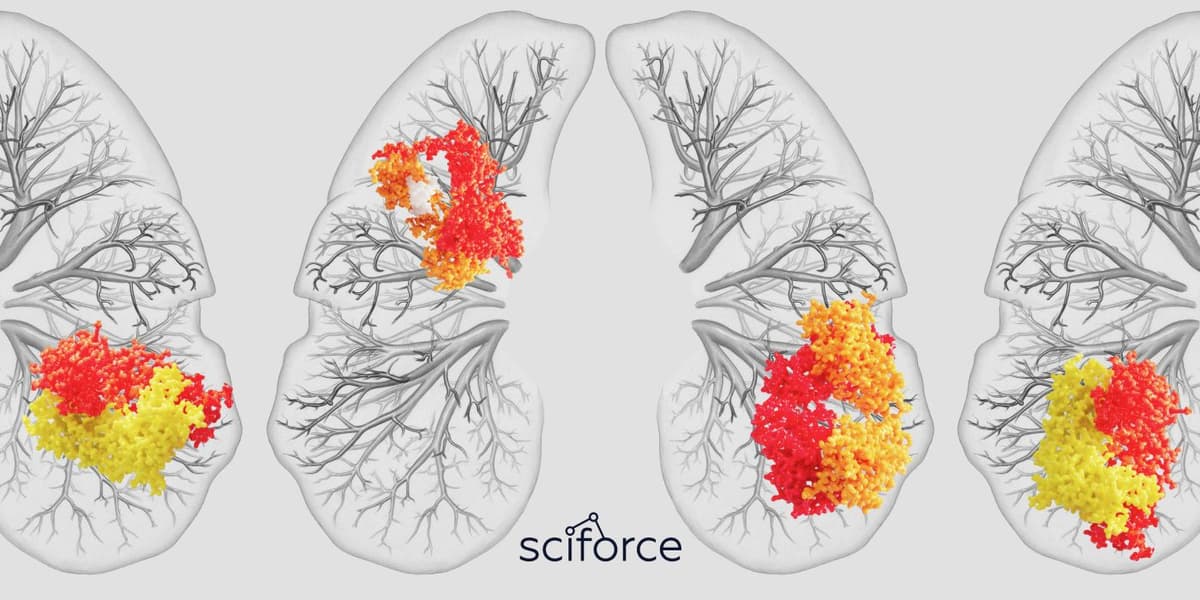
The client is a healthcare company focused on medical imaging and diagnostics, working to improve the diagnosis of lung diseases like tuberculosis and COVID-19. They wanted to create an AI for chest X-ray analysis for lung disease detection to spot abnormal changes and automatically prioritize the most urgent cases. The healthcare automation platform functions as an automated radiology triage system using deep learning, identifying abnormalities and highlighting critical cases to make diagnosis faster and more accurate. It supports reducing radiologist workload with automated image analysis by handling routine tasks, allowing specialists to focus on complex cases. By solving issues like delayed diagnoses and heavy workloads, the automated diagnostics system ensures patients with serious conditions get quicker and more reliable care.
Published: November 28, 2024
Our client, a technology company managing large data centers, faced recurring pump failures in their cooling systems, causing costly downtimes. By deploying AI for data center operations in the form of an advanced anomaly detection system, we identified critical sensor patterns that allowed the maintenance team to address issues before they escalated. This led to a 30% reduction in false alarms and a 25% decrease in unplanned downtime.
Published: September 10, 2024