

Stay informed and inspired in the world of AI with us.
Computer vision (CV) is a part of artificial intelligence that enables computers to analyze and understand visual information, both images and videos. It goes beyond plain “seeing” an image, but teaches computers to make decisions based on what they see. The AI-driven computer vision market is experiencing rapid growth, rising from $22 billion in 2023 to an expected $50 billion by 2030, with a 21.4% CAGR from 2024 to 2030. This technology imitates human vision but works faster using sophisticat
Published: March 8, 2024
Equipment failures don't happen out of the blue: pressure drifting lower, or a slightly different vibration pattern precedes the failure over weeks or months. None of these is big enough to cause an incident on its own, but the trend would show that action is already necessary. BlueScope, an Australian steel manufacturer, used to monitor their equipment through visual checks and basic low-level switches, until they introduced Siemens Senseye predictive maintenance system. Half a year after insta
Published: June 4, 2026
Last spring, OpenAI released a GPT-4o update that made the model hard to trust: it returned sycophantic and less reliable answers than usual, even though nothing was changed in users’ prompts and workflows. When an LLM system starts drifting in production, the deployment history doesn’t catch it early: nothing changed in the codebase, and providers didn’t release any official updates either. Meanwhile, some providers might have adjusted a classifier without notice, and a request that worked fi
Published: May 20, 2026
DevOps metrics are no longer limited to engineering teams. In 2026, they directly affect costs, delivery speed, and business risk. The financial impact of failure makes this clear. New Relic’s 2025 Observability Forecast shows that high-impact IT outages carry a median cost of $2 million per hour, or more than $33,000 per minute. The median annual cost of such outages reaches $76 million per organization. When downtime carries this level of cost, the metrics used to guide delivery and operation
Published: March 5, 2026
When speech recognition gets things wrong, the consequences show up in customer frustration, extra manual work, compliance issues, and lost revenue. Accuracy determines whether voice automation actually reduces effort, or quietly creates more of it. In practice, the accuracy seen in demos rarely matches production results. Studies show speech systems can perform 2.8–5.7× worse once deployed. A model that achieves about 8.7% word error rate (WER) in clean medical dictation has recorded over 50% W
Published: February 27, 2026
A computer vision model can look perfect during testing and then fall apart the moment it meets real life. The contrast is often dramatic. An MIT review found some face-analysis systems making mistakes on 34.7% of dark-skinned women, while the error rate for light-skinned men stayed under 1%. In agriculture, models that scored 95–99% accuracy on clean lab photos fell to 70–85% on real crops. And in radiology, an RSNA review showed four out of five models performing worse on data from another hos
Published: January 30, 2026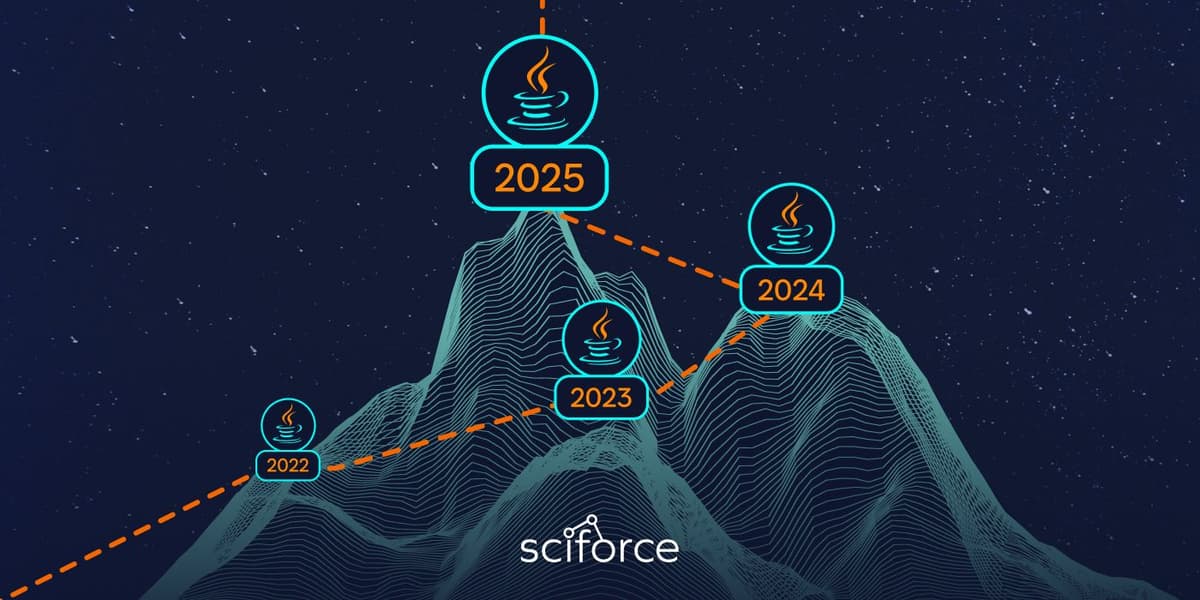
Java remains a powerhouse in software development, with 30% of developers naming it their primary language and its continued ranking as the third most-used language on the TIOBE Index. What sets Java apart is its ability to stay relevant where it matters most: building cloud-native applications, integrating AI solutions, driving IoT innovation, and powering scalable microservices. As we move into 2025, advancements like GraalVM and Project Loom push Java to new heights, making it faster, more e
Published: January 23, 2025
Voice biometry is changing the way businesses operate by using distinctive features of a person's voice, like pitch and rhythm, to confirm their identity. This technology, a central part of Voice AI applications, turns these voice characteristics into digital "voiceprints" that are used for secure authentication. Unlike traditional methods such as fingerprint or facial recognition, voice biometry can be used remotely with just standard microphones, making it both practical and non-intrusive.
Published: May 13, 2024