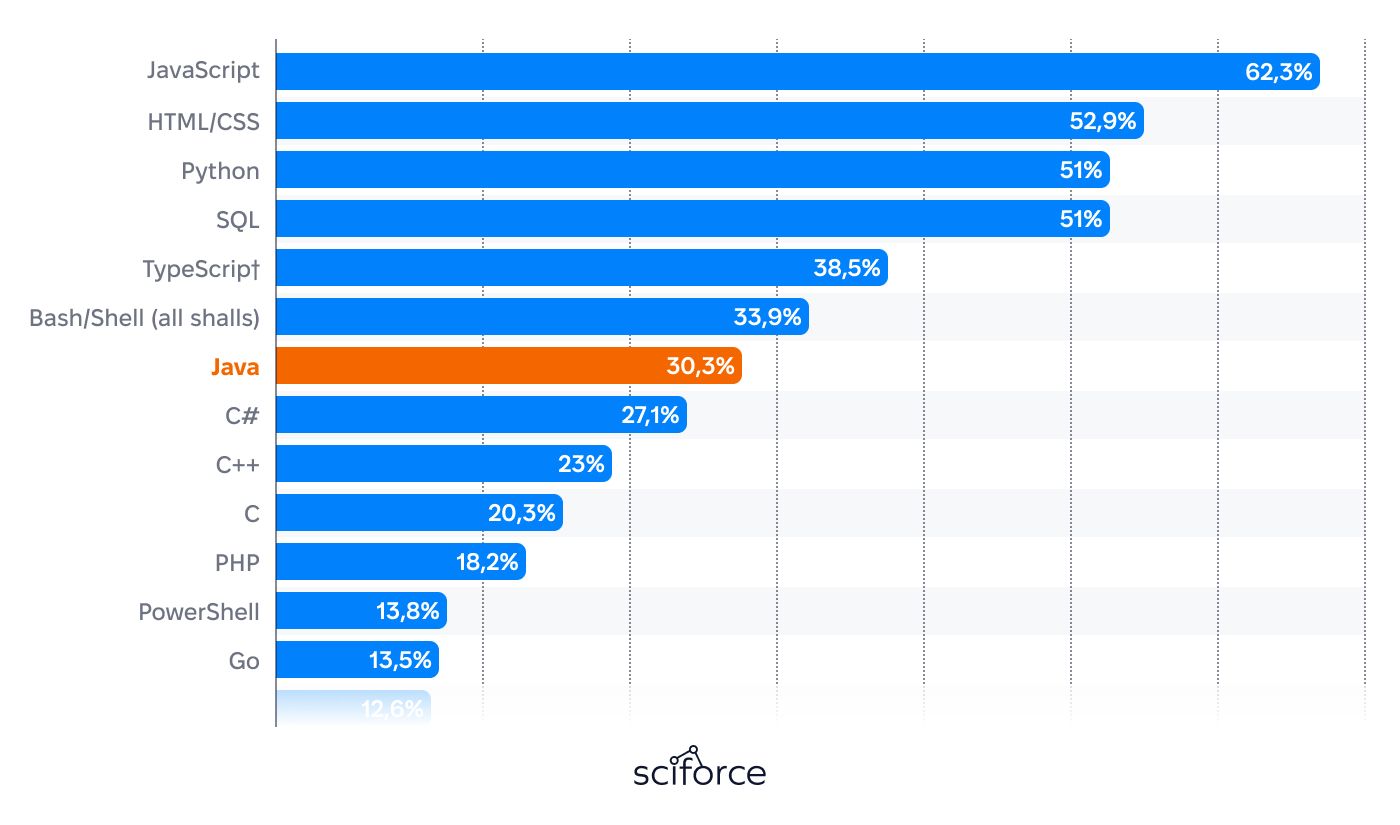
Java remains a powerhouse in software development, with 30% of developers naming it their primary language and its continued ranking as the third most-used language on the TIOBE Index.
What sets Java apart is its ability to stay relevant where it matters most: building cloud-native applications, integrating AI solutions, driving IoT innovation, and powering scalable microservices. As we move into 2025, advancements like GraalVM and Project Loom push Java to new heights, making it faster, more efficient, and ready to tackle the challenges of modern development.
In this article, we’ll look at the key Java trends 2025, showcasing how this long-standing language continues to evolve and deliver solutions that meet today’s demands.
Growing Java Trends in 2025
Big Data and Analytics
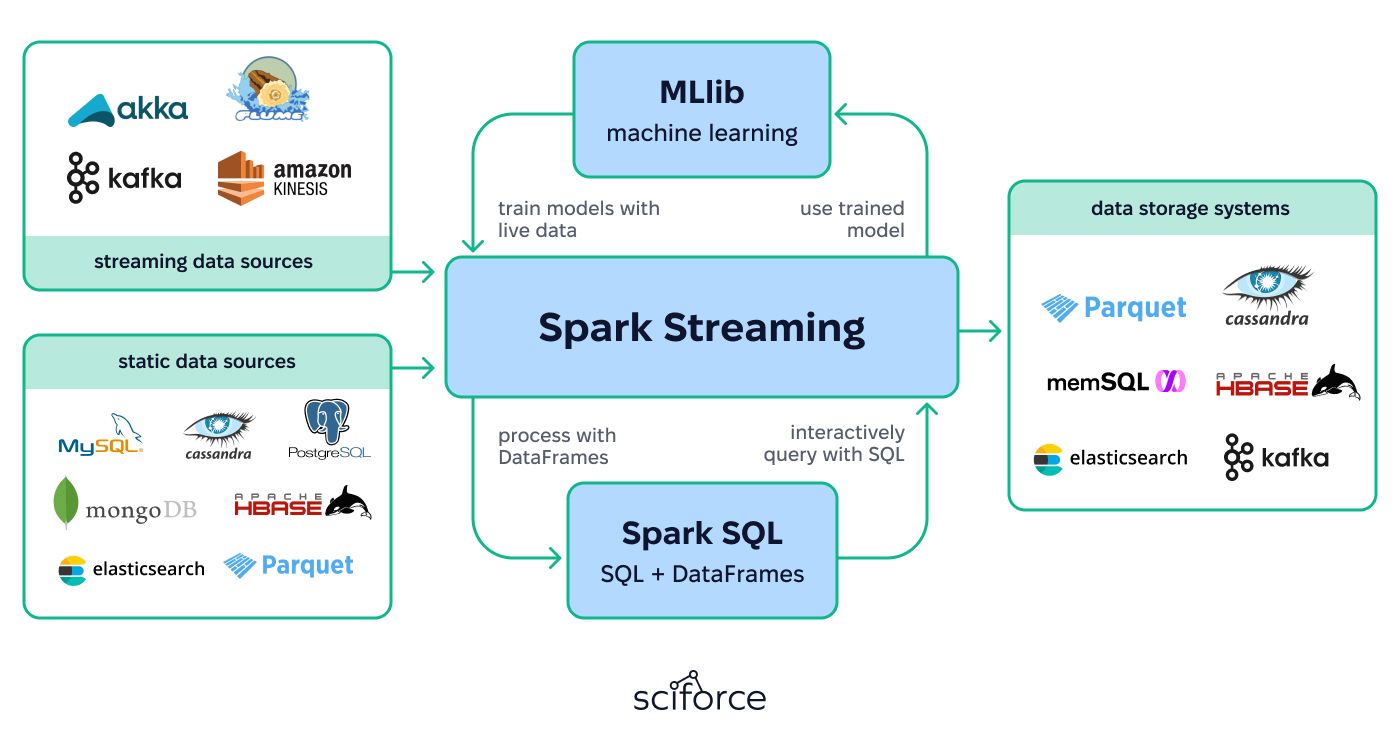
Java is a key language for working with large amounts of data, thanks to its compatibility with tools like Apache Spark, Hadoop, and Kafka. These tools help developers create systems that handle massive datasets, making Java a strong choice for real-time analytics, Java predictive modeling, and IoT applications.
Apache Spark: Processes large datasets by distributing tasks across machines. Used in financial services to detect fraud in real-time transactions.
Hadoop: Handles massive data storage and processing. In e-commerce, it analyzes browsing patterns to recommend products.
Kafka: Manages real-time data streams. Java-based systems use it in IoT for tracking sensor data in smart cities to monitor air quality or traffic.
At SciForce, we build scalable systems using Java's compatibility with big data tools. From predictive analytics to real-time monitoring, we design custom solutions to process and analyze large datasets efficiently, ensuring reliable performance for complex challenges.
Cloud-Native Development
2026 Generative AI Opportunity Map: Where Each Industry Wins (and Risks Losing)
Find out more with SciForce free whitepaper
Java is a key technology for cloud-native development, supported by tools like Spring Boot and Micronaut. These tools help developers build systems that are scalable, reliable, and efficient, while making it easier to deploy applications across different cloud platforms.
Spring Boot: Simplifies microservices development by enabling independent, scalable components.
Micronaut: Optimized for lightweight, fast applications, ideal for real-time data processing with reduced startup times and resource usage.
Docker: Packages Java applications into containers, ensuring consistent performance and deployment across different environments, from development to production.
Kubernetes: Orchestrates and manages containers, providing automatic scaling, load balancing, and recovery, which are essential for maintaining reliable and scalable cloud applications across multitenant environments.
DevOps Integration
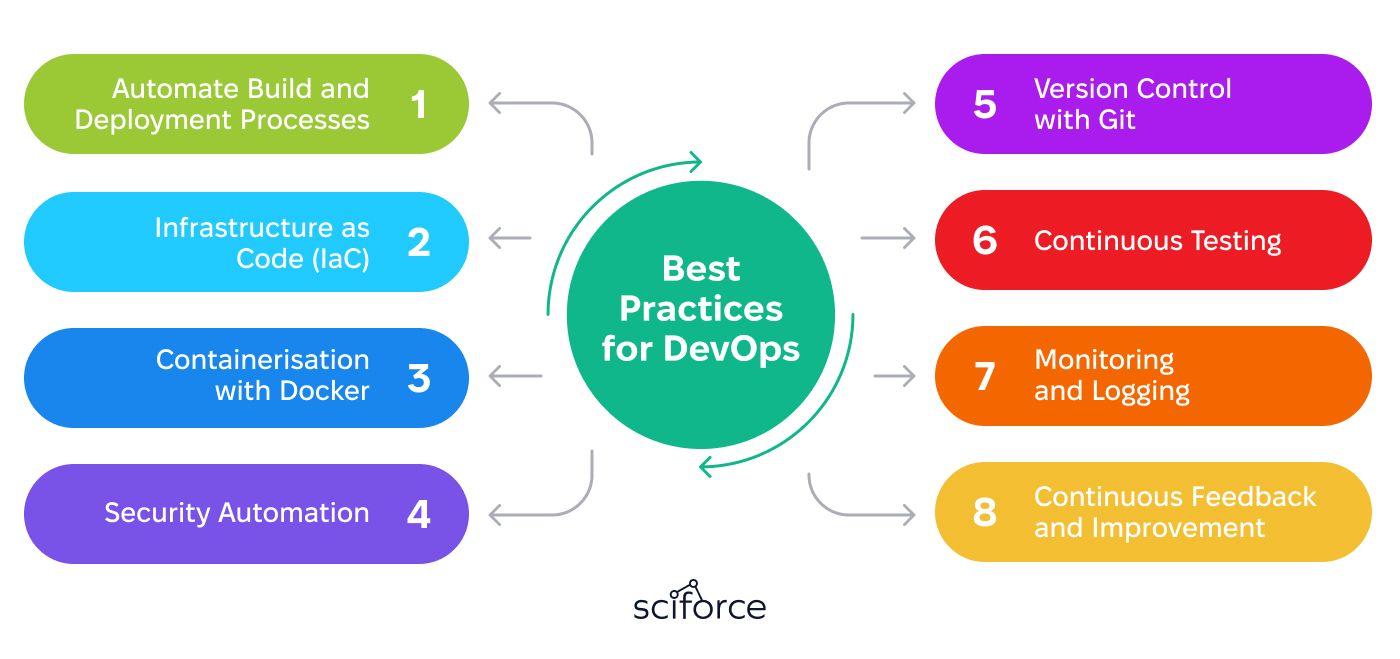
Java DevOps tools like GitLab CI/CD, Jenkins, Terraform, and Kubernetes are essential for improving the development and deployment of Java applications, including those using AI. These tools automate tasks, improve scalability, and make it easier to deliver projects quickly and reliably.
Here’s how these tools work in practice:
GitLab CI/CD: Automates building, testing, and deploying Java applications, including retraining AI models with new data.
Jenkins: Streamlines the development pipeline, automating deployments for fast, consistent updates.
Terraform: Simplifies setting up and managing cloud resources, including automated infrastructure deployment with tools like Amazon ECS. For AI projects, it's used to create and scale the infrastructure needed for training large machine learning models.
Kubernetes: Balances resources and scales Java applications in containers, ensuring smooth operation for AI workflows.
At SciForce, we integrate Java in DevOps practices into our Java development workflows to streamline processes and optimize performance. By automating deployment pipelines, managing infrastructure, and ensuring seamless scalability, we help clients reduce delivery times and maintain reliable operations.
Security and Data Protection
Java provides strong security features that make it a great choice for building applications where protecting data and ensuring user safety are critical. Its built-in tools, code verification processes, and access controls help create secure systems, while frameworks like Spring Security offer specialized Java authentication tools for managing authentication, authorization, and encryption. These security features are critical in industries such as finance, healthcare, and java for CRM systems, where protecting sensitive customer data and ensuring compliance are top priorities.
These security features are critical in industries such as finance, healthcare, and java for CRM systems, where protecting sensitive customer data and ensuring compliance are top priorities. In fintech specifically, security tunnels gave way to a Kubernetes service mesh backed by Vault and Istio — the financial workflows DevOps case shows how that shift played out across a hybrid OVH/Azure infrastructure.
Encryption Tools: APIs like JCA and JSSE enable encryption and secure communication, protecting sensitive data in payment systems.
Code Safety Checks: Bytecode verification detects vulnerabilities, ensuring compiled code is safe, critical for banking apps.
Access Control: Java SecurityManager and AccessController restrict resource access, safeguarding sensitive data in cloud applications.
Spring Security Framework: Enhances security with features like authentication, authorization, data encryption, and login system integration.
IoT Solutions
Java is a great fit for IoT applications because it can run on many types of devices, handle large networks, and work well with real-time AI models. These features make Java ideal for systems that need to process and analyze data from connected devices efficiently. Here’s how Java supports IoT use cases:
Cross-Device Compatibility: Java’s “write once, run anywhere” feature supports IoT devices like sensors and smart appliances. Used in fleet tracking systems for real-time data sharing.
Real-Time Data Processing: Tools like Kafka and Apache Flink enable traffic analysis in smart cities to optimize signals and reduce congestion.
AI Integration: Works with TensorFlow Java and DJL to run real-time models, such as predictive maintenance in factories using sensor data.
Large-Scale Networks: Frameworks like Spring Boot cloud and Micronaut manage thousands of devices, aiding systems like energy grids by analyzing and improving sensor data distribution.
Sustainability and Green Software
Java is actively embracing sustainable practices with tools and solutions designed to optimize resource usage. Projects like Project Leyden, GraalVM Native Image, and lightweight container images (e.g., Alpine and Alpaquita) help developers reduce energy consumption, lower infrastructure costs, and minimize the environmental impact of their applications—all while maintaining high performance. Here’s how these solutions contribute to green software development:
Project Leyden: Reduces startup time and memory usage by using static application images, ideal for serverless AI applications with low resource needs.
GraalVM Native Image: Converts Java apps into native binaries, cutting memory usage and improving execution speed, perfect for edge devices like IoT sensors and drones.
Lightweight Container Images: Minimal base images like Alpine and Alpaquita reduce storage and memory demands, lowering costs and energy usage in cloud deployments.
AI and Machine Learning
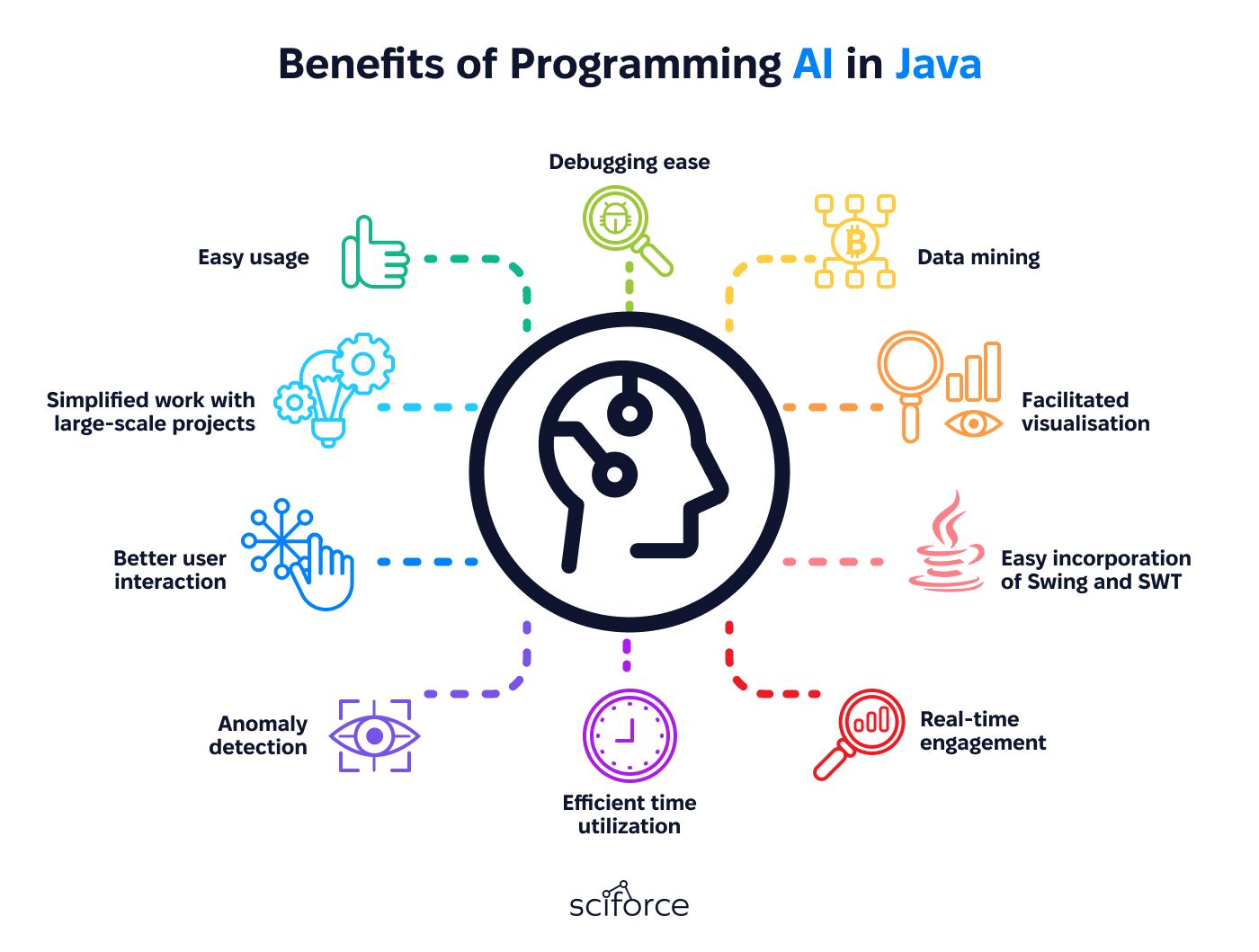
Java is a practical choice for AI and machine learning (ML) in enterprises with large, established Java systems. While Python remains the top choice for AI development, many enterprises rely on Java to integrate AI into existing infrastructure, prioritizing compatibility with legacy systems and minimizing disruptions.
Beyond AI, Java’s capabilities extend to big data and DevOps, essential components of modern AI workflows. It works seamlessly with tools like Apache Spark, Hadoop, and Kafka to process large datasets and supports CI/CD pipelines, Docker, and Kubernetes for scalable, automated AI deployments.
These combined strengths make Java a dependable option for enterprises enhancing their systems with AI:
Legacy System Compatibility – Seamlessly integrates AI with critical enterprise systems like ERP and CRM.
Cost Efficiency – Reduces retraining and rewriting costs by leveraging existing Java expertise.
Vendor Support – Backed by tools and platforms from Oracle, IBM, and others, tailored for enterprise needs.
Scalability and Performance – Ideal for production-grade AI handling large-scale data and real-time processing.
Security and Compliance – Offers strong encryption and authentication for industries with strict requirements.
Cross-Platform Deployment – Supports diverse environments, from cloud to IoT, with minimal changes.
Enterprise AI Libraries – Tools like Deeplearning4j and Apache Mahout enable reliable, large-scale AI solutions.
Here’s how key Java tools support AI and ML development:
TensorFlow Java: Lets developers use TensorFlow’s powerful machine learning models directly in Java projects. For example, it can help create systems that analyze sensor data in real-time to predict equipment failures.
Deep Java Library (DJL): Simplifies creating, training, and using deep learning models with minimal coding. DJL supports tasks like recognizing objects in images, making it useful for security or inventory management systems.
Deeplearning4j: Designed for training models on large datasets using GPUs and CPUs, this library is ideal for tasks like analyzing text in customer reviews to understand sentiment or improve chatbots.
Apache Mahout: Specializes in scalable machine learning for tasks like clustering and recommendations. It’s often used for e-commerce platforms to suggest products based on customer behavior.
Real-World Java Applications: SciForce Case Studies
At SciForce, we rely on Java’s robust frameworks, scalability, and seamless integration capabilities to address complex challenges across industries. From optimizing Docker for an EdTech platform to building advanced middleware for real-time sound analysis, Java enables us to create innovative, efficient, and scalable solutions.
Optimizing Java in Docker for EdTech Project
Our primary task was to reduce technical debt by transitioning the platform from Java 8 to Java 21. During this process, we also optimized Docker images to enhance performance and streamline deployments.
Challenges:
Outdated Java Version:
The platform relied on Java 8, which limited the adoption of modern Java features and introduced maintenance challenges.
Docker Image Inefficiencies:
The existing Docker image setup led to slower updates and increased image sizes.
Handling time zone updates, particularly the Europe/Kyiv time zone, was cumbersome and prone to delays.
Custom Certificate Management:
Test environments required support for self-signed certificates, which were not seamlessly integrated with the Docker image.
Solutions Implemented
Upgrading to Java 21:
The team transitioned from Java 8 to Java 21 to leverage modern features and improve maintainability. While Records were evaluated, the project continued to use Lombok for convenience.
Docker Image Optimization:
The base Docker image was switched to Eclipse Temurin (OpenJDK) for its faster update cycle and reliable support. An alternative, Azul Zulu OpenJDK, was also considered.
Time Zone Management:
To address slow time zone updates, the team integrated TzUpdater, ensuring timely support for critical regions like Europe/Kyiv.
Certificate Integration:
The team copied a key file (openjdk-trust-ca) from the original OpenJDK image to maintain compatibility with self-signed certificates. This file was required to enable trusted communication for Java-based applications while adhering to system-wide CA certificate practices.
Streamlined Build Process:
The team enabled DOCKER_BUILDKIT=1 to optimize image builds, allowing for better resource utilization and enhanced build performance.
Outcomes:
Enhanced Maintainability:
Moving to Java 21 significantly reduced technical debt and enabled the adoption of modern Java features, preparing the platform for future enhancements.
Improved Deployment Efficiency:
Switching to Eclipse Temurin improved the speed of updates and streamlined time zone management, directly benefiting deployment cycles.
Integration of TzUpdater ensured accurate and up-to-date time zone handling, a critical factor for global eLearning platforms.
Simplified Testing:
Self-signed certificates were seamlessly integrated, ensuring secure communication during testing without disrupting workflows.
Key Takeaways: The optimization efforts demonstrate how Java modernization s and refining Docker configurations can lead to substantial improvements in maintainability, performance, and deployment processes. By leveraging tools like Eclipse Temurin, TzUpdater, and Docker BuildKit, the team not only resolved existing inefficiencies but also set a strong foundation for the platform's scalability and reliability.
Micronaut for Sound Analysis and Streaming Middleware
Overview: The Sound Analysis and Streaming middleware project was designed to provide advanced capabilities for real-time audio processing and orchestration of AI-driven microservices. By using the Micronaut framework, a modern JVM-based technology, the team delivered a solution that excelled in performance, scalability, and resource efficiency.
Challenges:
Real-Time Processing:
The middleware needed to process and analyze audio streams in real time while maintaining low latency.
Microservice Orchestration:
Integration of Python-based AI microservices required seamless communication and efficient resource handling.
Resource Constraints:
The serverless architecture demanded minimal startup times and low memory overhead to optimize cost and performance.
Detailed Observability:
Robust tracing and monitoring were essential for identifying and addressing performance bottlenecks.
Solutions Implemented
Micronaut Framework:
The project adopted Micronaut, a modern JVM-based framework optimized for microservices and serverless architectures. Its non-blocking I/O model and native support for reactive programming enabled efficient handling of audio streams and asynchronous tasks.
Integration with GraalVM:
Micronaut’s compatibility with GraalVM allowed for the use of Ahead-of-Time (AOT) compilation. By compiling Java applications into native executables, the middleware achieved:
Reduced Memory Overhead: Optimized memory usage by bypassing the JVM.
Instant Startup Times: Enhanced performance in serverless environments by eliminating JVM warm-up delays.
AI Microservice Orchestration:
The middleware orchestrated Python-based AI microservices for advanced sound analysis. This included:
Non-Blocking Communication: Enabled through Micronaut’s reactive capabilities.
Efficient Data Flow: Ensured through well-designed APIs and lightweight serialization.
Enhanced Observability with OpenTelemetry:
Integrated OpenTelemetry for comprehensive tracing and monitoring. This provided:
Detailed Metrics: Visibility into system performance and resource utilization.
Quick Diagnostics: Rapid identification of bottlenecks and issues in the audio processing pipeline.
Outcomes:
High Performance:
The combination of Micronaut and GraalVM delivered a middleware solution with low latency, optimized resource usage, and instant scalability in serverless deployments.
Seamless AI Integration:
The middleware efficiently orchestrated Python-based AI microservices, enabling advanced sound analysis without sacrificing performance.
Improved Observability:
OpenTelemetry provided actionable insights, ensuring smooth operation and easy troubleshooting.
Future-Ready Architecture:
By leveraging Micronaut and GraalVM, the solution was prepared for evolving requirements, ensuring long-term maintainability and scalability.
Conclusion
Java remains a top choice in software development, driving progress in AI, big data, cloud solutions, and IoT. Its reliable tools and frameworks support the creation of scalable Java apps. At SciForce, we use Java to tackle complex challenges and deliver innovative solutions across industries. As technology evolves, Java continues to be a dependable and future-focused option for developers and businesses. Book a consultation with SciForce today to transform your ideas into powerful AI solutions!