
Stay informed and inspired in the world of AI with us.
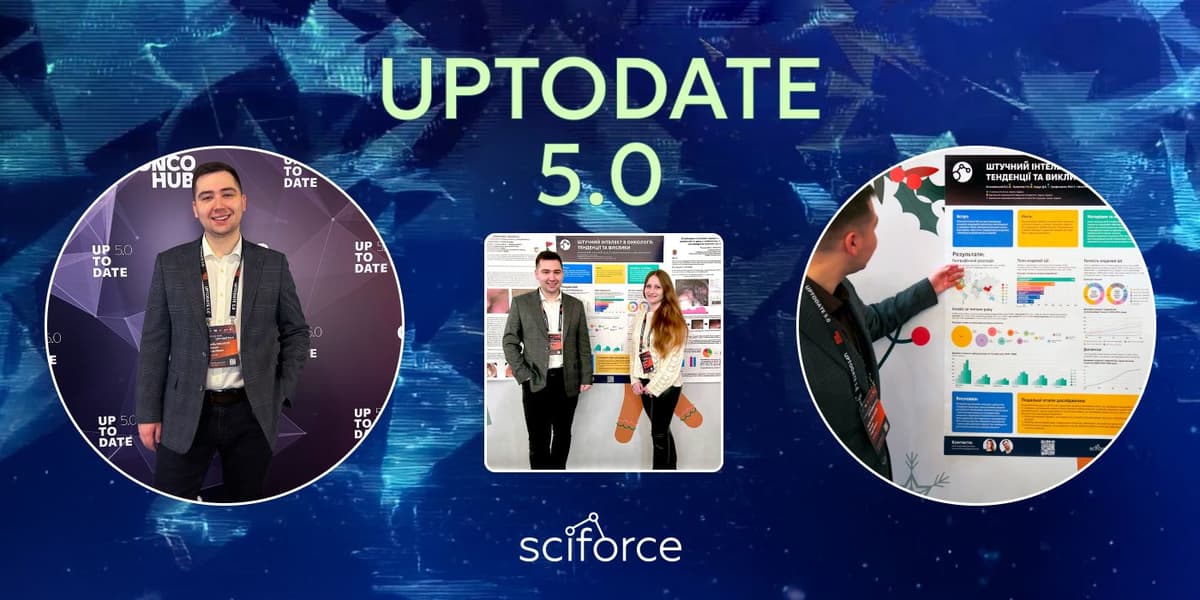
The SciForce Medical team recently attended a major oncology conference in Ukraine. The two-day event in Kyiv brought together over 2,000 experts, including doctors, researchers, and industry leaders. It provided a great chance to learn about the latest advancements in cancer care and connect with potential partners. The conference had a busy schedule of sessions, workshops, and presentations on topics like cancer diagnostics,advanced treatments, and personalized care. Since we couldn’t attend
Published: December 23, 2024
Healthcare providers manage an enormous volume of data daily, approximately 137 terabytes, most of which is unstructured. This includes a wide array of formats such as medical images, clinical notes, and genetic test results. Unstructured data processing, crucial for patient care, poses significant challenges due to its complexity and the varied sizes of its components. The volume of healthcare data is rapidly increasing, fueled by the widespread adoption of electronic health records and advance
Published: July 17, 2024
Predictive analytics uses historical data and techniques like statistical modeling and machine learning to drive predictive analytics for business transformation by forecasting future outcomes. It provides accurate forecasts, helping organizations predict trends and behaviors from milliseconds to years ahead. The global predictive analytics market growth was valued at 14.71 billion U.S. dollars in 2023 and is projected to grow from 18.02 billion U.S. dollars in 2024 to 95.30 billion U.S. dolla
Published: June 12, 2024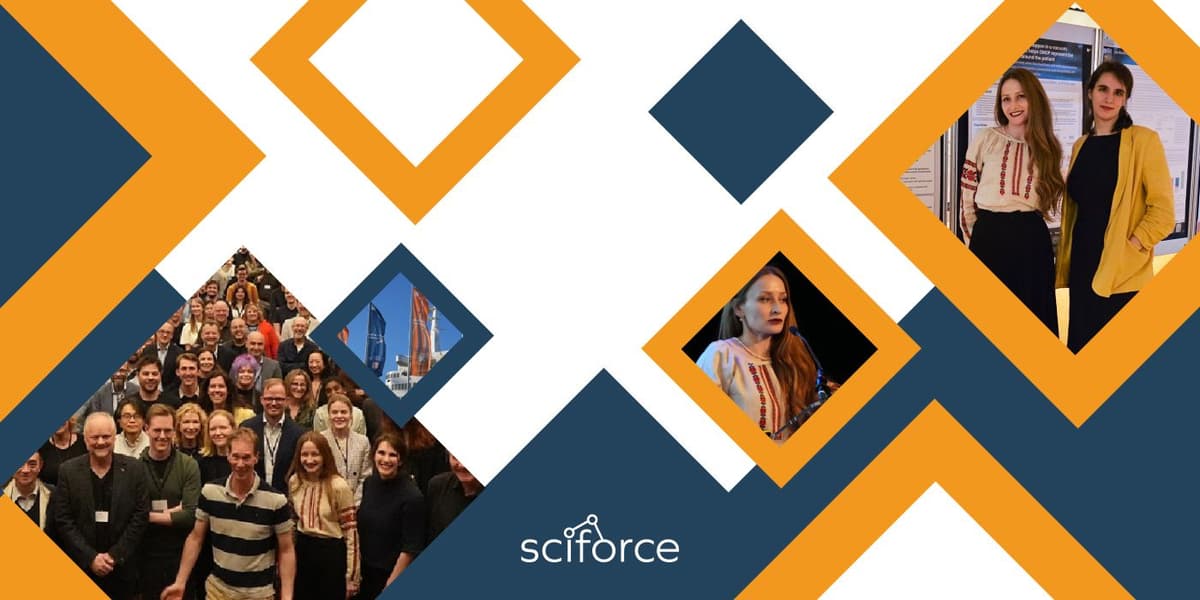
This April, Polina Talapova and Mariia Pahur represented SciForce at the 7th European OHDSI Symposium in Rotterdam – three vivid days of workshops, poster sessions, MindMeetsMachines mapping competition and an oral presentation aboard the SS Rotterdam, a retired ocean liner moored on the Maas river. The symposium's theme was Continuous Collaboration for Living Evidence Generation. The word "living" matters here. Traditional evidence-generation projects are often designed as discrete studies. A
Published: July 21, 2026
Building a telehealth platform at clinical scale means solving for hospital network restrictions, HIPAA compliance and auditability, and the data load of continuous remote monitoring – and the architecture decisions that determine whether it holds up are mostly made in the first few sprints. The engineering debt from early decisions starts showing up at scale: video sessions dropping when hospital firewalls, restrictive egress policies, or network address translation prevent a direct media path;
Published: July 7, 2026
A radiologist on a standard hospital shift may read dozens to well over a hundred imaging studies, depending on subspecialty, setting, shift structure, and case complexity. Each one is a search for something that might be subtle, easy to miss, or buried in noise. At that volume, non-trivial discrepancy or error rate is a known risk in radiology practice, especially under high workload and time pressure. Radiologists are working through growing imaging volumes with a workforce that has never full
Published: June 30, 2026
In 2018, a clinical informaticist launched a tool to handle intake forms and clinical notes so doctors could spend less time typing and more time doctoring. A small study with 18 medical students suggested that the Cydoc smart intake form could substantially reduce note-writing time while maintaining note quality, although broader validation in practicing clinicians was still needed. By August 2025, the company was gone. The postmortem names the main reason: Cydoc lived outside the EHR. Doctors
Published: May 27, 2026
Chatbots helped businesses get started with AI, but their impact has been limited — they respond to questions, follow scripts, and stop at the conversation. They don’t take action. AI agents do. These systems can plan, decide, and carry out tasks across tools like CRMs, ERPs, and internal platforms — all with minimal human input. They act more like digital team members than assistants. Gartner projects that by 2026, 40% of enterprise applications will include task-specific AI agents, up from und
Published: March 18, 2026
The COVID-19 pandemic changed how healthcare works. When in-person visits dropped, telehealth, remote monitoring, and home care quickly became necessary, and many of these solutions are now here to stay. Virtual hospitals and AI copilots are leading this shift. Virtual hospitals use video calls, remote monitoring, and mobile care teams to deliver hospital-level care at home. AI copilots support clinicians by drafting, summarizing, coding, and prioritizing information, while clinical decisions re
Published: March 12, 2026
AI-powered products can create real value, but only when they continue working reliably in the hands of customers. What makes this difficult is that their behavior doesn’t stay fixed after release. As data changes, so does model performance, which means that quality can decline even when no one touches the code. According to the 2024 DORA report, elite teams typically deploy on demand (multiple times per day), recover from failed deployments in under an hour, and keep change failure rates around
Published: February 6, 2026