
Stay informed and inspired in the world of AI with us.
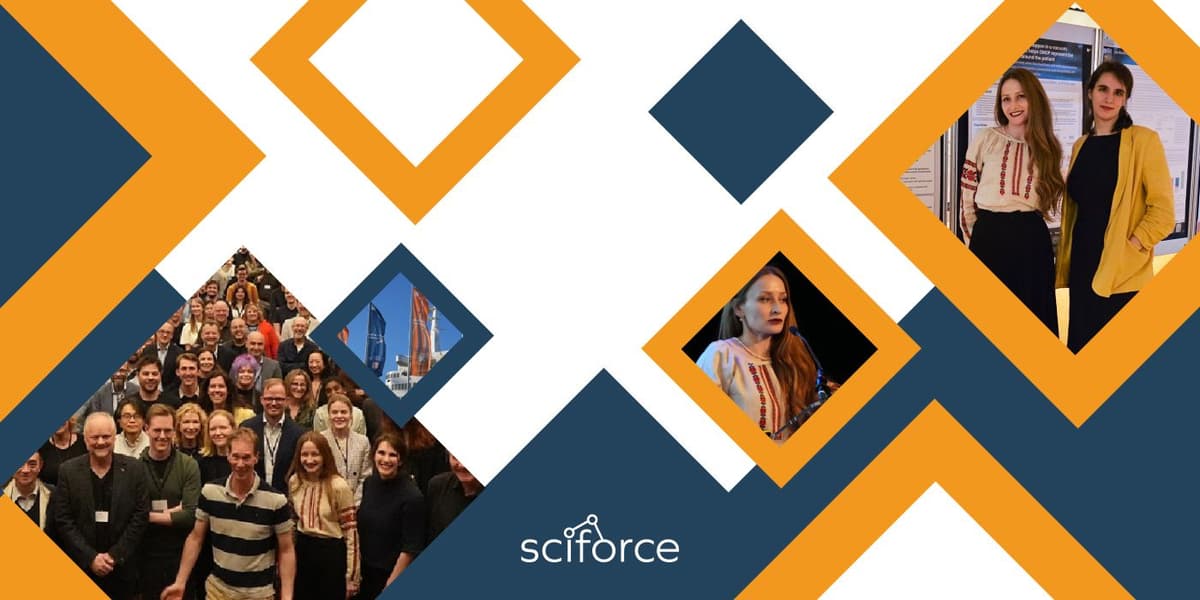
This April, Polina Talapova and Mariia Pahur represented SciForce at the 7th European OHDSI Symposium in Rotterdam – three vivid days of workshops, poster sessions, MindMeetsMachines mapping competition and an oral presentation aboard the SS Rotterdam, a retired ocean liner moored on the Maas river. The symposium's theme was Continuous Collaboration for Living Evidence Generation. The word "living" matters here. Traditional evidence-generation projects are often designed as discrete studies. A
Published: July 21, 2026
Building a telehealth platform at clinical scale means solving for hospital network restrictions, HIPAA compliance and auditability, and the data load of continuous remote monitoring – and the architecture decisions that determine whether it holds up are mostly made in the first few sprints. The engineering debt from early decisions starts showing up at scale: video sessions dropping when hospital firewalls, restrictive egress policies, or network address translation prevent a direct media path;
Published: July 7, 2026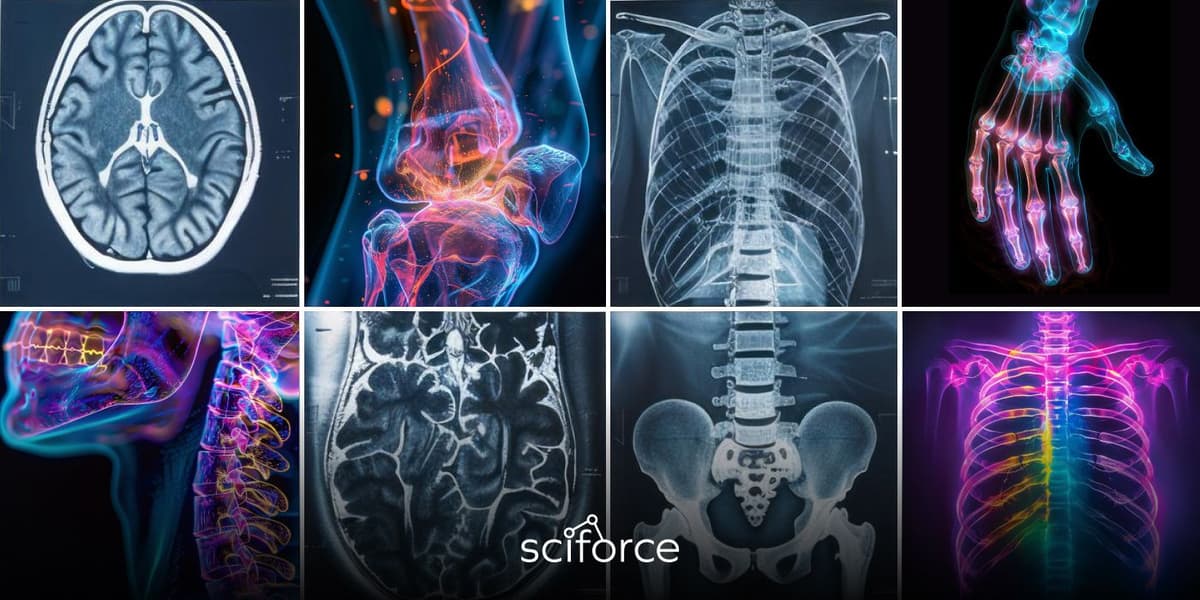
A radiologist on a standard hospital shift may read dozens to well over a hundred imaging studies, depending on subspecialty, setting, shift structure, and case complexity. Each one is a search for something that might be subtle, easy to miss, or buried in noise. At that volume, non-trivial discrepancy or error rate is a known risk in radiology practice, especially under high workload and time pressure. Radiologists are working through growing imaging volumes with a workforce that has never full
Published: June 30, 2026
In 2025, the world’s data centers consumed 485 terawatt-hour of energy, with AI-related demand growing at 50%. By 2030, the consumption is expected to reach 950 TWh – twice as much as today, and equals approximately the entire electricity consumption of Japan. Goldman Sachs forecasts that about 60% of new demand will be met by burning fossil fuels, increasing global carbon emissions to 220 million tons. And as the chart below shows, the emissions cost escalates sharply with each new generation o
Published: June 10, 2026
Equipment failures don't happen out of the blue: pressure drifting lower, or a slightly different vibration pattern precedes the failure over weeks or months. None of these is big enough to cause an incident on its own, but the trend would show that action is already necessary. BlueScope, an Australian steel manufacturer, used to monitor their equipment through visual checks and basic low-level switches, until they introduced Siemens Senseye predictive maintenance system. Half a year after insta
Published: June 4, 2026
In 2018, a clinical informaticist launched a tool to handle intake forms and clinical notes so doctors could spend less time typing and more time doctoring. A small study with 18 medical students suggested that the Cydoc smart intake form could substantially reduce note-writing time while maintaining note quality, although broader validation in practicing clinicians was still needed. By August 2025, the company was gone. The postmortem names the main reason: Cydoc lived outside the EHR. Doctors
Published: May 27, 2026
Last spring, OpenAI released a GPT-4o update that made the model hard to trust: it returned sycophantic and less reliable answers than usual, even though nothing was changed in users’ prompts and workflows. When an LLM system starts drifting in production, the deployment history doesn’t catch it early: nothing changed in the codebase, and providers didn’t release any official updates either. Meanwhile, some providers might have adjusted a classifier without notice, and a request that worked fi
Published: May 20, 2026
At some point in an AI company's growth, the GPU bill stops making sense, and we are looking at a cluster running at 3 am for a model that never shipped. That's the bill that eventually lands on someone's desk, and the first instinct is a cleanup to identify waste and kill orphaned resources. It worked when cloud spend drifted slowly enough for a monthly review to catch up, but by 2025, AI infrastructure spend grew 166% year over year. The job was run, and the bill for it would arrive only two
Published: May 7, 2026
Firmware failures don’t stay confined to software. They stop lines, knock out motors, and ruin batches. Once production is down, firmware stops being “just code.” Even so, many manufacturers still treat firmware as a fixed machine component: ship it once, assume it will hold up, and deal with the fallout later. That approach breaks down fast at scale. Last year, 61% of manufacturers faced unplanned downtime, causing nearly $1 billion in losses. At the same time, the software estate keeps getting
Published: April 29, 2026
Chatbots helped businesses get started with AI, but their impact has been limited — they respond to questions, follow scripts, and stop at the conversation. They don’t take action. AI agents do. These systems can plan, decide, and carry out tasks across tools like CRMs, ERPs, and internal platforms — all with minimal human input. They act more like digital team members than assistants. Gartner projects that by 2026, 40% of enterprise applications will include task-specific AI agents, up from und
Published: March 18, 2026