
Stay informed and inspired in the world of AI with us.
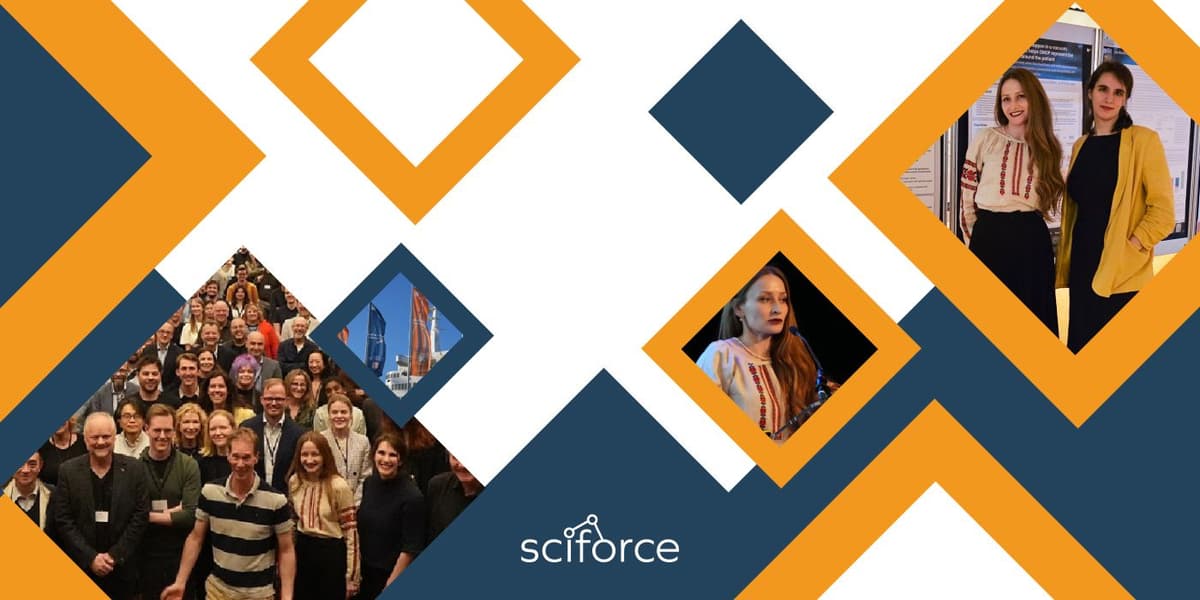
This April, Polina Talapova and Mariia Pahur represented SciForce at the 7th European OHDSI Symposium in Rotterdam – three vivid days of workshops, poster sessions, MindMeetsMachines mapping competition and an oral presentation aboard the SS Rotterdam, a retired ocean liner moored on the Maas river. The symposium's theme was Continuous Collaboration for Living Evidence Generation. The word "living" matters here. Traditional evidence-generation projects are often designed as discrete studies. A
Published: July 21, 2026
Building a telehealth platform at clinical scale means solving for hospital network restrictions, HIPAA compliance and auditability, and the data load of continuous remote monitoring – and the architecture decisions that determine whether it holds up are mostly made in the first few sprints. The engineering debt from early decisions starts showing up at scale: video sessions dropping when hospital firewalls, restrictive egress policies, or network address translation prevent a direct media path;
Published: July 7, 2026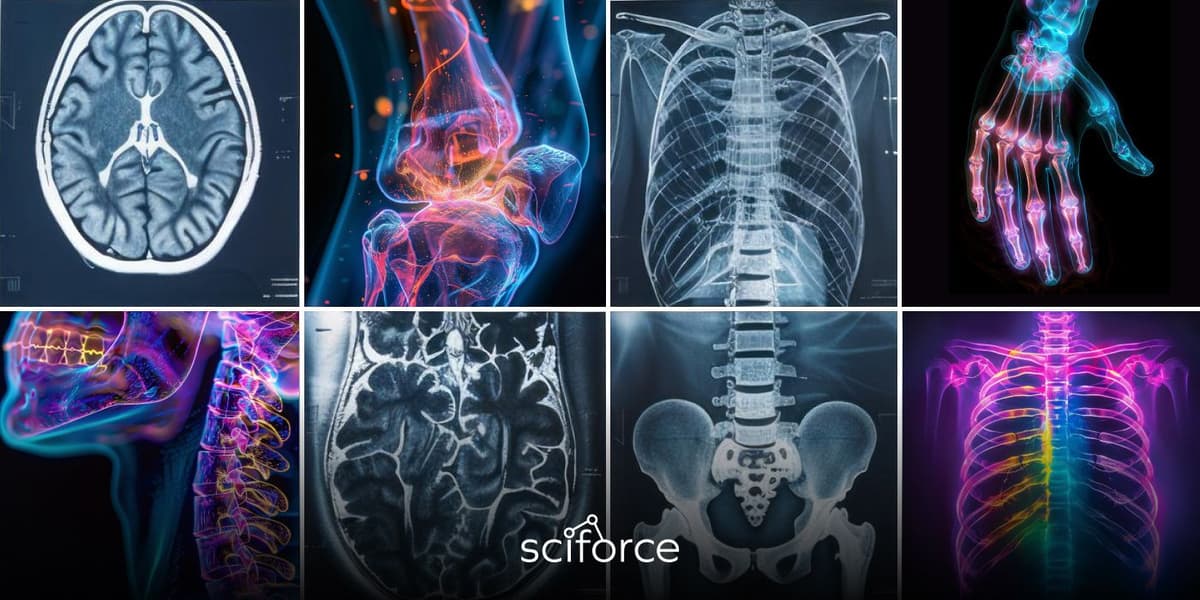
A radiologist on a standard hospital shift may read dozens to well over a hundred imaging studies, depending on subspecialty, setting, shift structure, and case complexity. Each one is a search for something that might be subtle, easy to miss, or buried in noise. At that volume, non-trivial discrepancy or error rate is a known risk in radiology practice, especially under high workload and time pressure. Radiologists are working through growing imaging volumes with a workforce that has never full
Published: June 30, 2026
In 2025, the world’s data centers consumed 485 terawatt-hour of energy, with AI-related demand growing at 50%. By 2030, the consumption is expected to reach 950 TWh – twice as much as today, and equals approximately the entire electricity consumption of Japan. Goldman Sachs forecasts that about 60% of new demand will be met by burning fossil fuels, increasing global carbon emissions to 220 million tons. And as the chart below shows, the emissions cost escalates sharply with each new generation o
Published: June 10, 2026
Equipment failures don't happen out of the blue: pressure drifting lower, or a slightly different vibration pattern precedes the failure over weeks or months. None of these is big enough to cause an incident on its own, but the trend would show that action is already necessary. BlueScope, an Australian steel manufacturer, used to monitor their equipment through visual checks and basic low-level switches, until they introduced Siemens Senseye predictive maintenance system. Half a year after insta
Published: June 4, 2026
In 2018, a clinical informaticist launched a tool to handle intake forms and clinical notes so doctors could spend less time typing and more time doctoring. A small study with 18 medical students suggested that the Cydoc smart intake form could substantially reduce note-writing time while maintaining note quality, although broader validation in practicing clinicians was still needed. By August 2025, the company was gone. The postmortem names the main reason: Cydoc lived outside the EHR. Doctors
Published: May 27, 2026
The COVID-19 pandemic changed how healthcare works. When in-person visits dropped, telehealth, remote monitoring, and home care quickly became necessary, and many of these solutions are now here to stay. Virtual hospitals and AI copilots are leading this shift. Virtual hospitals use video calls, remote monitoring, and mobile care teams to deliver hospital-level care at home. AI copilots support clinicians by drafting, summarizing, coding, and prioritizing information, while clinical decisions re
Published: March 12, 2026
In 2025, the battle for e-commerce loyalty isn’t fought on discounts – it’s won on relevance. Global online sales are climbing toward $4.8 trillion, yet what keeps shoppers coming back is how well a store recognizes them. 71 % of consumers expect personalized experiences, and 76 % say they’re frustrated when brands miss the mark. AI has made that expectation scalable. Today’s personalization engines predict, adapt, and learn in real time, create product sets, search results, and offers for every
Published: November 25, 2025
Coding is changing fast, and AI is now writing much of it. In 2025, more than 15 million developers use copilots like GitHub Copilot, Google Gemini Code Assist, and OpenAI’s coding tools to work faster and with fewer mistakes (GitHub usage data). Surveys show that 9 out of 10 engineering teams rely on AI assistants, with many reporting 25–50% productivity gains. The newest trend is the rise of specialized copilots for speech recognition and computer vision. These tools include built-in knowledge
Published: September 24, 2025
Java remains a powerhouse in software development, with 30% of developers naming it their primary language and its continued ranking as the third most-used language on the TIOBE Index. What sets Java apart is its ability to stay relevant where it matters most: building cloud-native applications, integrating AI solutions, driving IoT innovation, and powering scalable microservices. As we move into 2025, advancements like GraalVM and Project Loom push Java to new heights, making it faster, more e
Published: January 23, 2025