Find out more with SciForce free whitepaper
The client turned to us with a request to add new features to their e-commerce application and to website speed optimization. Their existing legacy infrastructure was overweight and caused significant performance issues, hindering progress toward digital transformation for publishing initiatives: for example, it took about 5 seconds to load the page on a client's website.
1. Outdated and Constrained IT Infrastructure:
The client relied on an outdated single-server setup that lacked necessary scalability for handling increasing online traffic. The video processing platform case shows what happens when that ceiling is removed entirely — serverless containers on AWS Fargate that spin up on demand, with no idle server costs between traffic spikes.
Both the database and the application were confined to the same server, leading to strain and performance issues.
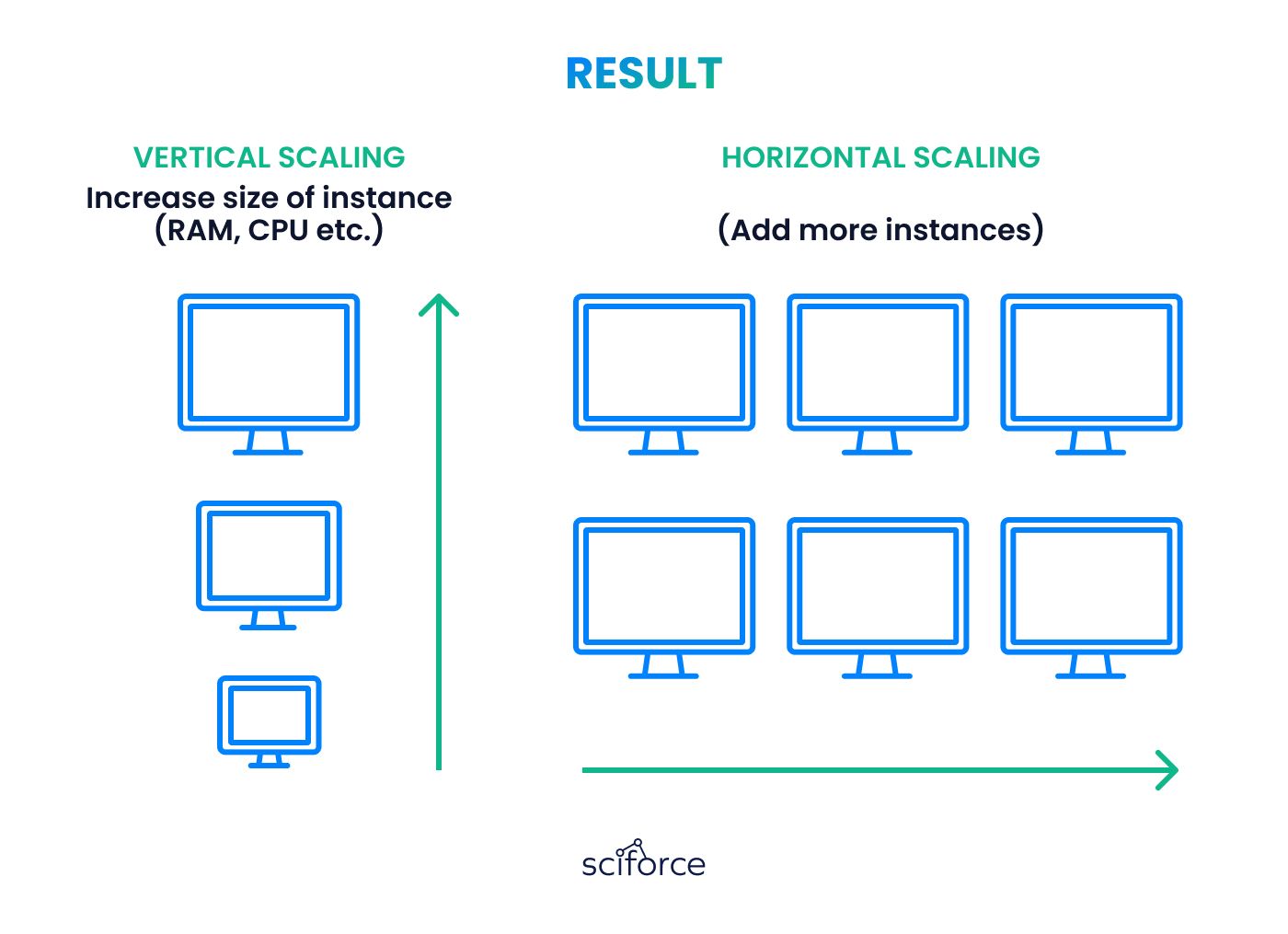
The infrastructure lacked horizontal scaling capabilities, limiting expansion to only vertical scaling—adding more resources to the existing server.
2. Technical Incompatibilities and Complexities:
The use of two distinct PHP frameworks for different functionalities caused compatibility issues, complicating integration and maintenance and highlighting the need for PHP framework modernization.
Accumulated, untracked changes over time made it impossible to know the server's exact state or reproduce its environment, complicating upgrades and maintenance.
3. Severe Performance Limitations:
The server, burdened with legacy configurations and lacking load balancing optimization, suffered from slow response times during peak traffic periods and frequent system overloads, resulting in poor user experiences and potential revenue losses.
4. Operational Risk and Management Challenges:
Absence of structured documentation and processes for server setup made it difficult to manage, restore, or replicate the environment if needed.
The risk of significant downtime was high, as there were no procedures to quickly restore or replicate the server environment in case of failure — a major obstacle to achieving a high-availability infrastructure.
5. Barriers to Digital Expansion:
Impediment to Growth: The combination of outdated infrastructure, technical complexities, and risk of downtime highlighted the need for infrastructure optimization for media and content-driven e-commerce to support digital expansion and preparing for future initiatives such as cloud migration for e-commerce in a competitive market.
We addressed the significant performance issues by removing unnecessary services and fine-tuning the server's settings. To overcome the limitations of the single-server setup, we enabled scaling monolithic e-commerce infrastructure without full replatforming through targeted vertical and horizontal scaling. This upgrade was essential to handle the growing amount of traffic and to ensure consistent performance, keeping the system reliable as more users access the platform.
We developed detailed documentation of the system's architecture and operational procedures to reduce risks from the previously complex setup. We also standardized processes for system updates and deployments, enabling DevOps modernization for legacy e-commerce systems and improving consistency and operational reliability.
System and Configuration Tuning
Implemented production infrastructure optimization for e-commerce platforms on installed systems and configurations. This included removing unnecessary components and fine-tuning settings to enhance overall performance and system response times.
DevOps Infrastructure Improvement
Increased the server's resources, which directly addressed performance limitations and improved handling of higher loads.
Automated Deployment Processes
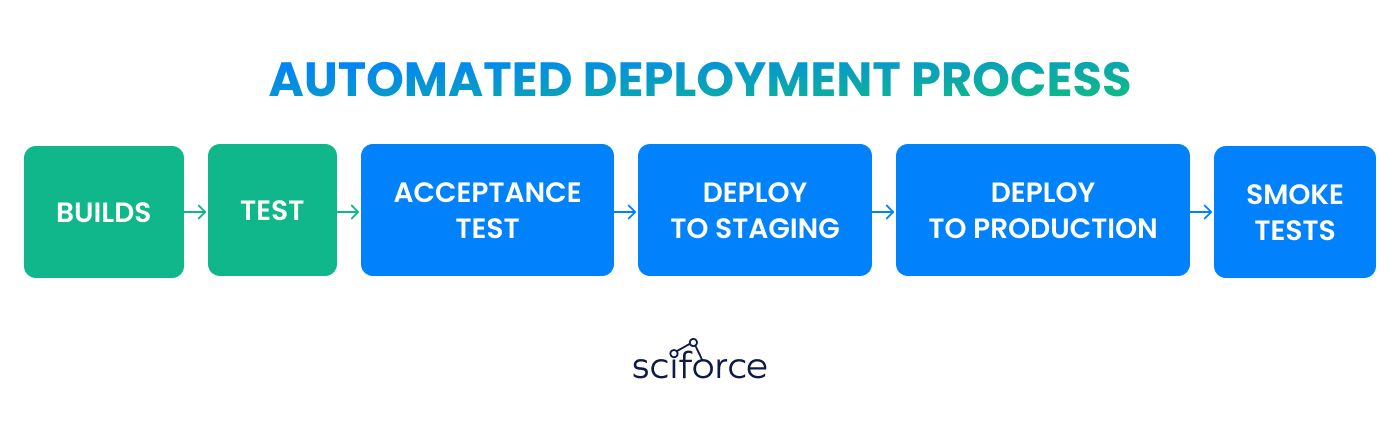
We implemented CI/CD automation for legacy PHP-based applications to streamline updates and maintenance. Taking that automation further into fully containerized, cloud-native infrastructure is documented in our Amazon ECS deployment case, where Infrastructure as Code replaced manual configuration entirely.
Development Process
1. Optimization of Existing Configurations
Analyzed and fine-tuned the software and server monitoring and reliability settings to enhance system performance, focusing on eliminating inefficiencies that caused slowdowns during high usage periods.
2. Removal of Unnecessary Processes
Identified and eliminated outdated or unnecessary services and processes that were using up system resources, thereby improving the efficiency of the processor and memory.
3. Enhancing Capacity
We performed server performance tuning for digital publishing platforms by adding 16GB of RAM and upgrading key resources, boosting system capacity by 50%. This enhancement not only addressed immediate challenges, but also prepared the system for future demands, ensuring it can effortlessly manage heavier workloads and traffic spikes.
4. Documentation and Cleanup
Developed detailed documentation of the server’s configuration and the optimizations made, to aid in better system management and provide a clear reference for system operations.
5. Testing and Validation
Conducted tests to verify that the optimizations and additional resources effectively improved the website's performance, notably reducing loading times and increasing reliability during high-traffic times.
The optimizations and configuration adjustments led to a 30% faster server response time. This change was crucial during busy periods, helping to eliminate common delays and maintain a smooth user experience.
By removing unnecessary processes, we freed up about 20% of CPU and memory resources. This improvement made data processing faster and allowed the server to handle user requests more efficiently.
To address immediate operational challenges, we conducted a quick audit and server infrastructure modernization by adding 16GB of RAM and upgrading key resources, which increased the server’s handling capacity by 50%. This not only addressed immediate challenges but also equipped the system for future demands, ensuring reliable performance and uninterrupted service during peak times.
Testing after the project average page load within a second, showing great improvement from initial 5 seconds, greatly improving the user experience. Additionally, the system maintained 99.9% uptime during peak traffic, a significant improvement from before.
We've laid the groundwork for preparing legacy e-commerce systems for future cloud migration, enabling further performance gains and long-term scalability. This future change is expected to reduce page load time by another 20% and reduce server load by 30%, preparing the client well for continued growth.