
Find out more with SciForce free whitepaper
1. The Complexity of Digital Advertising Across Platforms
Resizing digital advertisements for social media, websites, and advertising networks is a time-consuming, error-prone task. Each platform demands different dimensions and formats, requiring quick adaptation while maintaining visual appeal and compliance with technical specifications. The manual effort involved places significant pressure on creative teams, slowing campaign execution.
2. Ad Saturation and Consumer Disengagement
With the flood of online ads, users increasingly resist intrusive advertising, often using ad-blockers or tuning out disruptive content. To stay effective, ads must blend naturally into platforms while maintaining visual integrity across multiple placements, requiring a resizing approach that preserves both design and engagement.
3. Multi-Platform Format Requirements
Each advertising platform imposes strict format constraints, requiring ads in multiple aspect ratios (square, vertical, and widescreen for social media), or banners and skyscrapers for display networks. Platforms like Amazon Advertising have additional layout requirements for visibility — how AI shapes the broader advertising and personalization experience on platforms like Amazon is explored in our e-commerce personalization article. Without ad design automation tools, companies must manually resize ads for each format, slowing campaign execution and increasing costs.
4. Maintaining Quality and Visual Integrity
Resizing an ad requires more than simple scaling—it must prevent distortion, blurriness, and awkward cropping. Key elements like images, logos, and text must remain balanced, legible, and well-positioned. A resizing solution must preserve clarity and impact across all output sizes.
5. Ensuring Text Readability
Text in digital ads is highly vulnerable to resizing, often becoming blurred, misaligned, or cropped. Maintaining legibility requires more than simple scaling—placement and size must be dynamically adjusted to keep text clear across all formats.
6. Preserving Object & Human Elements in Ads
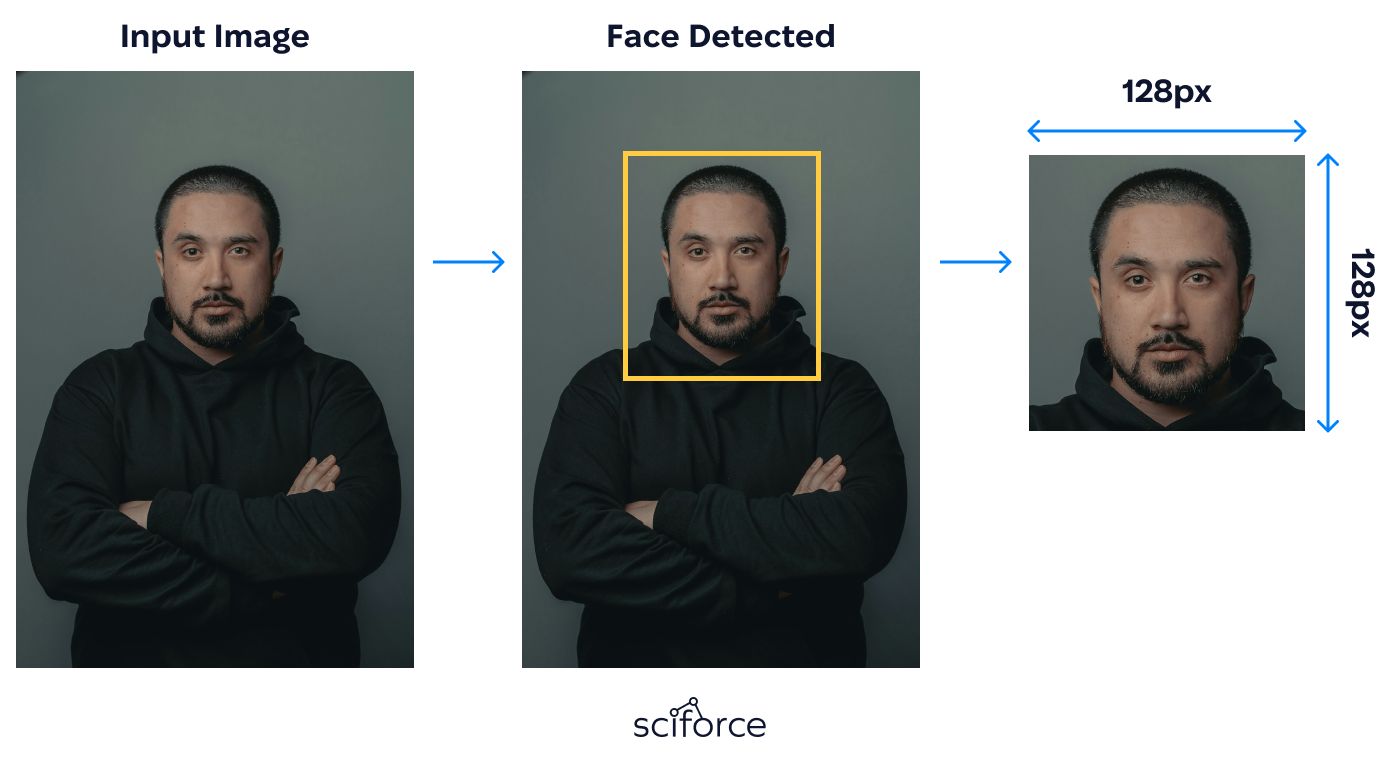
Human faces are key to emotional engagement and brand recognition, but standard resizing can crop, distort, or misplace them. A resizing tool must detect and preserve faces, ensuring they remain clear, undistorted, and properly positioned in every format.
7. High Workload for Creative Teams
Manually resizing ads for multiple platforms is time-consuming, requiring adjustments to elements, text, and layout for consistency. As campaigns scale, this repetitive process delays deployment, increases costs, and limits agility. Automation is essential to free creative teams to focus on innovation rather than manual resizing.
1) AI-Based Resizing Strategy
The system applies AI-driven object, text, and face detection to intelligently adjust ad components, preventing distortion, misalignment, or loss of quality. Ads maintain their intended design and readability across different platforms, adapting to the unique specifications of each without requiring manual adjustments.

2) Object Detection for Smart Scaling
Resizing ads requires precise identification and proportional adjustment of visual elements. The tool employs YOLOv3 for fast, real-time detection — the same model drives our warehouse tracking system, where boxes are detected and tracked across multi-camera zones in a high-volume retail distribution center. For cases requiring higher precision, TensorFlow’s Faster R-CNN NAS COCO model is used, ensuring detailed detection even in complex designs.

3) Text Detection to Maintain Readability
To address this, the system incorporates the EAST Text Detector, an OpenCV-based model designed to maintain sharpness and legibility across different sizes. Unlike traditional word segmentation methods, this approach ensures clean typography without requiring complex post-processing adjustments.
4) Face Detection for Human Element Preservation
Advertisements featuring human faces require additional safeguards during resizing to prevent cropping, stretching, or misalignment. The tool integrates Faced, a TensorFlow-based model trained on the WIDER FACE dataset, to detect and properly position faces within resized ads.
5) Multi-Format Resizing Logic
The tool seamlessly adapts both static images and animated GIFs to different formats without sacrificing quality. GIFs retain their original frame sequences, preventing animation glitches and ensuring a smooth visual experience across resized versions. By aligning with the specifications of social media platforms, display networks, and Machine Learning for advertising frameworks, the system ensures that all resized assets are immediately deployable without further manual adjustments.
6) Limitations of Traditional Parsing-Based Resizing
Early attempts at automated resizing relied on parsing JS, CSS, and HTML to adjust static parameters. The idea was to proportionally resize all elements and use machine learning (ML) to scale images accordingly, but this approach faced major obstacles:
These constraints made scaling ads consistently across formats unreliable, underscoring the need for a more precise AI-driven approach that intelligently detects, analyzes, and resizes elements.
Automatic Multi-Size Generation A single ad template can be uploaded, and the system automatically generates multiple size variations optimized for social media, Amazon Advertising, and display networks. This eliminates the need for manual adjustments, allowing seamless deployment across various platforms.
Smart Scaling Without Quality Loss The system detects key visual elements and resizes them proportionally to maintain the integrity of logos, images, and graphical components. Elements remain well-positioned and balanced, ensuring that resized ads retain their professional appearance without distortion or misalignment.
Text Readability Optimization To prevent text from becoming blurred, cropped, or misaligned, the tool applies intelligent text resizing techniques. Fonts remain sharp and legible across all ad formats, preserving ad readability and clarity regardless of scale adjustments.
Face Detection for Proper Composition Human faces play a critical role in ad engagement, and automated creative asset resizing must ensure they remain well-framed and undistorted.The system uses AI-driven face detection in marketing to adjust facial elements automatically, preventing stretching, misplacement, or cropping errors.
High-Quality Output Without Compression Resized ads maintain their original sharpness without squashing, pixelation, or visual degradation. GIF animations retain smooth motion, avoiding frame loss or disruptions that could impact the visual experience.
Manual Editing Options While the AI in digital advertisement handles the bulk of the resizing process, users can fine-tune and reposition elements as needed. This flexibility ensures that adjustments can be made to better align with creative preferences.
Platform Compatibility The tool exports ads in multiple formats, enabling ad optimization for social media platforms as well as display networks, ensuring faster deployment and seamless ad creative workflow automation. This compatibility reduces the time spent reformatting assets, allowing businesses to scale their campaigns efficiently.
1. Object Detection for Intelligent Resizing
To accurately identify and resize key ad components, the system employs YOLOv3 for real-time object detection, balancing speed and efficiency. For cases requiring higher precision, TensorFlow's Faster R-CNN NAS COCO Model was integrated, offering more detailed detection at the cost of processing speed. Balancing that tradeoff in aerial imagery led us somewhere unexpected — our drone-based roof modeling system uses the exact same YOLO + Faster R-CNN ensemble to detect precise roof boundaries from drone photos.

2. Text Detection to Maintain Readability
Text clarity is a major challenge in ad resizing, as scaling can cause blurring, misalignment, or cropping. To address this, the EAST Text Detector was implemented, leveraging OpenCV’s deep learning capabilities. Unlike traditional text detection models, EAST operates in an end-to-end manner, eliminating the need for complex post-processing while ensuring that text remains sharp and readable, even in challenging visual conditions.
3. Face Detection for Human Element Preservation
Since standard object detection models often misinterpret human faces, a dedicated solution was necessary to maintain proper composition. The Faced model, based on TensorFlow and trained on the WIDER FACE dataset, was selected for its superior performance in detecting and properly positioning faces in resized ads. This model significantly outperforms traditional Haar Cascades, making it particularly effective for ad content where facial imagery plays a crucial role.
4. Ensuring High-Quality Resizing Without Distortion
Maintaining proportionality is critical to preserving the visual integrity of resized ads. The system leverages image and text scaling algorithms to ensure that no visuals are squashed or stretched—instead, elements are intelligently resized or cropped to maintain design consistency. For animated content, frame sequences in GIFs are preserved, preventing visual artifacts or animation disruptions.
5. Multi-Platform Compatibility
The tool was designed as part of a broader strategy for cross-platform advertising solutions, supporting social media (Facebook, Instagram, LinkedIn, TikTok, Twitter), e-commerce advertising (Amazon Advertising), and display networks (Google Display Network, programmatic ad exchanges, and third-party publishers). It ensures that resized ads comply with the specific aspect ratios, resolution standards, and content guidelines of each platform.
The AI-powered resizing tool has streamlined ad production, reducing ad production time with AI by 80% and enabling 5x faster ad deployment. These gains highlight the impact of AI on digital marketing efficiency, as the system automates resizing for 15+ ad formats while ensuring ads are optimized for Facebook, Instagram, LinkedIn, TikTok, Twitter, Amazon Advertising, and Google Display Network with 100% compliance to platform requirements.
Efficiency & Quality Gains The tool scales a single input into 30+ output sizes in seconds, ensuring 99% accuracy in text and object placement while preventing pixelation, distortion, or misalignment. It has cut resizing errors by 90%, reducing the need for manual corrections and post-processing.
Business Impact With 30% lower ad production costs, brands can launch campaigns faster and at scale, improving engagement rates and ROI. The scalable architecture allows seamless dynamic ad content adaptation, applying ad resizing best practices to ensure long-term flexibility as digital marketing evolves.