
• Services
    LLM
    AI & ML
    Digital Healthcare
    Data Science
    DevOps
  • Products
    Jackalope
    EyeAI
  • Industries
    Healthcare
    Agriculture
    EdTech / LMS
    Retail / E-commerce
    Manufacturing
  • Resources
    Blog
    Case Studies
    Expert Guides
  • Company
    About us
    Careers
  • Contact us
logo
Services
LLMAI & MLDigital HealthcareData ScienceDevOps
Industries
HealthcareAgricultureEdTech / LMSRetail / E-commerceManufacturing
Case StudiesAbout UsBlogCareers
Our contacts
+380(66)54-32-579
sales@sciforce.tech

Get monthly digest of innovations

This site is protected by reCAPTCHA and the Google Privacy Policy and Terms of Service apply.
Social Media:
Privacy Policy © 2026 Sciforce
5.0
Automated video cutting cover

Automated video cutting

Published: August 17, 2023
# Marketing
# Computer Vision
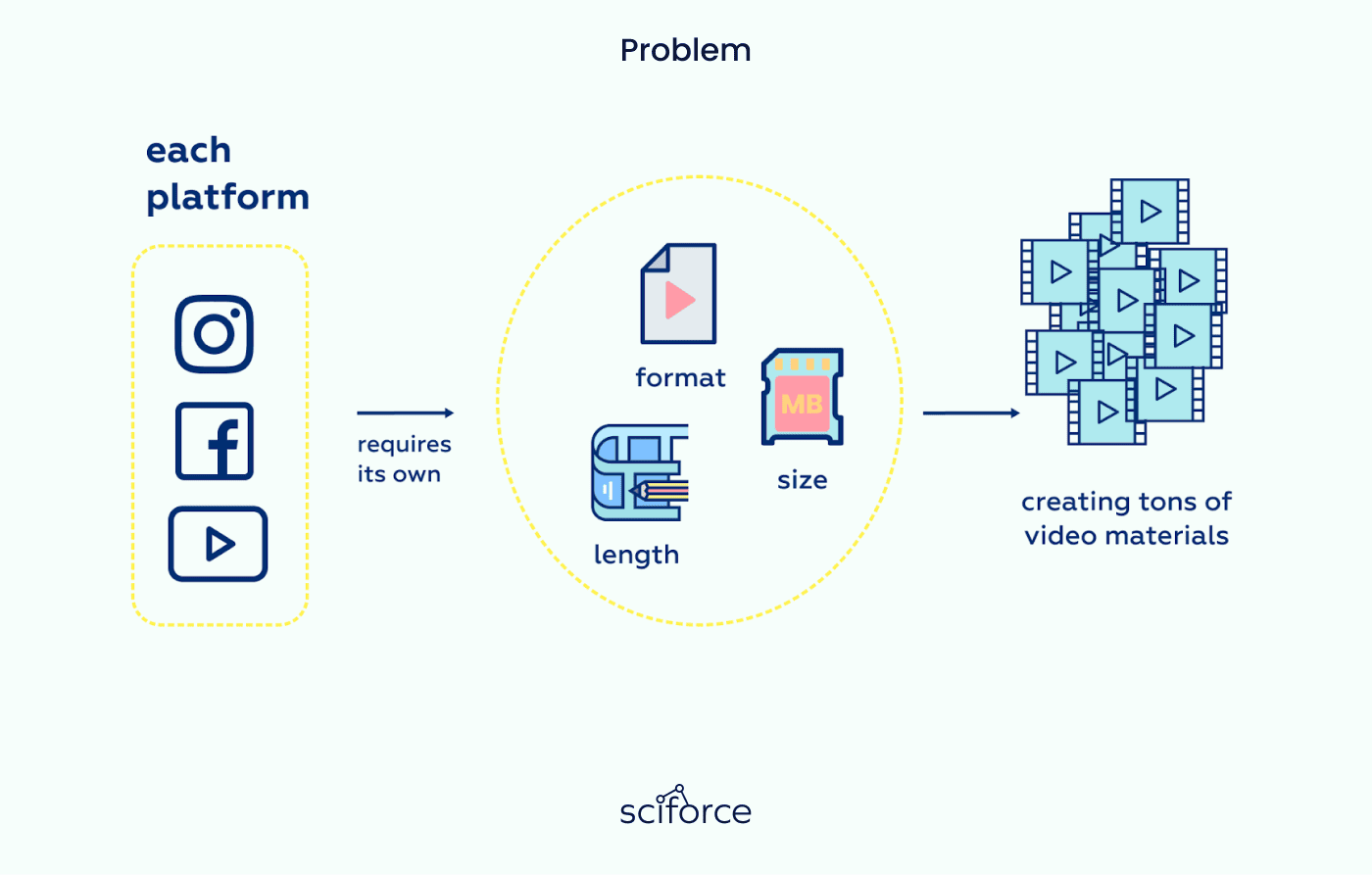
In the recent decade, as people have moved away from desktops to mobile devices, their consumption patterns have undergone significant transformation. One of such changes is the boost of video consumption from smartphones, which prompted mobile video advertising. Today, by creating a video tailored for mobile devices and the behavior of mobile users, advertisers can now achieve successful performance. At the same time, though growing in popularity, videos become shorter: in 2016, the average video length was 13.14 minutes, in 2017 6.07 minutes, and in 2018 it shrank to 4.07 minutes. So how is it possible to cut videos maintaining the content significance, and adjusting it to the viewer’s preferences? The answer seems obvious: you need to make your videos shorter and more content-intensive. But the reality is not that straightforward: each platform requires its format, length, and size, so you end up creating tons of video materials.

Challenge

video_1_15f5456bfa.png

Use Case Ready For Generative AI

Find out more with SciForce free checklist

The project objective was to develop a solution that would automatically cut and reshape a video according to the chosen social platform standards. The source videos were usually 30-second TV commercials that needed to be uploaded to many social media platforms, including Instagram, YouTube, and Facebook. The ultimate goal was to make a similar video shorter and, therefore, more content-intensive.

Solution

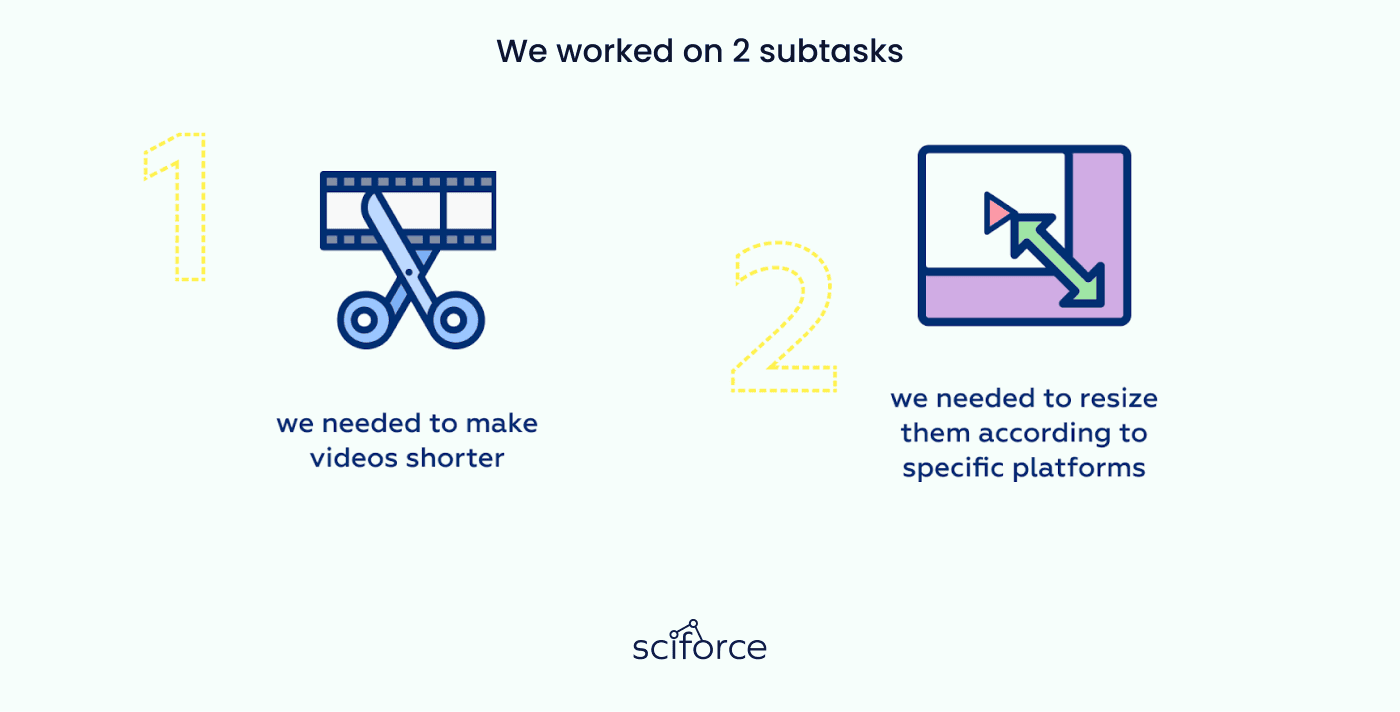
We worked on two subtasks: first of all, we needed to make videos shorter, and, secondly, we needed to resize them according to the requirements of specific social media platforms.
video_2_ac90951e2f.png

Subtask 1. Video Cutting

The source video length was approximately 30 sec., while the target length varied from 6 to 10 seconds. Therefore, we needed to select only the most relevant parts of the video and glue them together in a new and more content-intensive piece. To fulfill this subtask, we performed such steps:

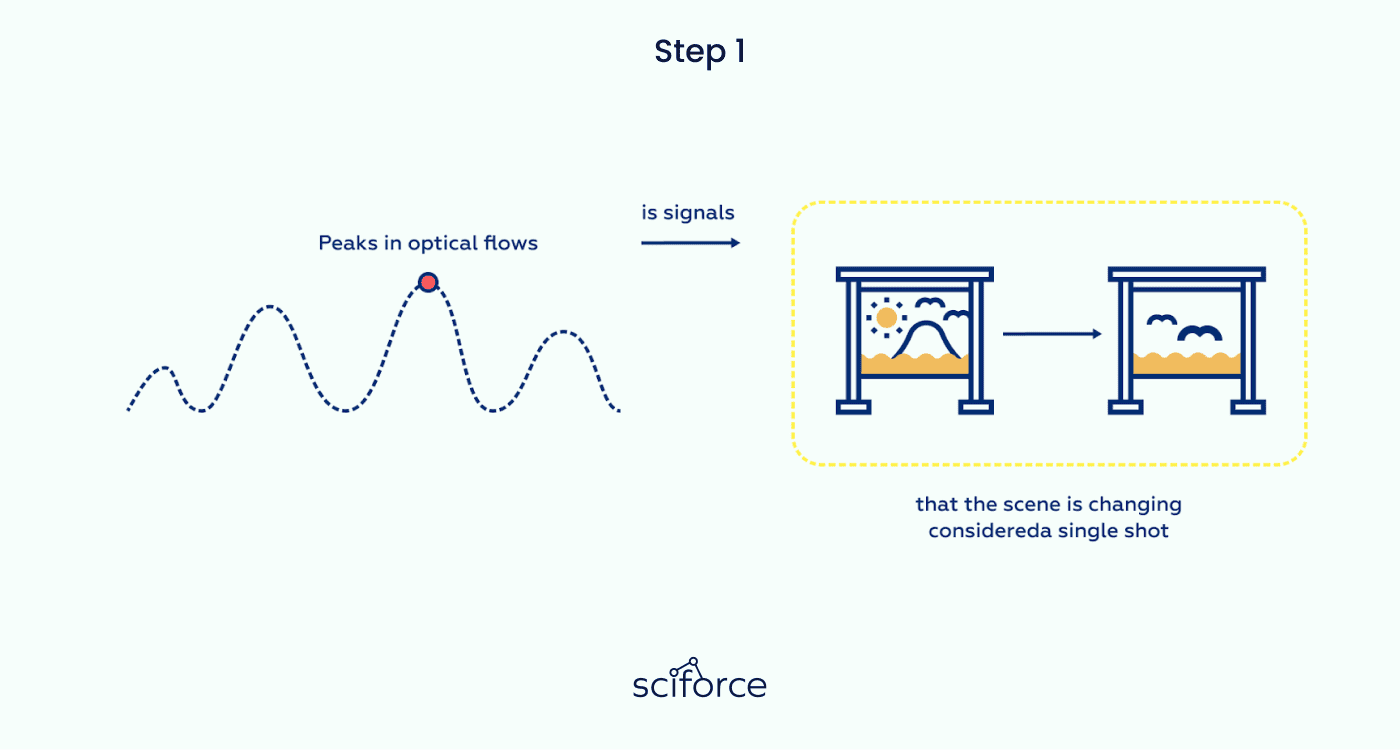
Step 1. The crucial part of cutting a video is to find relatively stationary shots that present similar information. To do so, we calculated optical flows – patterns of apparent motion of objects, edges, and surfaces of a scene caused by the relative motion between an observer and a scene. Peaks in optical flows can be used as signals that the scene is changing, therefore, a new shop begins. We used peaks as scene-changing markers and considered the zone between the adjacent peaks as a single shot.
video_3_4c8e836fca.png

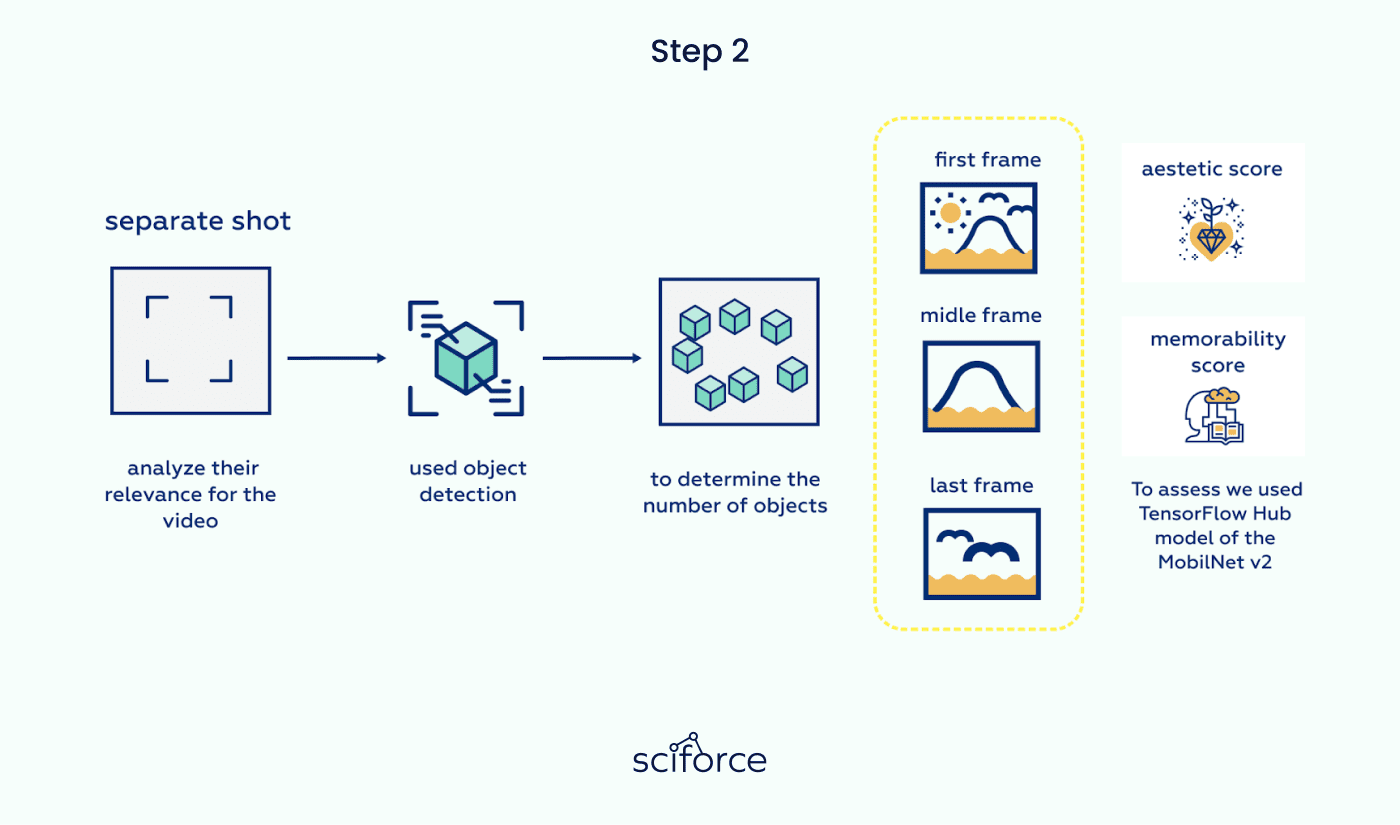
Step 2. After finding separate shots, we could analyze their relevance for the video. We used object detection to determine the number of objects present in the shot and its memorability and aesthetics levels. We estimated memorability and aesthetics scores for the first, middle, and last frames of each shot. To assess memorability and aesthetics, we used feature vectors from a TensorFlow Hub model of the MobilNet v2 family and classified them.
video_4_8ab41fba30.png

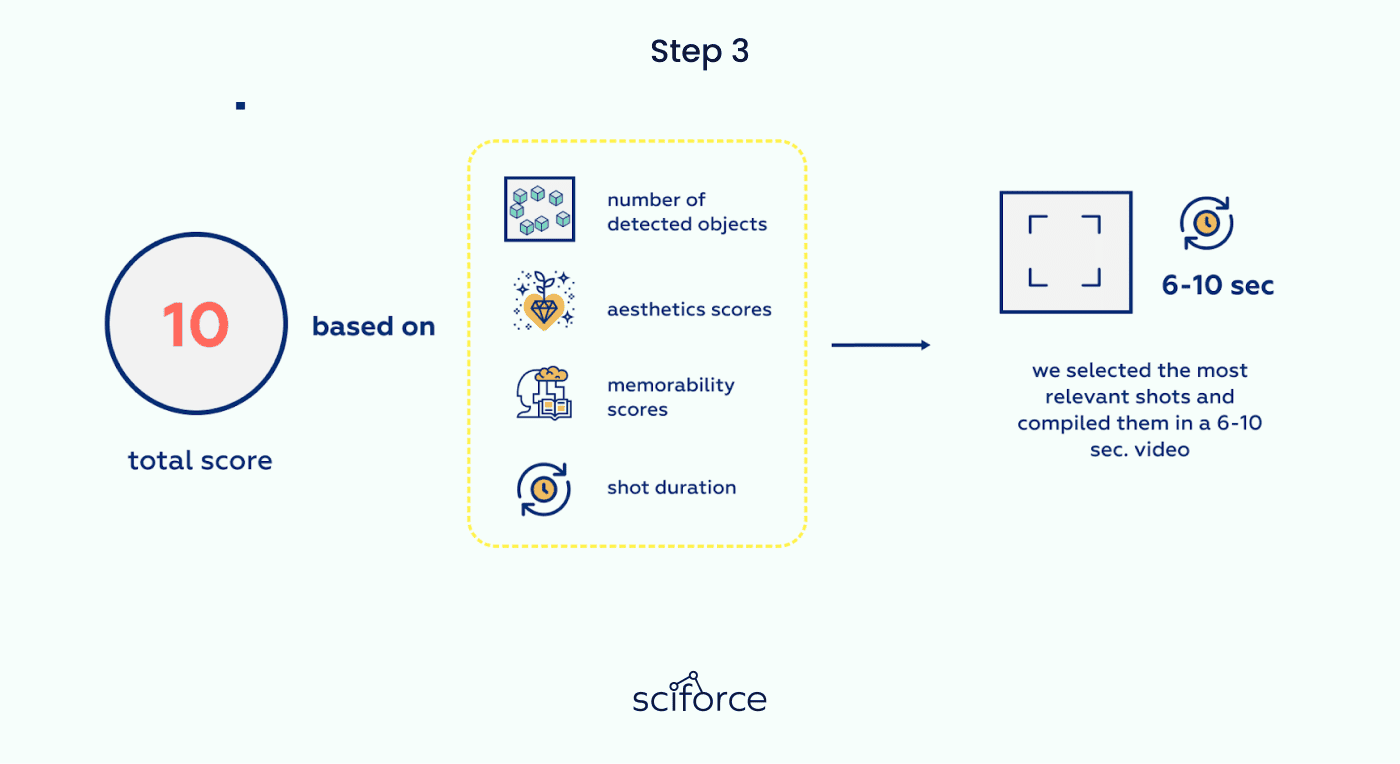
Step 3. We calculated a total score for each shot based on the number of detected objects, shot duration, and memorability and aesthetics scores. Afterward, we selected the most relevant shots and compiled them in 6-10 sec. video.
video_5_dfa35852ea.png

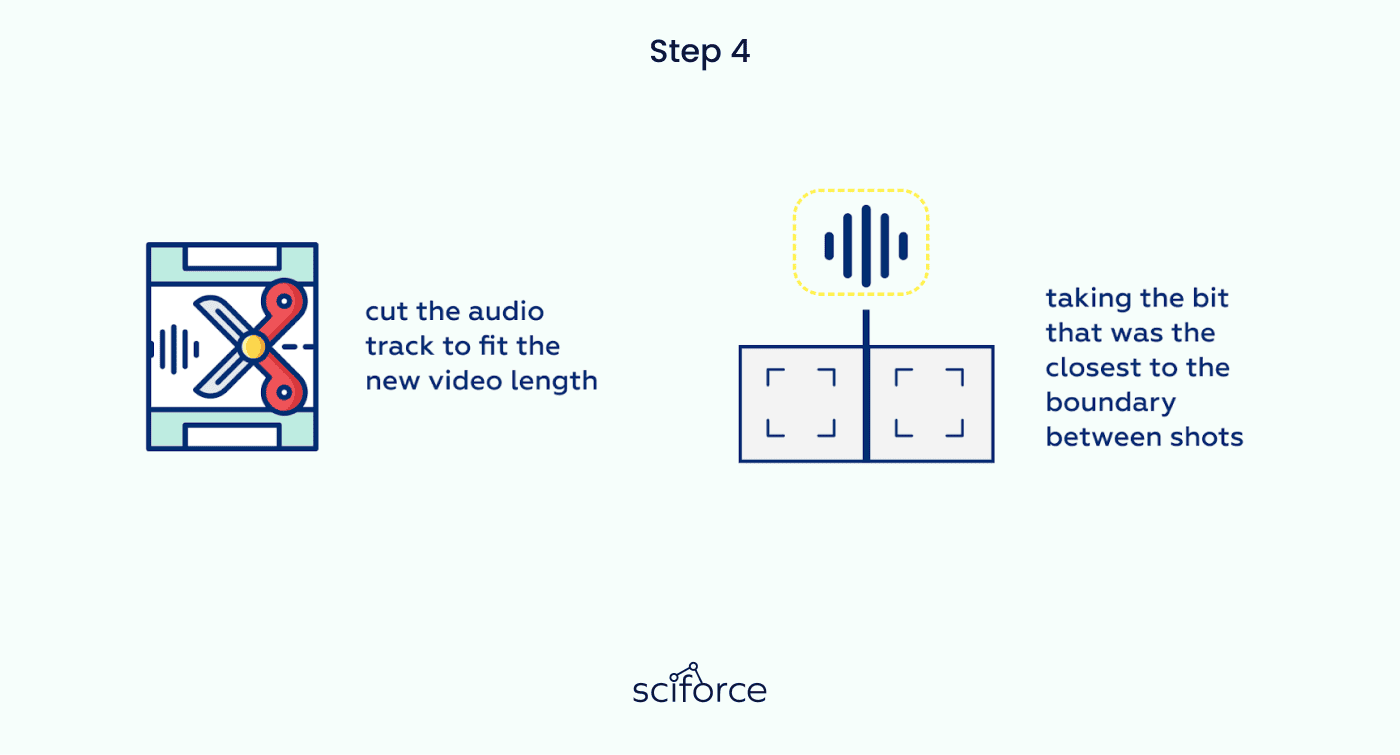
Step 4. We cut the audio track to fit the new video length by taking the closest bit to the boundary between shots.
video_6_ecc87d9233.png

Subtask 2. Video resizing

Depending on the platform, the video can be square or require a vertical orientation, which is uncommon for standard TV commercials. To make sure that the relevant information remains in the video, we needed to work on all objects and text segments present in the video:

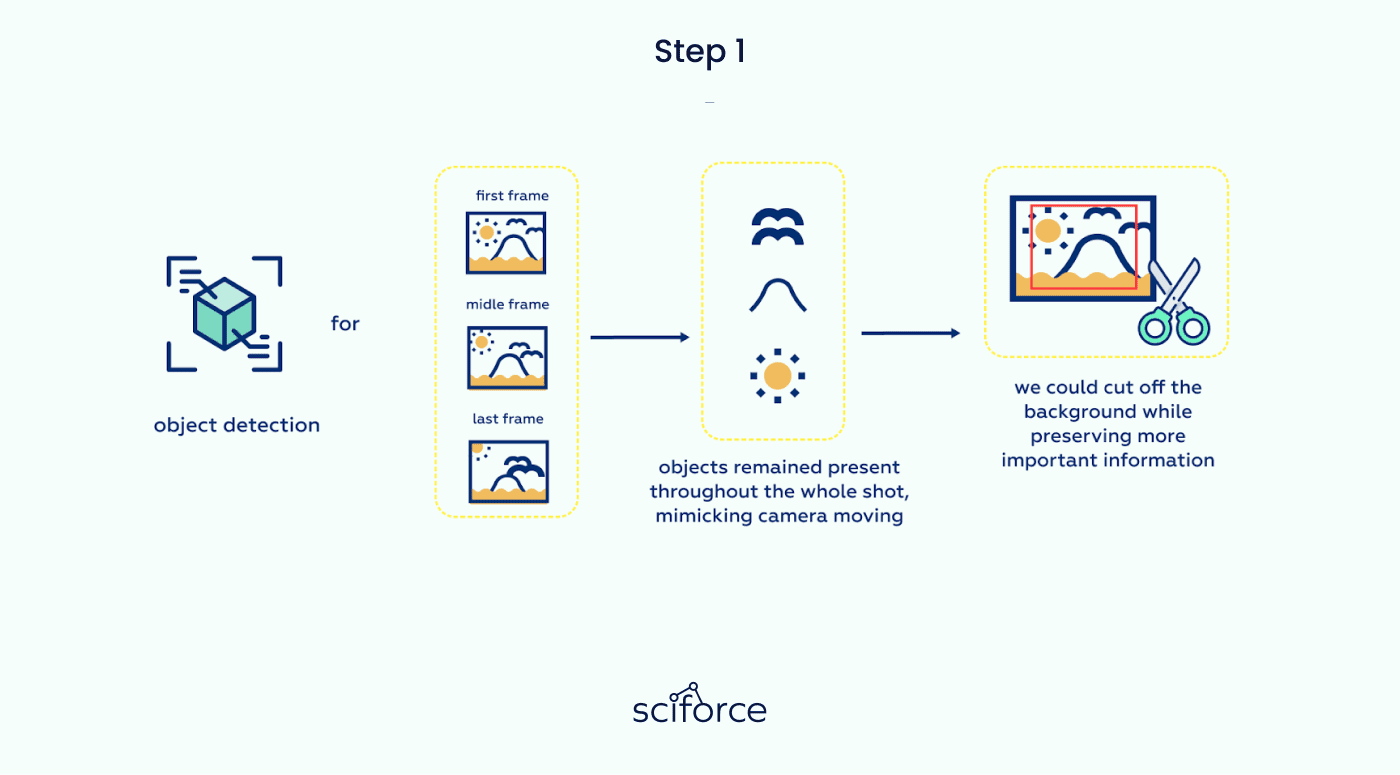
Step 1. We performed object detection for each shot's first, middle, and last frames against the background. We could ensure they remained present with objects detected throughout the whole shot, mimicking the camera movement. In this way, we could cut off the background while preserving more important information.
video_7_eafb359593.png

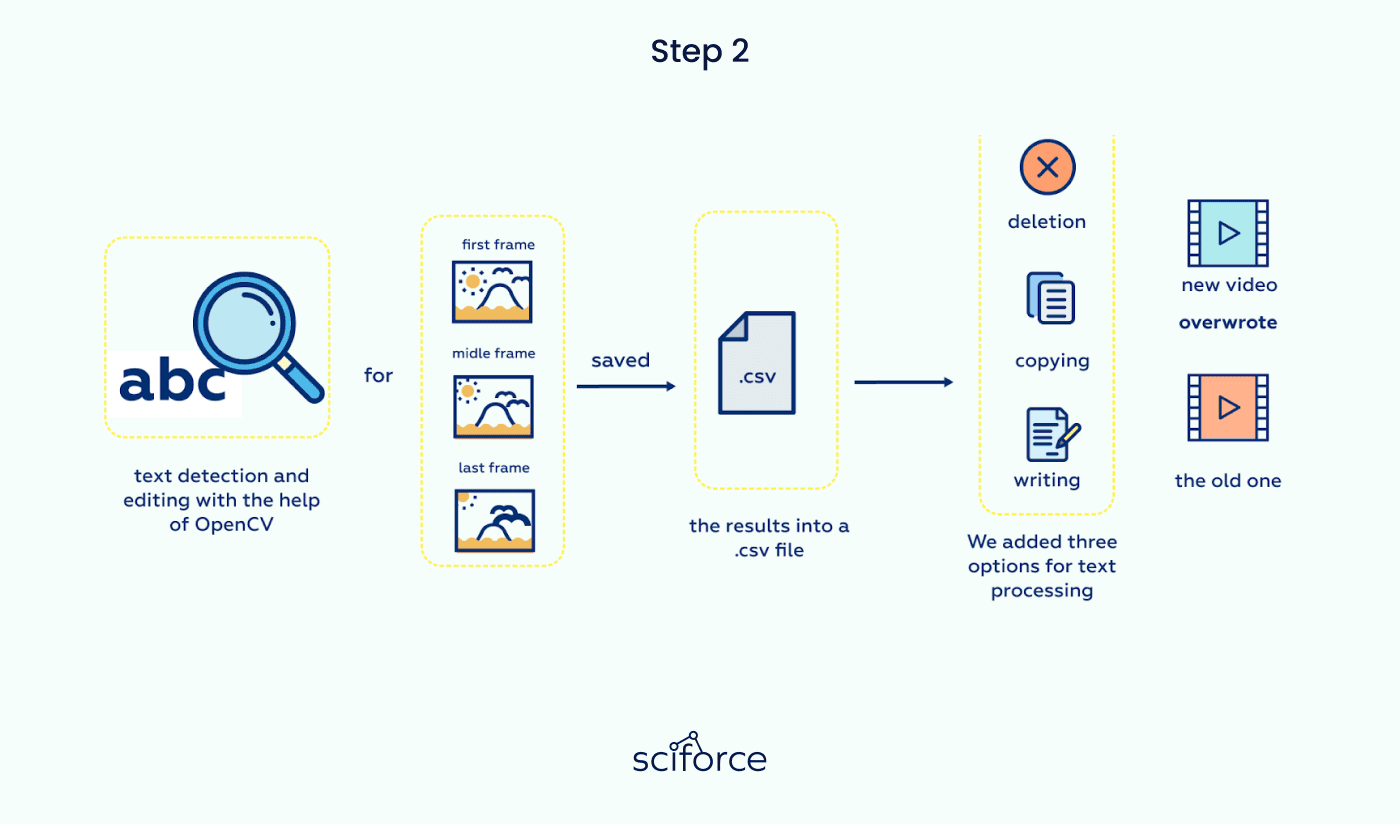
Step 2. We performed text detection and editing with the help of OpenCV. We detected text for each shot's first, middle, and last frames and saved the results into a .csv file. Furthermore, we added three options for text processing, including text deletion, copying, and writing. After completion of the required operations, a new video overwrote the old one.

video_8_ea2b0693aa.png

Development Journey

video_8_1_1f7dc96e86.png

Impact

We delivered a solution that allowed our clients to automatically resize video commercials to fit the requirements of the selected social media platform. With the process automation, they needed to create only one video, saving much time and effort on video trimming.

Our solution cracked the code. It allows video creators to make only 1 video and adjust it for different platform requirements, saving time and effort.


RELATED CASE STUDIES

View all Case Studies
AI-Driven Roof Modeling From Drone Imagery for for Insurance Company coverAI-Driven Roof Modeling From Drone Imagery for for Insurance Company

Our client is a U.S.-based startup specializing in automated roof measurement for the insurance industry. Their core business involves providing insurers with precise roof dimensions, structural layouts, and damage assessments based on drone imagery. To improve accuracy and reduce manual effort, they needed a custom software solution that could automatically reconstruct roofs in 3D, extract relevant measurements, and generate clean 2D plans suitable for underwriting and claims.

# PropTech
# AI / ML
# Big Data
# Computer Vision
Enabling Continuous DeploymentEnabling Continuous Deployment with Amazon Elastic Container Service and Infrastructure as Code

The client is a U.S.–based company developing a computer-vision platform for sports medicine. Its goal is to help professional teams and medical staff prevent injuries by analyzing basketball footage, detecting abnormal movements, and flagging potential risks for review. The project required building a DevOps infrastructure that would let the client’s product run reliably in the cloud and evolve without deployment bottlenecks. This meant designing a secure AWS infrastructure with isolated environments for development and production, automating delivery of containerized applications through CI/CD pipelines, and managing all resources as code for consistency and repeatability. By focusing on cloud-native services, scalability, and automation, the platform established an AWS DevOps setup for scalable AI or computer vision platforms that could grow and adapt reliably.

# AI / ML
# Big Data
# Computer Vision
# DevOps
Optimizing Multi-Zone Restaurant Service with Computer Vision for HospitalityOptimizing Multi-Zone Restaurant Service with Computer Vision for Hospitality

The client is a mid-sized restaurant chain with about 1200 locations in over 30 countries. Each restaurant provides full-service dining, where waiters take orders, serve food and manage table turnover. Most locations have two dining areas, which can make it hard for staff to keep track of all tables. The client wanted to improve AI for restaurant management by reducing wait times, speeding up table cleaning, and helping staff respond more quickly. Their goal was to use real-time table monitoring and smart video analytics to support better decision-making and improve the overall customer experience, showing how to track table status and wait times using AI in restaurants.

# Retail / E-commerce
# AI / ML
# Big Data
# Computer Vision
# Data Science
# DevOps
Smart video system for remote horse care and monitoringSmart Stable Monitoring System for Premium Remote Horse Care

The client is a private horse club that provides full-time care and boarding for pedigree horses owned by individuals. The smart farming & animal wellness club handles all daily responsibilities — feeding, cleaning, grooming, exercise, and health checks — as owners rarely visit in person. Some horses are fully owned by clients, while others are co-owned with the club as part of long-term investment agreements. Owners expect high standards of care and regular updates without having to contact staff directly. To meet this need, the club introduced an AI-powered horse care system with 24/7 video access and real-time stall condition tracking (temperature, humidity, etc.), and automatic alerts — helping owners stay informed about their horses at any time.

# AI / ML
# Big Data
# Computer Vision
# DevOps