Find out more with SciForce free checklist
Our client operates in the corporate training sector, specializing in aggregating courses designed specifically for businesses. These courses support data-driven workforce learning and skill development platforms for enterprise employees. Their AI skill development platform serves as a comprehensive hub for educational content.
AI in corporate learning acts as a centralized repository for both internally developed training materials and a diverse range of external courses. It enables role-based learning path personalization with AI, delivering learning paths aligned with career goals and job roles, while providing companies with robust tools to track and manage their workforce’s professional growth.
1. Cold Start Problem
The system initially struggled to make accurate recommendations for new users or new courses due to the lack of historical interaction data. For new users, the system lacked sufficient data on their preferences and behavior, such as courses viewed, liked, or completed, making it difficult to deliver personalized recommendations.
Similarly, when new courses were introduced, there was no historical interaction data (e.g., user ratings, views, or enrollments) to inform the recommendation engine. This made it challenging to connect users with relevant new content, leading to a less engaging user experience, especially for those starting their learning journey. Our language learning AI case approached that same starting-point gap from the content side: AI-generated materials gave new learners a personalized entry point before any interaction history existed.
2. Course Classification:
The client needed to efficiently categorize a vast and varied course library into specific business areas such as marketing, finance, human resources, and IT. However, many courses had content that overlapped multiple categories, leading to ambiguity in classification.
For example, a course titled "Digital Marketing Strategies" could be relevant to both "Marketing" and "IT." This overlap created challenges in ensuring that employees could easily find courses most relevant to their specific roles and development needs.
3. Recommendation System
The platform required machine learning recommendation systems for employee upskilling that could provide personalized learning paths based on each employee's role and career goals, while adhering to strict access controls. Unlike open platforms, where users have broad access to content, the client’s platform had to restrict course visibility based on job functions. This restriction made it difficult to deliver tailored recommendations without violating access permissions, adding complexity to HR learning automation.
4. Data Quality
The accuracy of course categorization and recommendations was compromised by the inconsistent and noisy data provided. Variations in course titles, descriptions, and user interaction data led to challenges in ensuring consistent and precise data inputs for the machine learning models. These inconsistencies needed to be addressed to improve the reliability of the classification and recommendation outputs.
5. Content Analysis Limitations:
Initially, the system was limited to analyzing only textual data from course titles and descriptions, which constrained the depth and accuracy of the recommendations. This approach overlooked the rich content within course materials, such as video lectures and supplementary resources, which often contained crucial information that could better inform scalable personalized learning solutions for enterprise LMS. This limitation resulted in a less comprehensive understanding of the course content and reduced the overall effectiveness of the recommendations.
1) Automated Course Classification
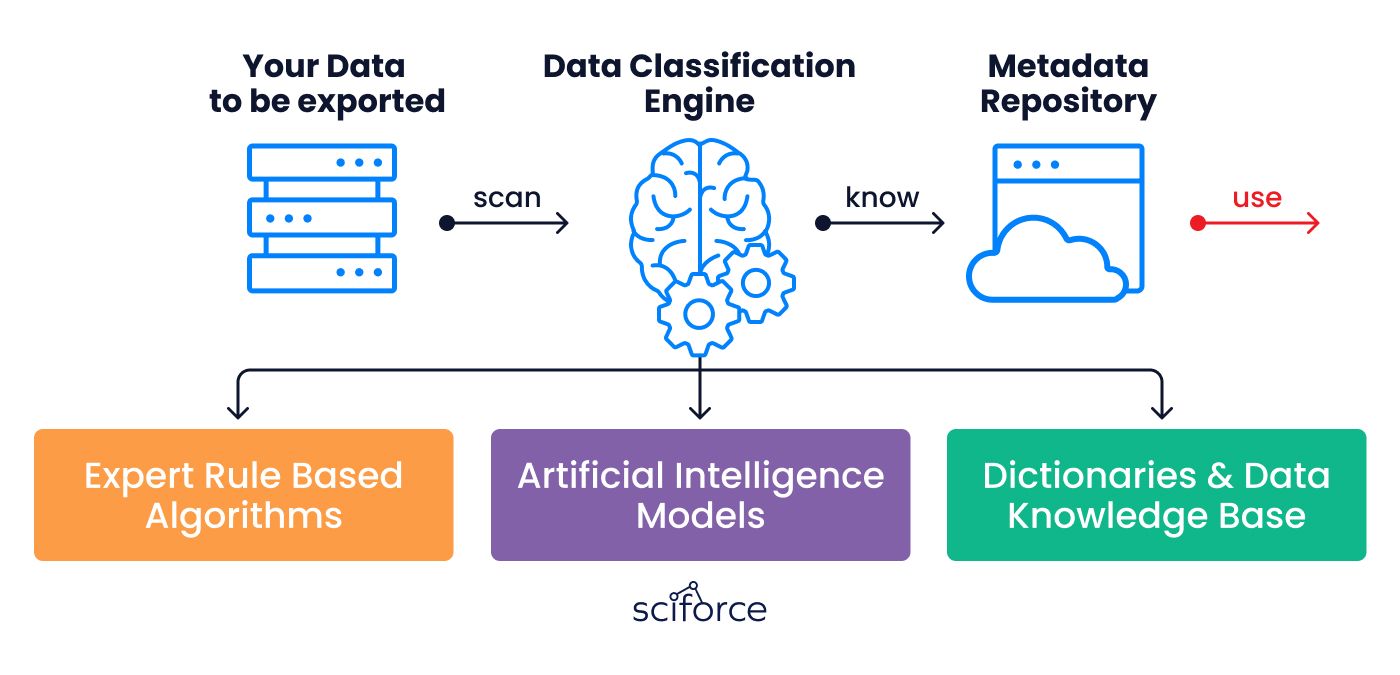
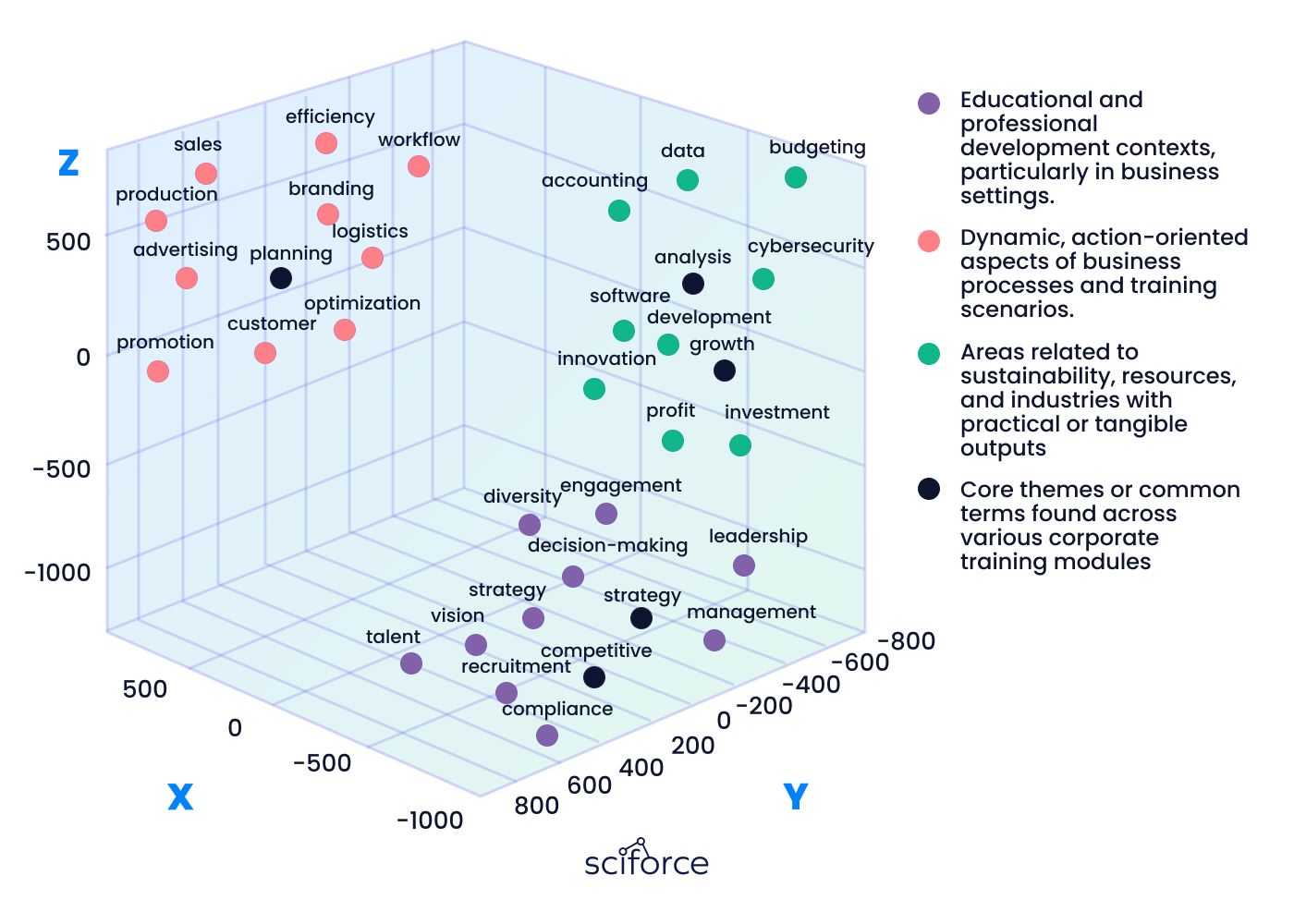
Our solution leverages automated course classification using NLP for EdTech to assign each course to multiple relevant categories, such as "Marketing," "Finance," "Human Resources," and "Management."
The system goes beyond simple keyword matching; it performs NLP-based course analysis of course titles, descriptions, and other metadata to accurately tag each course. It also continuously updates course categories as new courses are added to the platform, keeping the course library organized and current. This ensures precise content categorization aligning with both corporate training objectives and broader educational trends.
2) Hybrid Recommendation System:
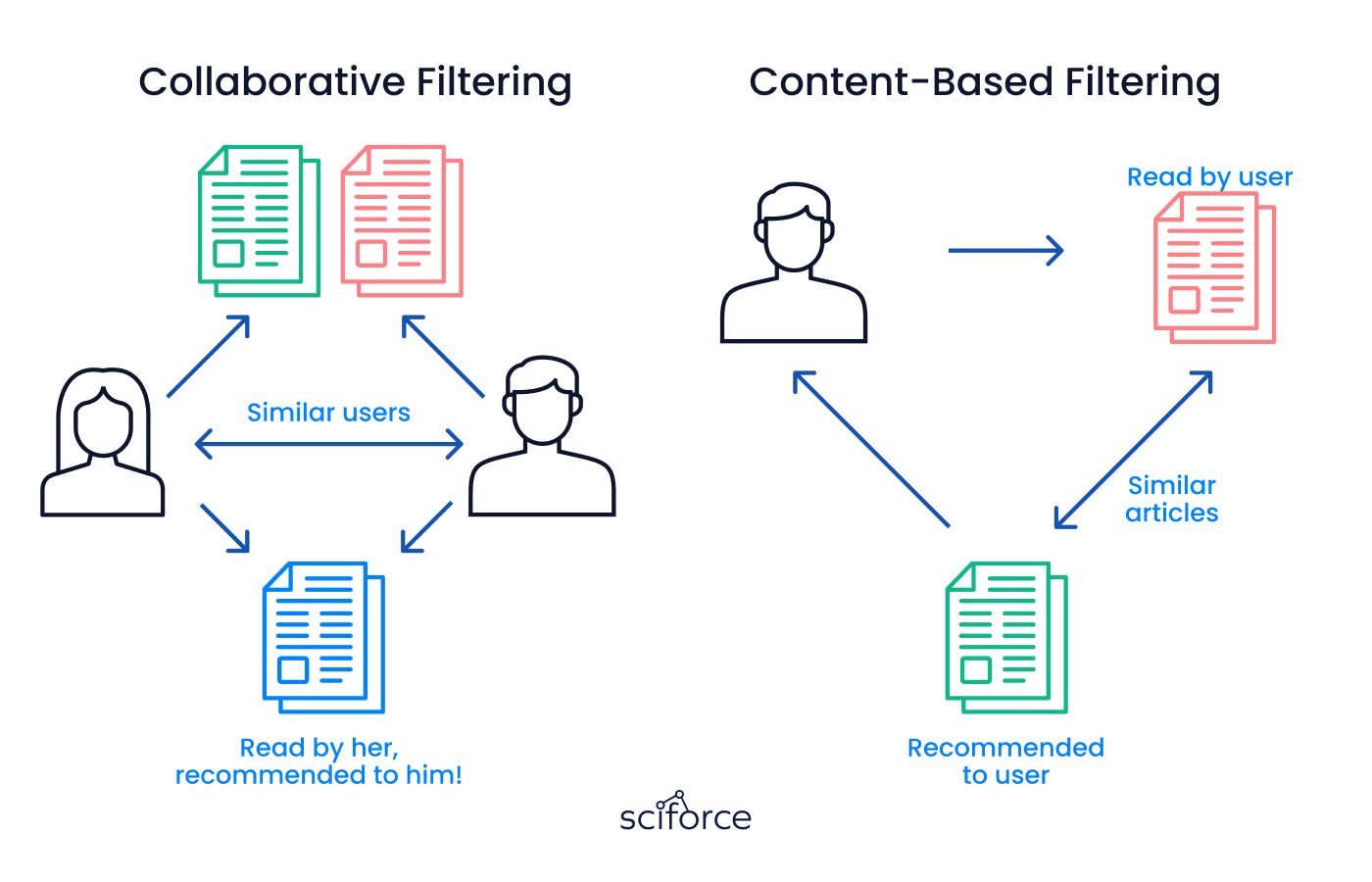
We developed hybrid recommendation engines for learning management systems that combine content-based filtering and collaborative filtering to deliver data-driven personalized learning through tailored course suggestions:
- Content-Based Filtering:
The system looks at course titles and descriptions to create detailed profiles for each course, called vector embeddings – detailed profiles that capture the essence of each course. The same embedding-based retrieval logic powers enterprise knowledge systems: our LLM enterprise data processing case uses vector search to match natural language queries against unified HR, CRM, and financial data.
By comparing these profiles, the system identifies and recommends courses with content similar to those an employee has already engaged with, aligning with their specific learning objectives and interests.
- Collaborative Filtering:
Our system tracks user interactions, such as viewed, rated, or completed courses, to identify behavioral patterns.
By recognizing similarities in user behavior, the system recommends courses that have been popular among peers with comparable learning preferences.
Enhancing the discovery of new and relevant courses, encouraging continuous learning.
3) Data Processing:
We created a system for data preprocessing for ML, efficiently gathering and cleaning data about courses and user interactions, ensuring it was ready for analysis in our classification and recommendation systems:
- Data Gathering:
We used web scraping tools to collect detailed information about courses, including titles, descriptions, and other key details from the client’s platform.
We also gathered data on how users interacted with courses, such as which courses they viewed, rated, or completed.
- Data Cleaning and Standardization:
The raw data had some inconsistencies and unnecessary information, so we developed processes to remove duplicates, correct incomplete entries, and eliminate unnecessary noise.
We standardized the data into a consistent format, making it easier to analyze and use in machine learning models.
- Data Integration:
The cleaned data was stored in a centralized database, ensuring that both the classification and recommendation systems had access to accurate and high-quality information.
This approach helped improve the accuracy of course recommendations and classifications by providing a solid data foundation.
Recommendation System Feature
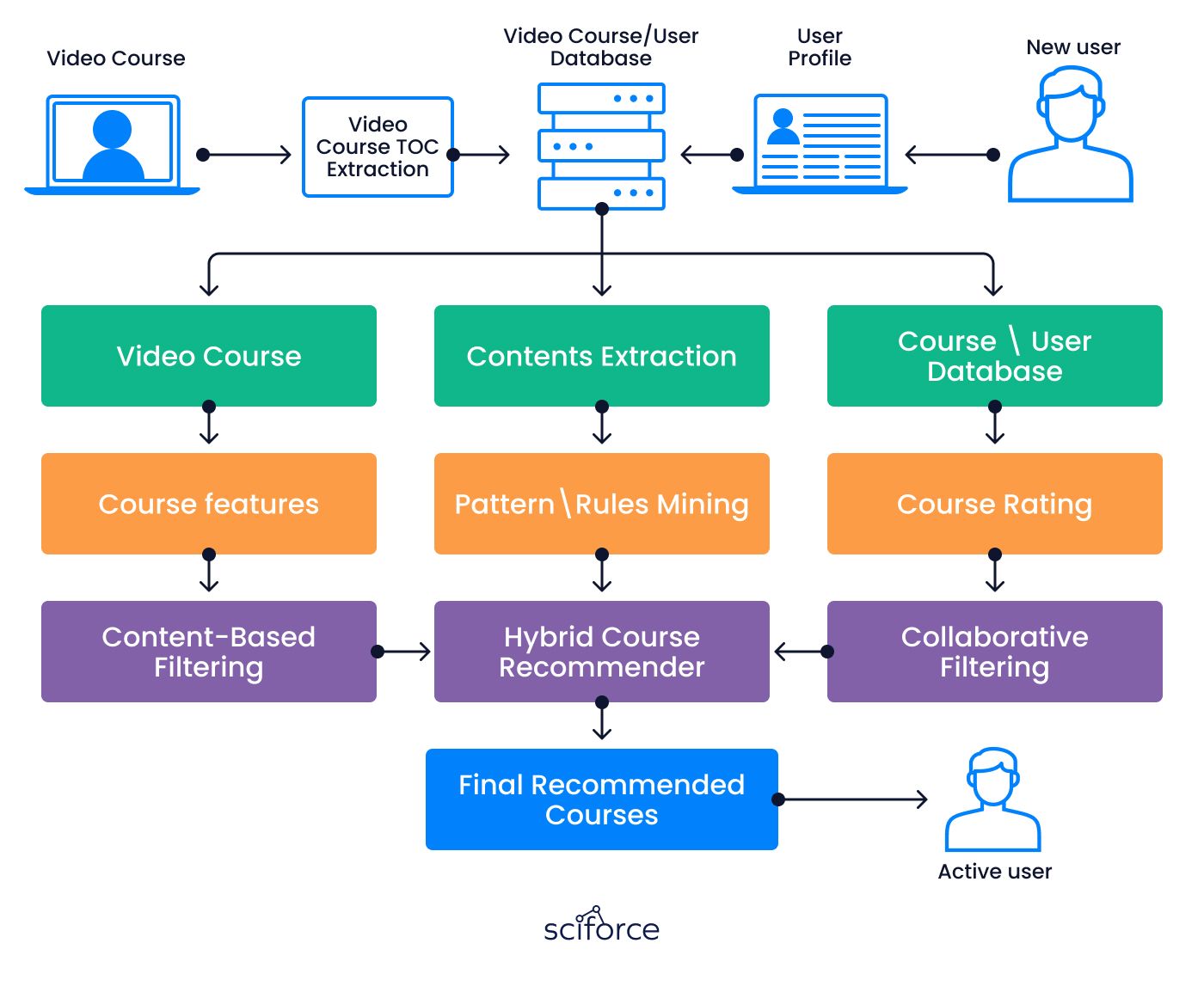
The hybrid recommendation system combines content-based and collaborative filtering to deliver personalized course suggestions. It uses course titles and descriptions to recommend similar content based on users' past views, and analyzes user interactions to suggest courses popular among users with similar interests.
Internal and External Content Integration:
The platform supports both company-created courses and those from outside providers, giving employees access to a broad range of learning options. This ensures a rich and varied training environment.
Course Management Tools:
Includes features for organizing and updating the course catalog, making it simple for administrators to keep training materials current and well-organized. This ensures that employees have access to the latest courses.
Scalability for Business Growth:
Designed to handle a wide variety of courses across different business areas, like marketing and finance, the platform can grow and adapt to meet the changing training needs of companies.
Access Control Integration:
Sets up a system that limits course access based on an employee’s job role. Employees can only see and take courses that are relevant to their specific jobs, ensuring they meet company training requirements. This system checks user permissions before allowing access to ensure no unauthorized viewing of course content.
Dynamic Filtering:
Tailors AI systems for employee reskilling and career path alignment for each employee by considering their role and access rights. This ensures that the courses suggested are relevant to their job duties and career goals. If an employee’s role changes, the system updates their access and recommendations automatically.
Adaptive Learning Algorithms:
Learns from user interactions and feedback to improve the accuracy of course categorization over time. This means the system gets better at understanding course content and placing courses in the right categories. When engagement mechanics matter as much as content matching, our gamification case shows how ELO-based difficulty scaling and live leaderboards drive the same retention goal through a different mechanism.
1. Initial Understanding and Requirement Gathering
The development process began by analyzing the client's business model, which focused on aggregating online courses for corporate training. The primary objectives were to automate the classification of these courses into relevant categories such as marketing, finance, and human resources, and to develop a recommendation system that could personalize course suggestions for employees based on their roles and learning history
2. Data Collection and Preparation
Established a system to efficiently gather and prepare data from the client’s platform. This involved using web scraping tools to extract course titles, descriptions, metadata, and user interactions, complemented by data from existing client databases for a richer dataset.
3. Data Cleansing
Cleaned the data to remove noise, like HTML tags and duplicates, and standardized for consistency and extracted key features, such as course attributes and user behaviors to support deep learning for education. Additionally, we implemented an ongoing update mechanism to ensure data remained current, enabling accurate course classification and personalized recommendations.
4. Designing the System Architecture
Built a flexible and scalable system to automate course classification and provide personalized recommendations. The design is modular, allowing us to easily add new features and data sources like video transcripts as needed. By using distributed computing, the system can handle more courses and users efficiently, ensuring quick processing. With APIs and microservices, we connected the platform seamlessly with third-party tools, enhancing its functionality.
5. Classification System Development
Developed a machine learning system that uses multi-labeling to categorize each course into several relevant categories (marketing, finance etc). This system analyzes course titles and descriptions to accurately reflect the comprehensive nature of each course. By tagging courses with multiple categories, we improve discoverability and ensure users can easily find content that meets their learning needs.
6. Hybrid Recommendation Implementation
We developed a hybrid recommendation system using content-based and collaborative filtering to provide personalized course suggestions. Content-based filtering uses vector embeddings from course titles and descriptions to recommend similar content. Collaborative filtering analyzes user interactions, like course views and ratings, to identify patterns and suggest courses based on similar user behavior.
7. Access Control and Permissions Integration:
We integrated a role-based access control system to ensure employees only view courses relevant to their job roles. This involved implementing dynamic filtering within the recommendation system, which customizes course suggestions based on each employee’s access rights and job functions.
Want to see similar results for your educational platform? Contact us to explore how we can enhance your EdTech solution and deliver tailored learning experiences to your clients.