• Services
    LLM
    AI & ML
    Digital Healthcare
    Data Science
    DevOps
  • Products
    Jackalope
    EyeAI
  • Industries
    Healthcare
    Agriculture
    EdTech / LMS
    Retail / E-commerce
    Manufacturing
  • Resources
    Blog
    Case Studies
    Expert Guides
  • Company
    About us
    Careers
  • Contact us
logo
Services
LLMAI & MLDigital HealthcareData ScienceDevOps
Industries
HealthcareAgricultureEdTech / LMSRetail / E-commerceManufacturing
Case StudiesAbout UsBlogCareers
Our contacts
+380(66)54-32-579
sales@sciforce.tech

Get monthly digest of innovations

This site is protected by reCAPTCHA and the Google Privacy Policy and Terms of Service apply.
Social Media:
Privacy Policy © 2026 Sciforce
5.0

Machine learning: Changing the Beauty Industry

Published: July 9, 2019
# Computer Vision

2026 Generative AI Opportunity Map: Where Each Industry Wins (and Risks Losing)

Find out more with SciForce free whitepaper

Several years ago a friend of mine, who was a biologist, was talking about their weird experiments. They were shaving mice and if this was done this in a particular way, the mice remained bald for the rest of their short lives. Their team was dreaming to extrapolate this magic technique to humans and shake the waxing industry.

It is unlikely that they have succeeded, but the gist of the story is that even serious science tries to serve beauticians if they get a chance.

So, maybe, it is time for machine learning to transform beauty salons where traditional biology and pharmacy fail?

Obviously, machine learning can help the beauty industry in several ways, from providing statistical basis for attractiveness and helping people look more attractive to develop products which would tackle specific needs of customers.

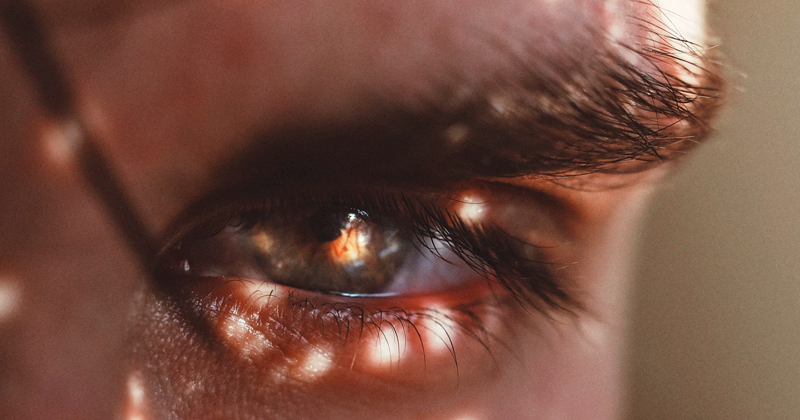
The core of the future technology is, without doubt, computer vision — the part of AI that deals with the theory and technology for building artificial systems that obtain information from images or multi-dimensional data and further process it. In the beauty industry, it is expected that computer vision would help recognize facial features, analyze the data obtained and come up with a prediction or a conclusion about the appearance.

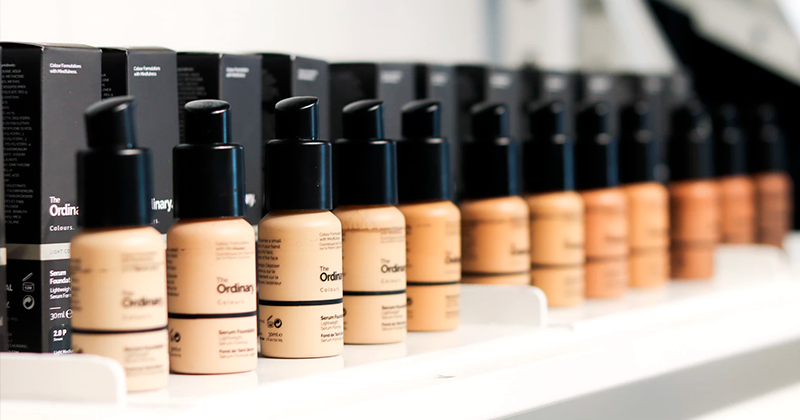
Image Credit: unsplash.com

On the one hand, the ability of AI-driven computer vision to properly analyze a human face is incredibly handy for testing purposes and it might help end users choose products and techniques that would be perfect for them. In the past, it was nearly impossible to know how a new eye shadow or a face cream will actually look on the skin without physically testing them. At present, armies of data scientists are working on AI systems that can understand the human face. Once mastered, the ability to test out new looks and products will become exceptionally easy and realistic.

On the other hand, AI can make a breakthrough in the development of new formulas. Data has always been used to create better products and optimize formulas. Traditionally, a perfume is physically tested, reviewed and compared before being released. At present, data can be used to optimize specific scent ratios to create the next hit. Similarly, data analysis will lead to better cosmetics. Leveraging data means better, longer-lasting formulas.

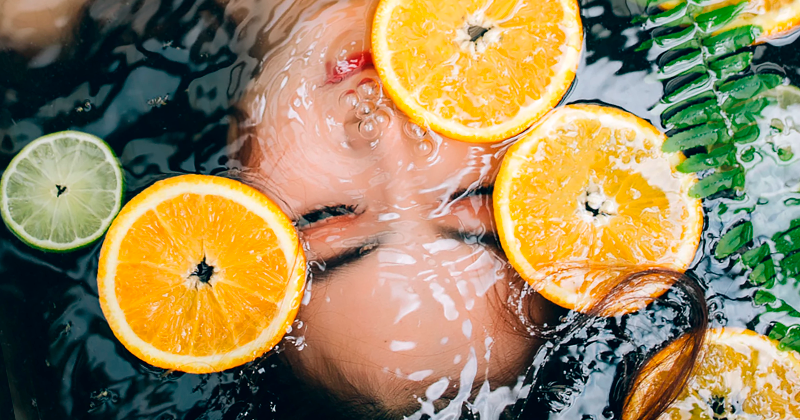
Image Credit: unsplash.com

Let’s now have a look at how businesses incorporate these ideas in their products.

The first and the most obvious approach is to use big data to determine what is attractive from the statistical perspective:

  • Beauty.ai uses deep learning to determine the most beautiful people on earth. Their algorithm analyzes wrinkles, face symmetry, skin color, gender, age group, and ethnicity to determine the global winners.
  • Yahoo! Research (previously Yahoo! Labs) has also developed a deep learning model to categorize photographic portraits based on various image attributes and proving that “race, gender, and age are largely uncorrelated with photographic beauty” (Predictive Analytics by Eric Siegel, 2016).

At this stage, the impact of machine learning does not sound very positive: you may understand what attractive is, according to machines, but what can you do with this knowledge rather than stand in front of the mirror comparing yourself with the mathematically beautiful people.

Luckily, the next step for businesses striving to link machine learning with beauty is to develop personalized approach to finding your style. Both startups and industry leaders offer machine-based advice on finding your personal style and feeling more attractive — statistically proved — in the eyes of the others:

  • Sephora uses worldwide tests and more than 1,000 combinations of foundation to help customers find their perfect match using the ColorIQ app. The app records 27 color-corrected images, eight light settings and one ultraviolet light to capture the skin conditions of women.
  • Mira uses computer vision to solve the problem of finding influencers, images and videos that address a specific eye shape and complexion. Given a set of images of faces, the company looks for an intuitive visual similarity metric between eyes and a classifier that captures human-labeled properties to better decide on products and techniques.

Image Credit: unsplash.com

Another group of developments is connected with applying machine learning and AI to create new skincare products which would be customized according to your skin type, age — and medical history:

  • Proven creates personalized skincare products based on the “largest beauty database in the world”. It uses machine learning to learn connections between different product categories, ingredients and review ratings, then offer ingredient recommendations for consumer products.
  • Curology uses machine learning to analyze users’ skin type, skin goals and medical history. Afterwards, users are matched with a medical professional who designs custom formulas to target individual’s skin care needs.
  • Function Of Beauty (FoB) uses machine learning to create customized shampoo and conditioners with different ingredient combinations based on the hair type, hair structure, hair goals and other preferences.

Some businesses go so far as to develop applications to determine your skin needs and come up with personalized products:

  • Olay, a drugstore brand of Procter & Gamble, , for instance, launched Skin Advisor app, based on a deep learning algorithm which analyzes skin using selfies and recommends beauty products.
  • A similar idea is central to Atolla Skin Lab solutions. So far, the company uses a specialized database in conjunction with a machine-learning algorithm to connect combinations of ingredients to skin attributes, based on skin hydration, oil content, sun damage, age, and skin concerns and goals. Atolla is working on a smartphone app which would rely on “computer vision” to track results, improving the algorithm and allowing the brand to make adjustments if necessary.

Image Credit: unsplash.com

Moreover, with academia and research teams being often ahead of the industry, machine learning, deep learning, and artificial intelligence algorithms seem to be the basis of certain brilliant ideas. Some of my favorites include:

  • Identification of the face shape using machine learning and image processing techniques (Gunasinghe et al., 2016)
  • Virtual makeup using image processing techniques (Oztel et al., 2015)
  • Detection of facial retouching using supervised deep learning (Bharati et al., 2016)
  • Detection, analysis and digital removal of makeup from an “image of a human face wearing makeup” in order to predict facial beauty (Patents, 2015)

It’s not a secret that the global spending on skincare tops many billions and — according to dermatologists — much of it goes to waste on ineffective or incompatible products. This gives AI with its machine learning and computer vision techniques opportunities to change the rules and finally fully satisfy the customers.
RELATED BLOG ARTICLES

View all Articles
Improving Diagnostic Accuracy and WorkflowAI in Medical Imaging: From Diagnostic Accuracy to Clinically Usable Workflow

A radiologist on a standard hospital shift may read dozens to well over a hundred imaging studies, depending on subspecialty, setting, shift structure, and case complexity. Each one is a search for something that might be subtle, easy to miss, or buried in noise. At that volume, non-trivial discrepancy or error rate is a known risk in radiology practice, especially under high workload and time pressure. Radiologists are working through growing imaging volumes with a workforce that has never full

# Healthcare
# AI / ML
# Computer Vision
# Data Science
From Medical Devices to Smart Cameras: DevOps for AI-Powered ProductsFrom Medical Devices to Smart Cameras: DevOps for AI-Powered Products

AI-powered products can create real value, but only when they continue working reliably in the hands of customers. What makes this difficult is that their behavior doesn’t stay fixed after release. As data changes, so does model performance, which means that quality can decline even when no one touches the code. According to the 2024 DORA report, elite teams typically deploy on demand (multiple times per day), recover from failed deployments in under an hour, and keep change failure rates around

# Healthcare
# AI / ML
# Computer Vision
# DevOps
Computer Vision Model Struggles in the Real WorldWhy Your Computer Vision Model Struggles in the Real World

A computer vision model can look perfect during testing and then fall apart the moment it meets real life. The contrast is often dramatic. An MIT review found some face-analysis systems making mistakes on 34.7% of dark-skinned women, while the error rate for light-skinned men stayed under 1%. In agriculture, models that scored 95–99% accuracy on clean lab photos fell to 70–85% on real crops. And in radiology, an RSNA review showed four out of five models performing worse on data from another hos

# Agriculture
# Healthcare
# Tech
# Retail / E-commerce
# AI / ML
# Computer Vision
Best Coding CopilotsWhat the Best Coding Copilots Can Do for You in 2025

Coding is changing fast, and AI is now writing much of it. In 2025, more than 15 million developers use copilots like GitHub Copilot, Google Gemini Code Assist, and OpenAI’s coding tools to work faster and with fewer mistakes (GitHub usage data). Surveys show that 9 out of 10 engineering teams rely on AI assistants, with many reporting 25–50% productivity gains. The newest trend is the rise of specialized copilots for speech recognition and computer vision. These tools include built-in knowledge

# AI / ML
# Computer Vision
# Data Science
# DevOps
# Speech Processing
# LLM