• Services
    LLM
    AI & ML
    Digital Healthcare
    Data Science
    DevOps
  • Products
    Jackalope
    EyeAI
  • Industries
    Healthcare
    Agriculture
    EdTech / LMS
    Retail / E-commerce
    Manufacturing
  • Resources
    Blog
    Case Studies
    Expert Guides
  • Company
    About us
    Careers
  • Contact us
logo
Services
LLMAI & MLDigital HealthcareData ScienceDevOps
Industries
HealthcareAgricultureEdTech / LMSRetail / E-commerceManufacturing
Case StudiesAbout UsBlogCareers
Our contacts
+380(66)54-32-579
sales@sciforce.tech

Get monthly digest of innovations

This site is protected by reCAPTCHA and the Google Privacy Policy and Terms of Service apply.
Social Media:
Privacy Policy © 2026 Sciforce
5.0
Building a Unified Medical Vocabulary Framework Aligned with OMOP CDM cover

Building a Unified Medical Vocabulary Framework Aligned with OMOP CDM

Published: March 19, 2025
# Healthcare
# AI / ML
# Big Data
Our client develops standardized medical vocabularies that unify data from different sources, ensuring consistency and interoperability, to support observational studies and generate real-world evidence (RWE) analytics. Their work helps researchers, data scientists, and healthcare professionals conduct data-driven healthcare research, integrating and analyzing medical information using established standards like SNOMED CT, LOINC, and RxNorm. By structuring and maintaining the unified medical dictionaries, they support large-scale research, improve data accessibility, and help healthcare providers to make decisions based on up-to-date evidence. Their approach allows global medical collaboration and applying data-driven insights in medical practice and research.

Challenge

AI in Healthcare

Find out more with SciForce free playbook

A standardized vocabulary must include:
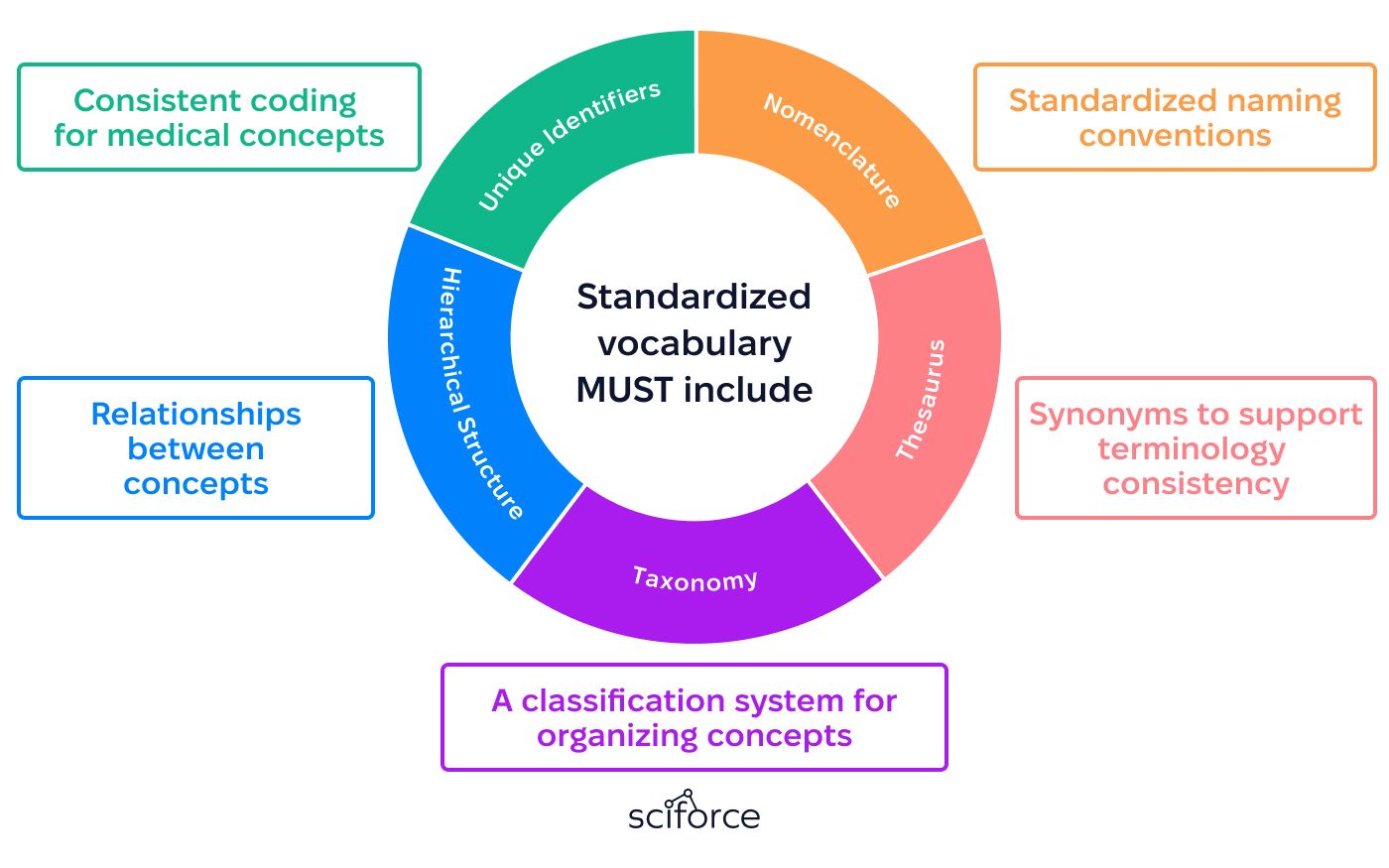
  • Unique Identifiers – Consistent coding for medical concepts
  • Nomenclature – Standardized naming conventions
  • Thesaurus – Synonyms to support terminology consistency
  • Taxonomy – A classification system for organizing concepts
  • Network hierarchy – Upward/downward relationships augmented with lateral associations between concepts

01 (3).jpg

Additionally, all input data must be normalized into a unified format, utilizing standardized terminologies and controlled vocabularies, to enable consistent querying and interoperability across healthcare systems. This requires expertise in medical ontology, engineering, hierarchical modeling, and domain-specific contexts to ensure accuracy and seamless integration for robust observational research.

1. Semantic Integration Across Sources

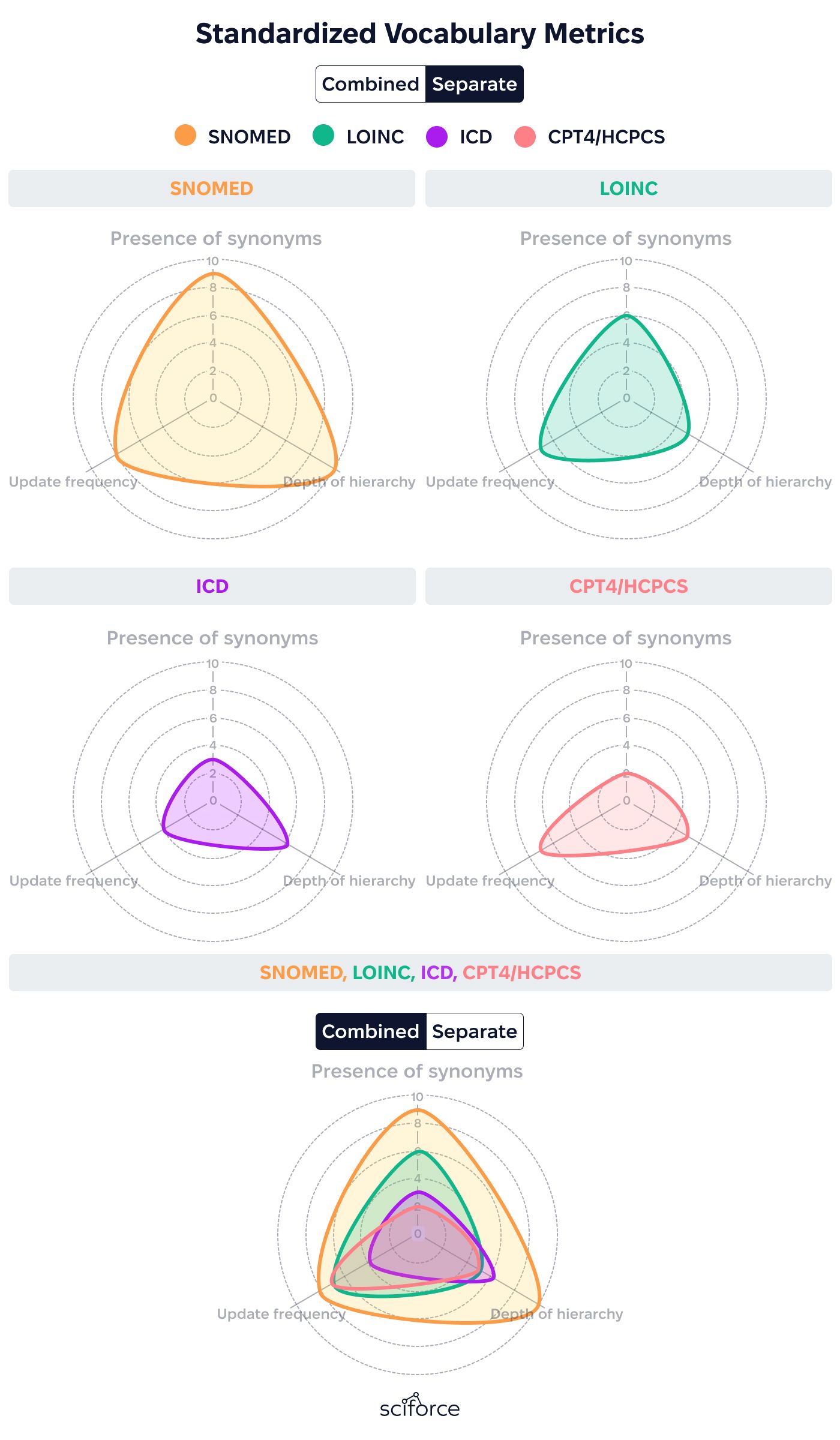
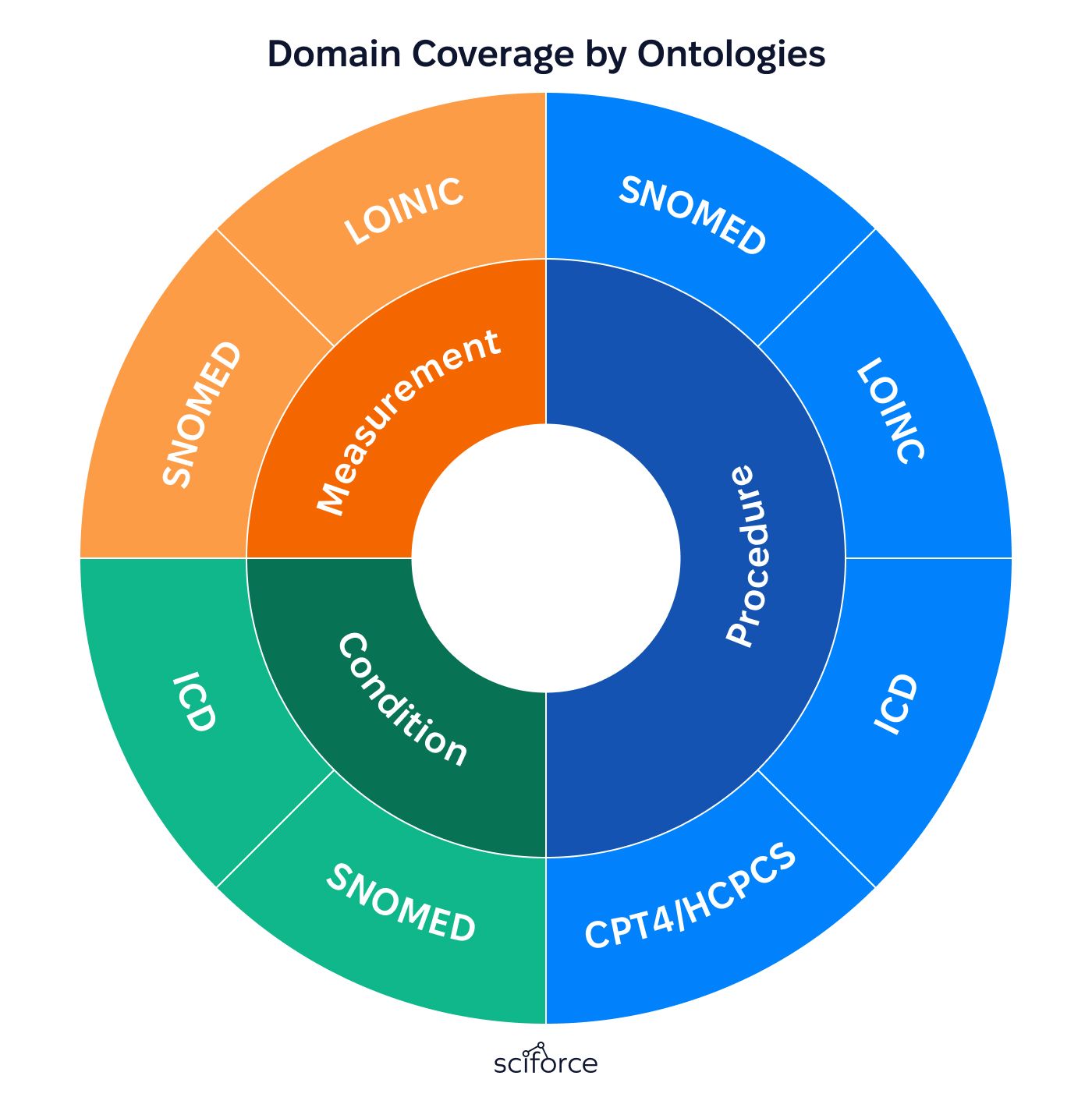
Medical coding systems such as ICD, SNOMED CT, and LOINC vary in structures and follow different conventions. The challenge was to align these diverse terminologies into a single vocabulary while preserving the integrity of the original datasets. 02_1.jpg
2. Complex Hierarchical Relationships

Medical concepts follow a structured milti-axial and dynamically evolving hierarchy that links diagnoses, drugs, measurements, procedures, and/or observations. The system had to accurately represent parent-child and lateral relationships, support continuous updates and adapt to rapid changes in medical knowledge.

3. Health Data Normalization

Healthcare data originates from various systems with different formats, creating inconsistencies. Transforming these datasets into a standardized OMOP CDM-compatible format required standardizing heterogeneous healthcare data for real-world evidence studies while preserving essential metadata and ensuring lossless integration – what that looks like on the ingestion side is covered in our PCORnet ETL pipeline on Snowflake, where raw hospital and insurance feeds are mapped into OMOP CDM using these standardized vocabularies.

4. Improved Clinical Data Accuracy

Medical concepts vary across healthcare settings due to the differences in local practices, coding granularity, and terminology interpretations. Aligning these variations with standardized definitions was essential to maintain clinical and operational relevance.

5. Dynamic Evolution and Scalability

Medical coding systems continuously evolve with new discoveries and practices. The vocabulary framework had to support ongoing updates without disrupting integrations, ensuring long-term reliability and adaptability to future advancements.
Solution

04 (2).jpg

1) Development and Harmonization of Standardized Vocabularies

We focused on building a unified medical vocabulary aligned with OMOP CDM by integrating multiple medical terminologies into a single, consistent structure. This included:

  • Core Clinical Vocabularies: SNOMED CT, LOINC, OMOP Extension, RxNorm, RxNorm Extension
  • Pharmacological Classification: ATC
  • Procedural and Diagnostic Codes: ICD9Proc, ICD10, ICD-10PCS, ICD-10CM, CPT4, HCPCS, OPS
  • Oncology-Specific Resources: HemOnc, ICDO3, JAX, NCIt, OncoKb
  • Genetics and Genomics Resources:OMOP Genomic, ClinVar, CIViC, CGI, HGNC, enabling harmonized clinical and genomic data.

*2) Ensuring Consistency and Clinical Data Interoperability

We set clear rules to standardize raw datasets, organized vocabularies into structured hierarchies, and developed algorithms to fix inconsistencies in definitions and classifications. To ensure accurate querying and analysis, we converted vocabularies into a common format for efficient querying and analysis, and applied strict quality checks, including automated validation for metadata accuracy and completeness. The same SNOMED CT and RxNorm mappings don't stop at the database — our OMOP-to-FHIR pipeline transforms them further into HL7 FHIR resources for live hospital workflows.

3) Addressing Semantic and Structural Challenges

To ensure accuracy and consistency across different medical vocabularies, we developed solutions for mapping and maintaining medical terminologies across multiple coding systems, unifying terms, maintaining relationships, and improving data clarity.

  • Healthcare Terminology Mapping Algorithms – Linked source terms to standard concepts while keeping the original data intact. Jackalope takes this further, generating post-coordinated SNOMED expressions for cases where direct one-to-one mapping isn't possible.
  • Dynamic Hierarchies – Organized medical concepts into structured parent-child relationships and lateral property-based associations.
  • Human-Readable Descriptions – Enriched vocabulary entries with detailed metadata, including concept identification (preferred names, synonyms, concept classes), semantic context (domains, standardness), temporal validity (validity periods, creation/deprecation dates), cross-references (associated mappings), supplemented by comprehensive documentation.

4) Continuous Maintenance and Quality Assurance

We implemented a comprehensive vocabulary management system, encompassing:

  • Staged Loading and Integration: Utilizing SQL scripts and functions, dedicated manual input tables (e.g., concept_manual, concept_relationship_manual), staging tables (e.g., concept_stage, concept_relationship_stage), and a generic_update.sql script to systematically build and integrate vocabulary updates into the basic OMOP Vocabulary tables (e.g., concept, concept_relationship).
  • Versioning System: Establishing a versioning system, utilizing Git principles, that empowers users to track the updates and apply changes as needed.
  • Manual Review and Validation: Conducting thorough manual reviews by medical domain experts to maintain accuracy, reliability, and clinical relevance.
  • Automated Quality Checks: Employing automated checks to verify data completeness and consistency.

Features

Comprehensive Multivocabulary Coverage

The solution harmonizes SNOMED CT, LOINC, ICD, and RxNorm for observational research across clinical, pharmacological, laboratory, procedural, device, oncology, and genomics domains. By unifying these resources into a single system, healthcare professionals and researchers can efficiently access standardized healthcare data models for drug and disease classifications and coding, genetic research, and a broad spectrum of clinical and translational applications.

Dynamic Hierarchy Exploration

The OMOP CDM vocabulary integration allows users to navigate complex hierarchies with ease by:

  • Visualizing parent-child relationships between medical concepts
  • Exploring conceptual linkages to uncover associations and patterns
  • Enhancing data interpretation through structured categorization

This feature improves accessibility and helps researchers analyze the relationships within medical datasets more effectively — in production, these structured vocabularies power systems like our medical semantic search platform, where SNOMED, LOINC, and RxNorm embeddings are queried in real time to match free-text clinical input to standardized concepts.

Adaptive Scalability and Versioning

The modular framework supports OMOP vocabulary management and semantic normalization at scale, allowing new terminologies and refinements to be integrated seamlessly. A versioning system tracks changes, ensuring full transparency and alignment with evolving healthcare standards.

Development Journey

The development process focused on building a robust relational database infrastructure to harmonized diverse medical vocabularies. Each vocabulary required a customized loading process, implemented using SQL, with dedicated documentation on GitHub for transparency and reproducibility.

1. Vocabulary Transformation and Standardization

Each vocabulary (e.g., SNOMED CT, LOINC, ICDO3) was transformed based on its unique structure, coding conventions, and relationships. To ensure semantic consistency while preserving essential details, we implemented medical data transformation and curation to align overlapping concepts accurately across vocabularies.

05 (1).jpg 2. Managing Hierarchical Relationships

Medical vocabularies contain complex parent-child and lateral relationships and taxonomies that required:

  • Optimized SQL procedures to efficiently process large datasets and maintain relationship integrity
  • Dynamic hierarchy management to accommodate updates without disrupting already existing structures
  • Scalable processing techniques to handle expanding datasets while ensuring fast query performance and avoiding bottlenecks.

3. Terminology Version Control in Healthcare

We implemented a version control system to track changes, apply updates efficiently, and allow users to reference or revert to specific versions as needed. This ensured consistency across integrations and maintained compatibility with evolving standards.

Technical Highlights

  • Domain Expertise: The project was enriched by insights from various medical specialties, including Internal Medicine, Pediatrics, Psychiatry, Pathology, Neurology, Intensive Care, Oncology, Obstetrics, and Gynaecology.
  • Medical Ontology Engineering: The core of the infrastructure was built upon SQL-based solutions, facilitating the integration and management of complex medical taxonomies within a relational database framework.
  • Programming Languages: The build process predominantly utilized PLpgSQL.
  • Version Control and Collaboration: GitHub served as the central platform for version control and collaborative development, hosting the building processes and associated documentation for each vocabulary.

Impact

We developed a standardized medical vocabulary infrastructure aligned with OMOP CDM, enabling seamless data interoperability and supporting global research and analysis. The system now offers:

  • A unified framework for diverse coding systems, cross-institutional data sharing across hospitals, research institutions, and healthcare networks in different countries, ensuring interoperability and consistency in multinational healthcare and research collaborations.
  • Scalability and adaptability to incorporate new medical knowledge, ensuring long-term usability.
  • Dynamic hierarchies combined with detailed metadata for improved searchability and more precise data analysis.

This transformation enables healthcare data harmonization for federated observational studies, allowing researchers, clinicians, and policymakers to conduct evidence-based studies more efficiently and improve data-driven decision-making in global healthcare.

Hospitals and research institutions using this vocabulary infrastructure can now streamline patient data integration across different systems, improving large-scale observational studies. For example, a research team studying cardiovascular disease outcomes across multiple countries can utilize harmonized OMOP data with standardized research data for AI/ML and ETL transformations, thus ensuring the interoperability and allowing to generate a large-scale evidence.

Researchers can then define study-specific concept sets, construct cohorts using reproducible phenotype algorithms and conduct patient characterization to analyze baseline demographics and clinical features. This enables reliable cross-site comparison, improves predictive modeling for patient risk factors, and strengthens population-level effect estimation in real-world evidence studies.

RELATED CASE STUDIES

View all Case Studies
Computable Phenotyping Using OMOP And Human-Governed LLM Assistance

Our client was a U.S.-based, multi-institutional healthcare research initiative developing an AI-ready clinical data ecosystem for critical-care research. The initiative brought together several institutional data sources with differences in clinical workflows, source systems, coding practices, data availability, and OMOP ETL implementations. The client needed a systematic way to translate complex clinical research questions into reproducible computable phenotypes that could support cohort discovery, population characterization, outcome definition, and downstream analytical and machine-learning workflows. The project focused on structured electronic health record data represented primarily through the OMOP Condition, Procedure, Measurement, Observation, Device, Drug, Specimen and Visit domains. To preserve confidentiality, the organization and individual clinical use cases are not disclosed.

# Healthcare
# Data Science
# LLM
End-to-End ETL on Snowflake cover smallFrom Raw Claims and Clinical Data to PCORnet CDM: End-to-End ETL on Snowflake

Our client, a U.S. health insurer collaborating with multiple hospital systems, aimed to aggregate and harmonize anonymized claims and clinical data in the PCORnet Common Data Model (CDM) to support large-scale outcomes research and operational analytics. The incoming medical and billing feeds came from heterogeneous hospital and payer systems with inconsistent schemas, variable data quality, and no unified governance. The client asked SciForce to design and implement a sustainable, cloud-native ETL/ELT pipeline on Snowflake that would: 1) Continuously integrate raw source feeds into a centralized Snowflake data platform; 2) Transform them into a PCORnet-conformant CDM with strong data quality guarantees; 3) Enable near real-time analytics for patient demand forecasting, capacity planning, and revenue cycle optimization.

# Healthcare
# AI / ML
# Big Data
# Data Science
Sensor-Based Fall Detection and Monitoring for Patient SafetyReal-Time Fall Detection System for Elderly Care Facilities

The client was a residential care facility for elderly patients who were at risk of falling, relying on wearable sensor fall detection for assisted living facilities to reduce incidents and response time. Each resident wore a small motion-tracking device as part of a wearable health monitoring setup that measured their movements in three directions. Their rooms were also equipped with AI in assisted living facilities that monitored temperature, humidity, light, noise levels, and whether someone was in or out of bed. The goal was to build an AI fall detection system that could automatically detect when someone had fallen and notify staff quickly. The team focused on understanding how movement patterns could indicate a fall and explored how room data could help add context in the future.

# Healthcare
# Tech
# AI / ML
# Big Data
# Data Science
OMOP to FHIR Conversion: Scalable Healthcare Data PipelineAutomating Research-to-Care Data Integration via OMOP and FHIR

Our client is a university hospital based in Germany, aimed to enhance cross-institutional standardized healthcare data exchange through structured health data pipelines. Multiple institutions involved in observational research sought integrating observational research data into clinical systems via FHIR, including risk models and disease prevalence metrics, into operational clinical workflows. To support this goal, the client required a conversion pipeline from OMOP CDM (used in research analytics) to HL7 FHIR (used in clinical applications) to enable real-time data AI for healthcare data interoperability.

# Healthcare
# AI / ML
# Big Data
# Data Science