
Predictive maintenance (PdM) is quickly becoming a must-have for industries looking to avoid the headaches of unexpected equipment failures. Imagine a manufacturing plant where a critical machine breaks down suddenly, halting production and costing thousands of dollars per hour in lost output. PdM helps prevent these costly surprises by predicting when equipment might fail, reducing downtime, and keeping operations running smoothly.
Find out more with SciForce free whitepaper
As more businesses realize the benefits of catching problems before they happen, the PdM market is set to grow significantly—from USD 10.6 billion in 2024 to USD 47.8 billion by 2029, with an impressive annual growth rate of 35.1%.
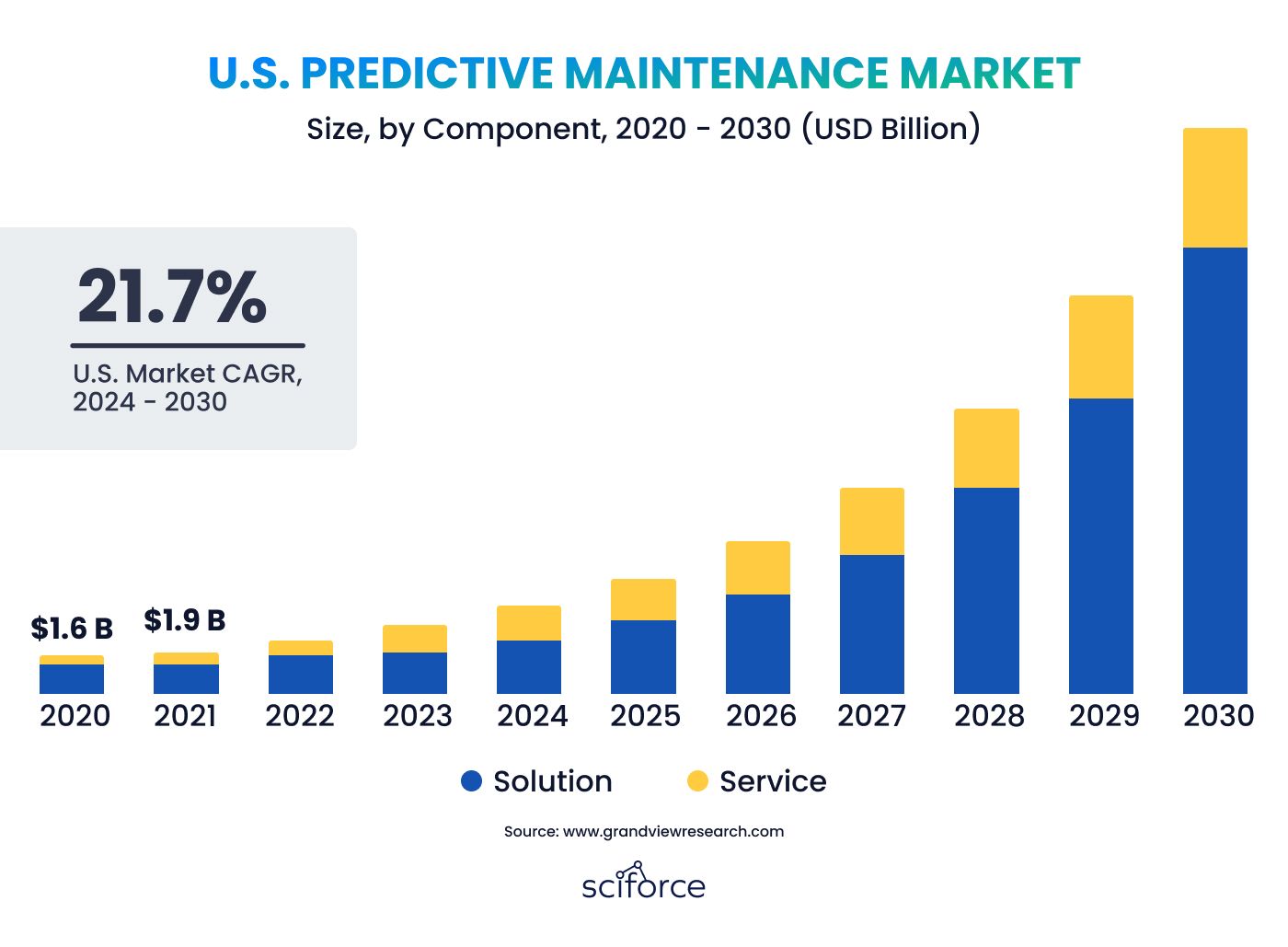
For example, consider a public transit system where trains are taken out of service unexpectedly due to mechanical issues. With PdM, sensors can detect early signs of wear and tear, allowing maintenance teams to address problems before they cause delays, ensuring passengers get to their destinations on time. Or think about a hospital where life-saving equipment fails without warning.
Predictive maintenance in healthcare helps facilities keep their critical devices in top condition, preventing interruptions in patient care. As we approach 2025, staying on top of the latest PdM trends and innovations is essential for any business looking to stay competitive.
This article explores the key developments that will shape the future of predictive maintenance, offering practical insights on how these advancements can help businesses avoid downtime, improve efficiency, and ultimately increase profitability.
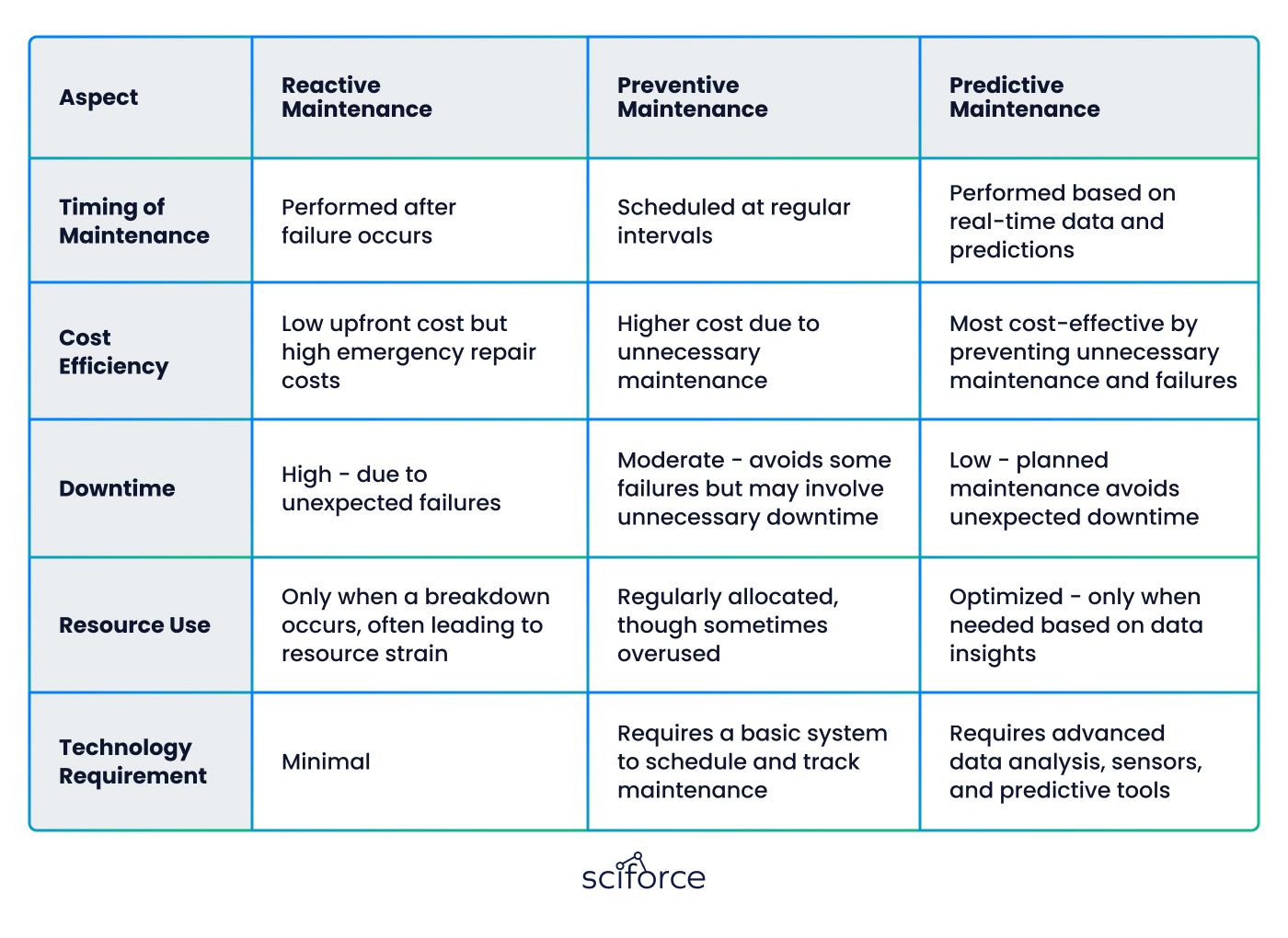
Predictive maintenance is a proactive way to keep equipment and machinery running smoothly by using data analysis to predict and prevent failures before they occur. Unlike traditional maintenance methods, which either fix problems after they happen (reactive) or follow a set maintenance schedule (preventive), PdM focuses on maintaining equipment only when it's truly needed.
This approach helps maximize efficiency and extend the life of the machinery by addressing issues before they lead to costly breakdowns. Let’s briefly compare three main strategies used in predictive maintenance:
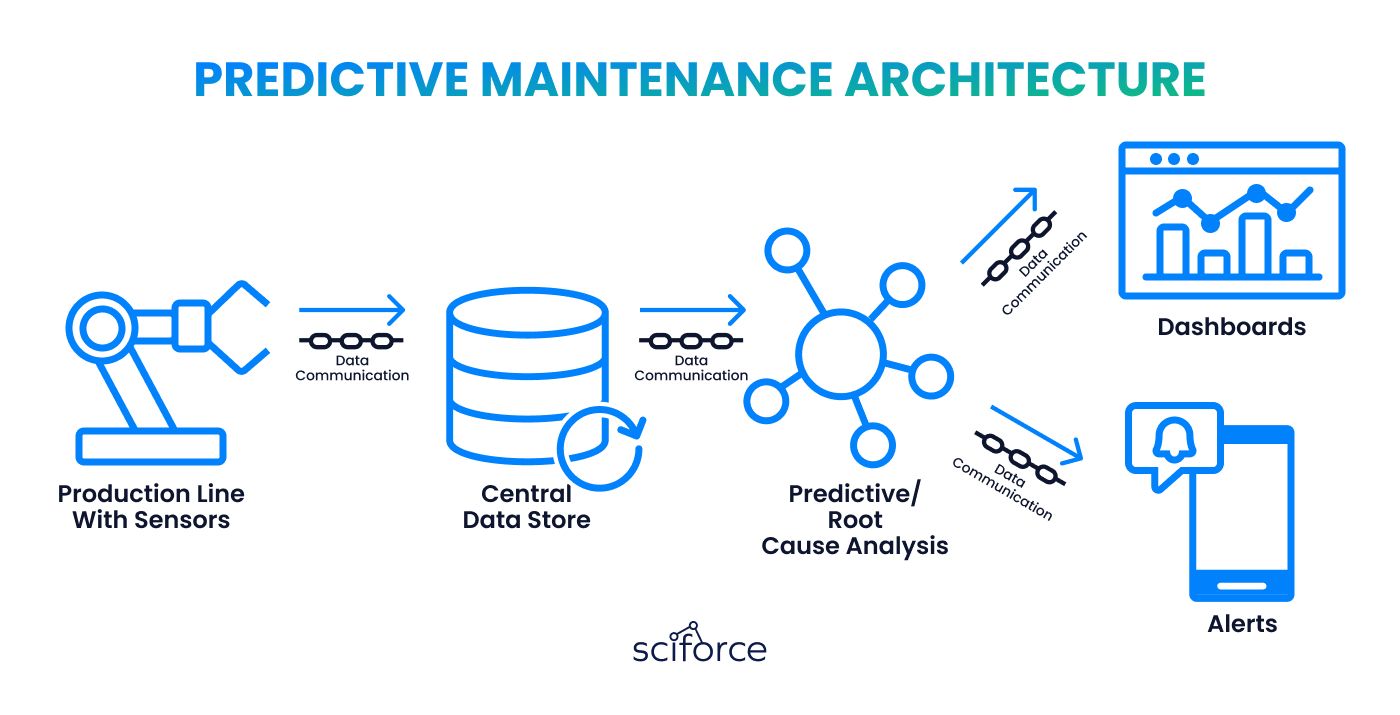
Sensors are strategically installed on critical equipment to continuously monitor operational data in real-time. These sensors collect various performance metrics, such as:
This stage forms the foundation of predictive maintenance by ensuring a constant flow of data from machines without the need for manual inspections.
Once the sensors capture operational data, it needs to be sent to a centralized platform for storage and analysis. This is often done using:
The raw data is then processed using artificial intelligence (AI) and machine learning (ML) algorithms to make sense of the vast amount of information being collected. This step involves:
These analyses become more accurate over time as AI models learn from historical data and improve in recognizing failure patterns, especially when powered by advanced PdM software.
If an issue is detected, the system generates automated alerts that are sent to the maintenance team, providing detailed information on:
These alerts are usually delivered via mobile apps, dashboards, or directly to the operations team’s devices, ensuring that the right personnel are informed promptly to take corrective action.
With detailed insights from the PdM system, maintenance teams can schedule repairs or replacements at an optimal time. The benefits of this approach include:
Predictive maintenance significantly improves resource utilization by making maintenance an intentional and proactive part of business operations rather than a reactive one.
Predictive maintenance is evolving quickly, thanks to new technologies like AI, IoT, edge computing, and digital twins. These advancements are changing the way businesses manage their equipment, helping them prevent breakdowns and operate more efficiently. As we look toward 2025, these trends will continue to drive improvements in PdM, improving the efficiency of complex business infrastructures. Let's explore how they will shape the future of PdM.
Artificial Intelligence (AI) and Machine Learning (ML) analyze large amounts of data from sensors, such as temperature, vibration, and pressure readings, to spot patterns that signal potential equipment problems. This makes failure predictions more accurate, helping maintenance teams to fix problems before equipment breaks down.
Preventing Equipment Failures & Fatigue:
Continuous monitoring of sensors detects early signs of wear and fatigue, predicting potential component failures.
Predicting Human Errors:
AI identifies patterns in maintenance tasks, detecting deviations and recurring mistakes to predict human errors and enable early intervention.
Optimizing Maintenance Schedules:
AI provides condition-based insights to schedule maintenance only when necessary, reducing downtime and improving equipment reliability.
Optimizing Spare Parts Inventory:
AI forecasts spare part needs by analyzing wear patterns, supporting just-in-time inventory to prevent overstocking and shortages.
Improving Energy Efficiency:
AI monitors energy consumption in real time, identifying inefficiencies to reduce energy waste and lower operating costs.
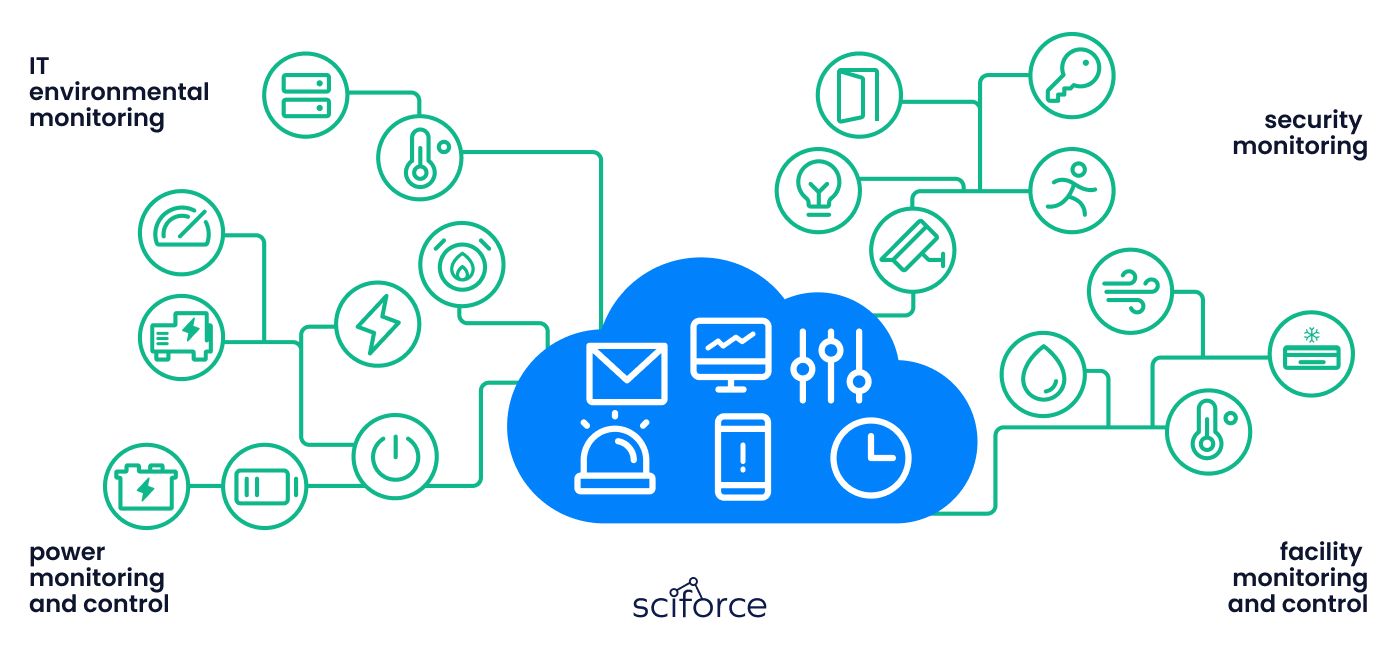
IoT sensors track important factors like machine temperature, vibration, and workload in real time. AI analyzes this data to predict when equipment will need maintenance, identifying issues like worn-out parts or motor fatigue. With this information, businesses can adjust their production schedules to perform maintenance during less busy times, reducing unexpected interruptions and keeping machines running smoothly during peak production.
Predicting Maintenance Costs:
AI uses real-time IoT data (vibration, temperature, power consumption) to predict maintenance timing and calculate costs, including spare parts, labor, and downtime.
Identifying Hidden Inefficiencies:
IoT data and AI help detect inefficiencies like excess energy use or incorrect calibration, reducing energy costs and extending equipment lifespan.
Reducing Insurance Costs:
Continuous monitoring via IoT sensors predicts equipment failures and safety risks, helping lower insurance premiums and avoid legal claims, compensation costs, and downtime.
Edge AI processes data locally, near its source—such as sensors or machines—instead of sending it to a centralized cloud or data center. This enables faster response times, reduces bandwidth use, and allows real-time decision-making. It’s especially useful in industries where immediate action is required, such as manufacturing or healthcare.
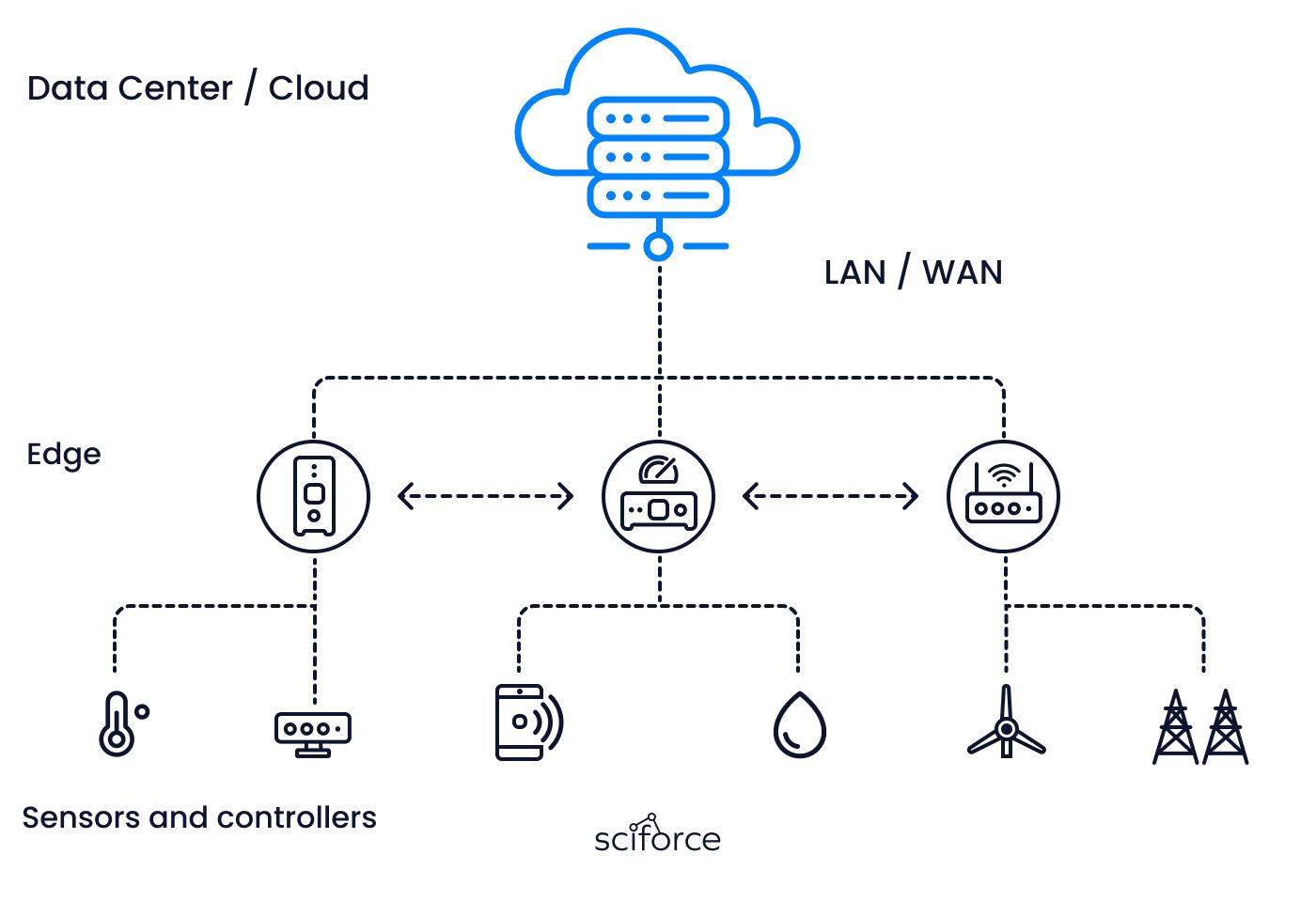
Remote Monitoring for Industrial Sites:
Supports equipment monitoring in remote locations (oil rigs, mines) with limited internet connectivity by processing data locally, ensuring continuous maintenance.
Predictive Maintenance for Legacy Equipment:
Acts as a bridge for older equipment, enabling predictive maintenance without expensive upgrades by processing data locally.
Reducing Latency for Time-Sensitive Operations:
In industries like healthcare and aerospace, local data processing ensures immediate responses, detecting failures and risks in real time.
Digital twins are virtual replicas of physical assets—like machines or systems—that reflect the real-time performance and condition of those assets. These digital models are constantly updated with data from sensors on the actual equipment, tracking things like temperature, pressure, and vibration. Paired with virtual simulations, digital twins allow businesses to better understand how equipment behaves under different conditions.
Simulating Maintenance Scenarios:
Virtual simulations on digital twins allow businesses to test and optimize maintenance strategies and failure conditions without impacting real-world operations, optimizing cost and efficiency.
Failure Prediction and Risk Mitigation:
Digital twins, combined with AI, analyze performance data and simulate wear/stress conditions to predict failures, enabling preemptive part replacements.
Improving Equipment Design:
Digital twins provide insights into machine performance, helping businesses optimize equipment design and test new configurations in virtual environments before physical changes.
Autonomous maintenance systems use AI, industrial IoT, and edge computing to automate tasks that are usually done by human technicians. These systems monitor equipment in real-time, analyze performance data, and take immediate action when needed, without human involvement. This can include tasks like adjusting machine settings, running diagnostics, and even making minor repairs.
Real-Time Monitoring and Adjustments:
Continuously monitor equipment via IoT sensors (temperature, pressure, vibration) and automatically adjust settings to prevent damage, e.g., reducing motor load if overheating occurs.
Self-Diagnostics and Automated Repairs:
Perform diagnostics and basic maintenance tasks (resetting, tightening, recalibrating) autonomously; alert technicians for more complex repairs with detailed diagnostics.
Enhanced Predictive Insights:
Analyze data trends to predict future maintenance needs, schedule interventions, and alert maintenance crews in advance, e.g., predicting service needs for aircraft engines.
Our predictive maintenance solutions help businesses move from reactive to proactive maintenance. Using real-time data and advanced anomaly detection, we’ve worked with clients to prevent unexpected equipment failures, reduce downtime, and improve overall efficiency. Below are some examples of how our expertise has helped businesses solve critical maintenance challenges
A technology company managing large data centers faced repeated pump failures in their cooling systems, leading to costly unplanned downtime. Despite regular inspections, the client couldn’t predict or prevent these failures in time. They needed a solution to detect issues early and avoid unexpected breakdowns.
We implemented an anomaly detection system using algorithms like Isolation Forest to monitor the equipment in real time. This system identified unusual patterns in the data and flagged potential problems early, allowing the maintenance team to take action before a pump failed.
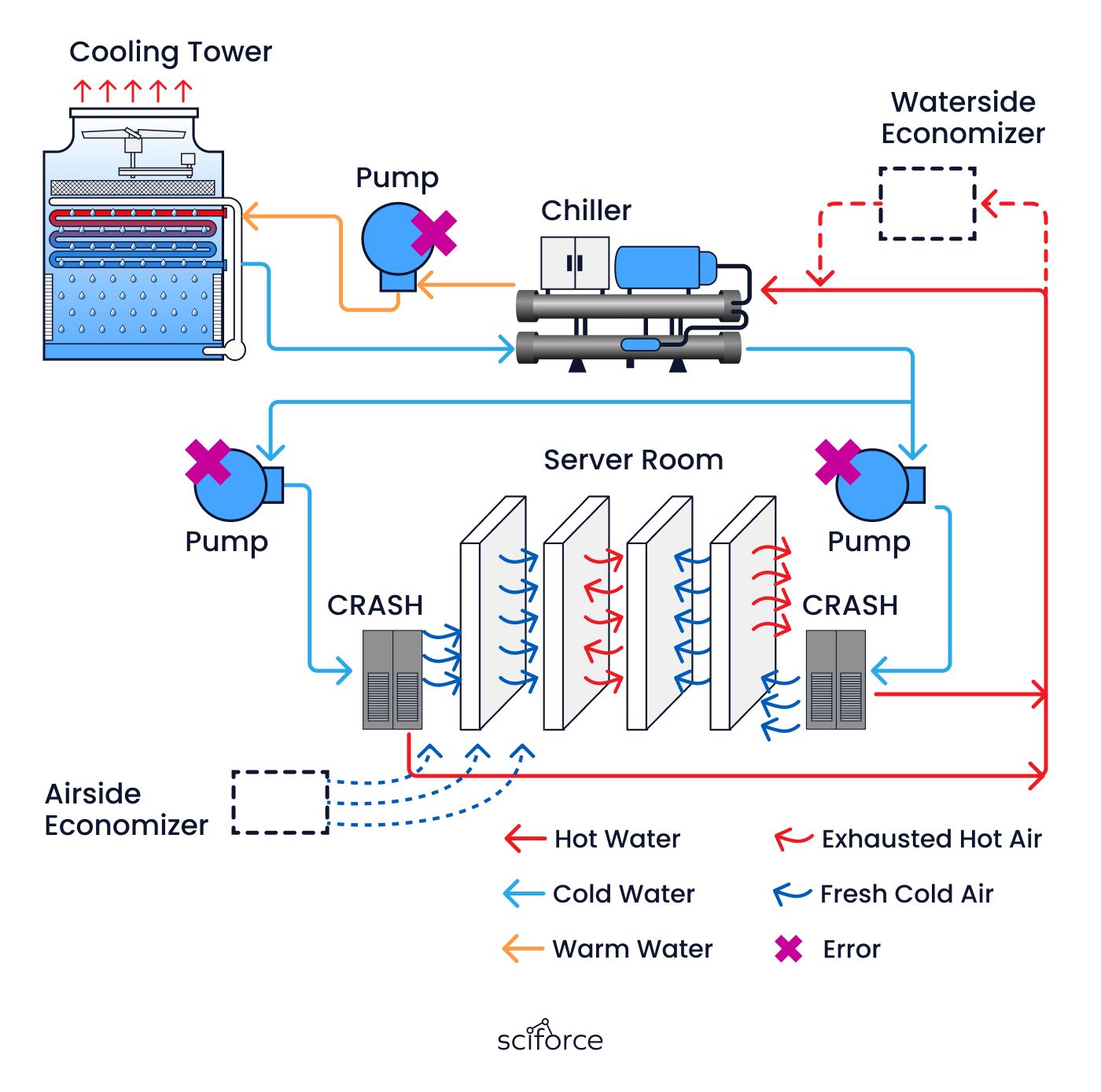
Real-Time Monitoring:
The system continuously analyzed data from key sensors, such as temperature, pressure, and flow rate, to detect early signs of pump issues.
Anomaly Detection:
We used multiple algorithms to ensure accurate detection of anomalies, reducing false alerts.
Correlation Analysis:
By linking anomalies to pump failure dates, we identified specific patterns that helped predict failures before they happened.
- 30% Reduction in False Alarms:
The system became better at identifying real issues, cutting down on unnecessary alerts.
- 40% Increase in Detection Accuracy:
The system’s ability to correctly detect issues improved, allowing more precise condition monitoring.
- 25% Decrease in Unplanned Downtime:
The early warnings enabled the maintenance team to address problems before they caused equipment failure.
- 20% Faster Response Time:
Maintenance teams were able to respond more quickly to potential issues, reducing the risk of larger breakdowns.
The company shifted from a reactive approach to a proactive maintenance strategy, reducing operational disruptions and improving the reliability of their cooling systems. By using real-time data and advanced detection, the client saw fewer pump failures and better performance across their data centers.
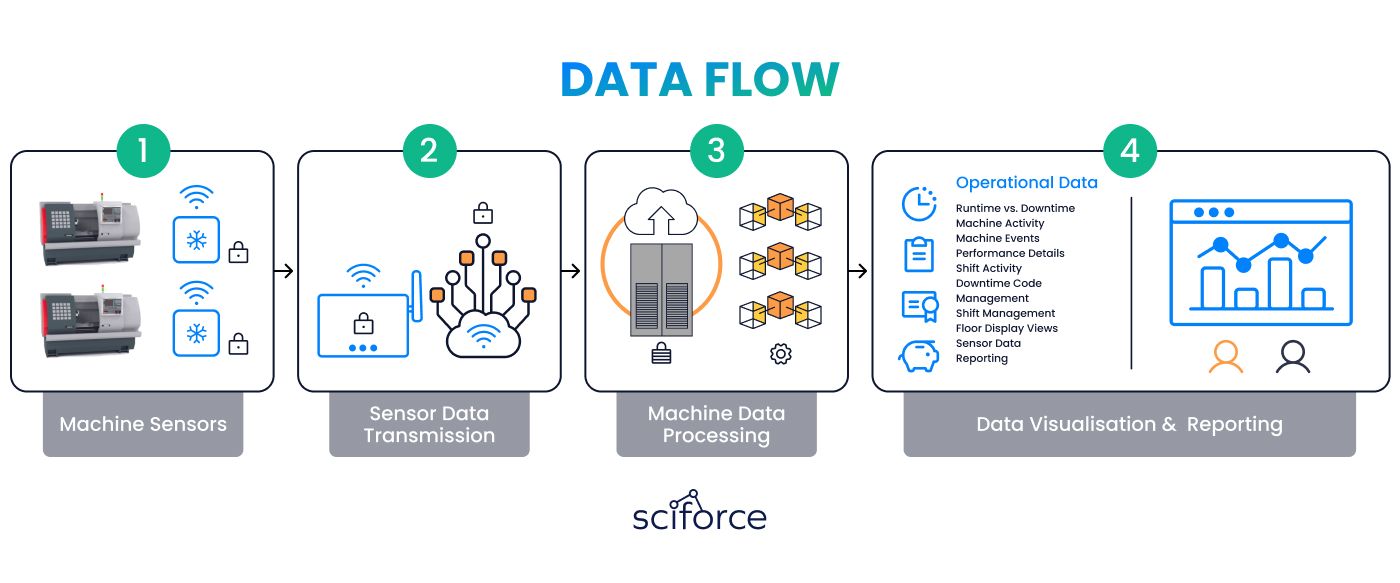
The project focused on providing a real-time machine monitoring product that uses wireless sensors to measure key data like vibration and temperature. It includes an anomaly detection system with models like HBOS, KNN, and AutoEncoder, which spot performance problems and detect unusual patterns in real time. Users can view machine data and reports through a web portal, allowing them to respond quickly and prevent equipment failures.
Real-time performance monitoring:
The client needed to track multiple machines across locations and detect issues instantly.
Managing large sensor data:
Handling and securely transmitting vast amounts of vibration and temperature data to the cloud.
Early failure warnings:
A system was required to predict failures in advance, minimizing downtime.
Installed wireless sensors:
Key machine data, like vibration and temperature, is captured and securely transmitted to the cloud via AWS IoT Core using the MQTT protocol.
Anomaly detection system:
Deployed models such as HBOS, KNN, and AutoEncoder to detect performance issues and flag anomalies in real-time.
Cloud-based data processing:
Implemented a cloud system for secure data analysis and reporting, accessible through a web portal from any device.
Real-time monitoring:
Reduced machine failure response times by 35%, enabling users to act swiftly and prevent breakdowns.
Operational efficiency:
Increased overall machine uptime by 20% by detecting issues early, with the HBOS model achieving a 97% accuracy in anomaly detection.
Scalability:
Deployed a secure, scalable system via Docker, cutting deployment time by 45% and simplifying management across multiple environments.
The real-time machine monitoring product successfully addressed the client’s need for proactive maintenance and performance tracking. By integrating wireless sensors and an advanced anomaly detection system, the solution provided real-time insights into machine health, allowing users to prevent breakdowns and reduce downtime.
Predictive maintenance is no longer just a nice-to-have—it’s a game changer for businesses that rely on critical machinery. By catching problems before they cause downtime, PdM helps keep operations running smoothly, boosts efficiency, and extends the life of your equipment. With technologies like AI, IoT, edge computing, and digital twins driving PdM forward, it’s easier than ever to take a proactive approach to maintenance.
Looking to improve your operations with predictive maintenance? Contact us for a free consultation and discover how PdM can make a real difference in your business.