Technologies now revolutionize our experience in each sector of our lives: from creating Netflix recommendations to helping doctors with diagnostics. But what about the agriculture field and technologies?
Find out more with SciForce free checklist
Precision agriculture is going to absolutely change the farmer's cultivation and harvest of their food with the help of different sophisticated technologies like AI and Machine Learning, GPS, GIS, UAVs, and Satellite Remote Sensing, collectively known as Precision Agriculture.
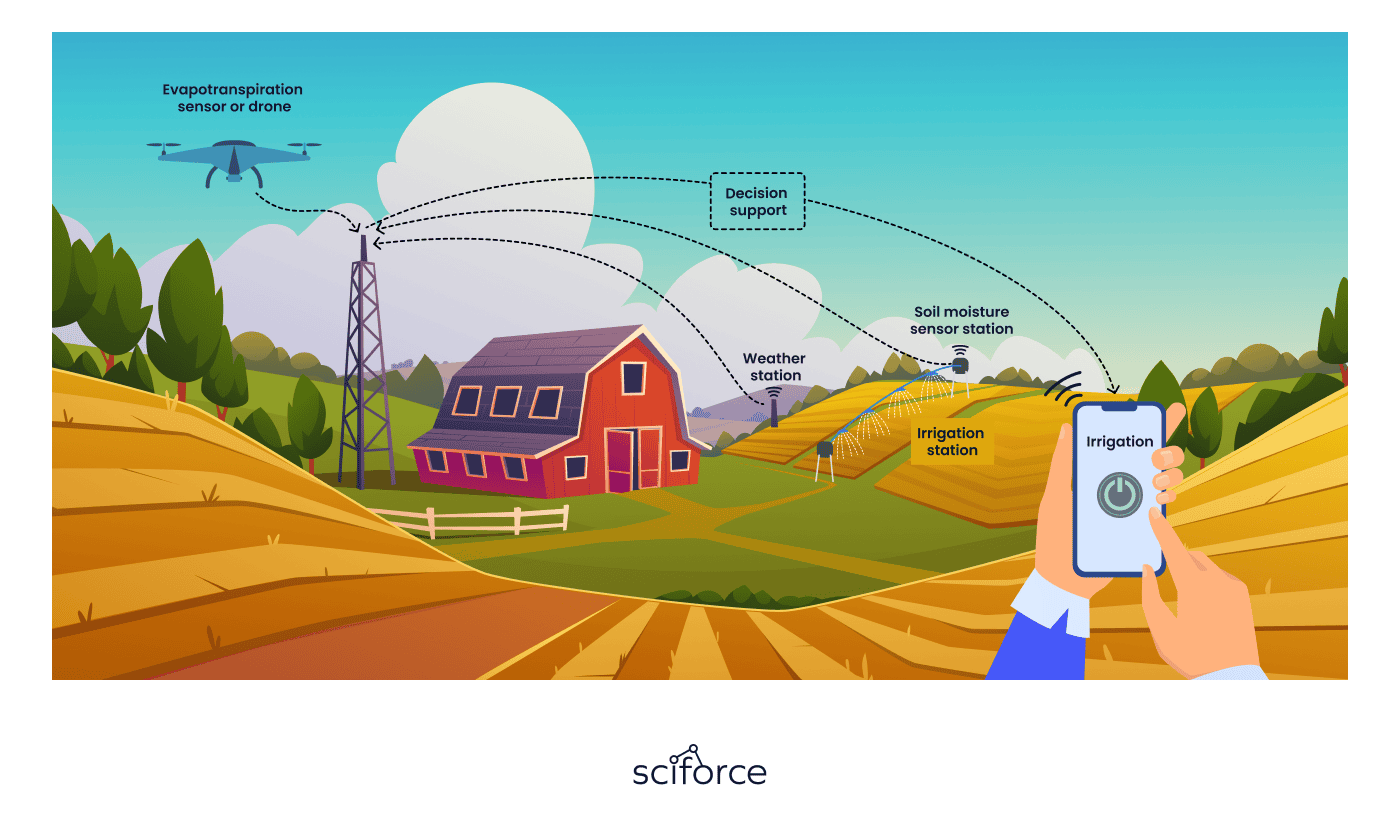
Precision Agriculture, also known as smart farming or precision farming, is the application of advanced technologies and data-driven insights to optimize farming practices. It's all about making agriculture more accurate and controlled when it comes to growing crops. From a technical point of view, the results are achieved by using tools like GPS, GIS, remote sensing, satellite imagery, field mapping, artificial intelligence, and machine learning to monitor field conditions, make accurate predictions, and improve crop quality and profitability. Basically, precision agriculture employs data from multiple sources to improve crop yields and increase the cost-effectiveness of crop management strategies, including fertilizer inputs, irrigation management, and pesticide application.
By using such technologies in the agriculture field, your business can participate in the development of sustainable agriculture and solve both: economic and ecological problems.
The importance of Precision Agriculture is definitely more than just improving farm efficiency – It provides great solutions for some of the most pressing global challenges we face today. The research "2020 World Population Data Sheet", conducted by the Population Reference Bureau, shows that the world population is projected to increase from 7.8 billion in 2020 to 9.9 billion by 2050. And, when the world's population is growing so fast, the demand for food is growing at the same or even higher speed. However, the resources to produce this food, like land, water, and energy, are limited and must be used wisely.
Here precision agriculture steps in: it enables farmers to use resources more efficiently, helps to increase yield and productivity, reduces waste, minimizes environmental impact, and ultimately, ensures food security.
Actually, beyond those socio-environmental aspects, precision agriculture also allows demonstration of the potential of AI, machine learning, and other high-tech tools.
Precision agriculture systems allow farmers to remotely manage all agricultural processes. Such systems can effectively control vast areas, making them viable for small farms with large fields or multiple small parcels of land. Implementation of precision agriculture remarkably enhances crop efficiency and escalates production while simultaneously conserving financial resources. Despite the prejudiceі that these technologies are expensive, in a long-term perspective, the savings are significantly higher than with traditional agricultural methods.
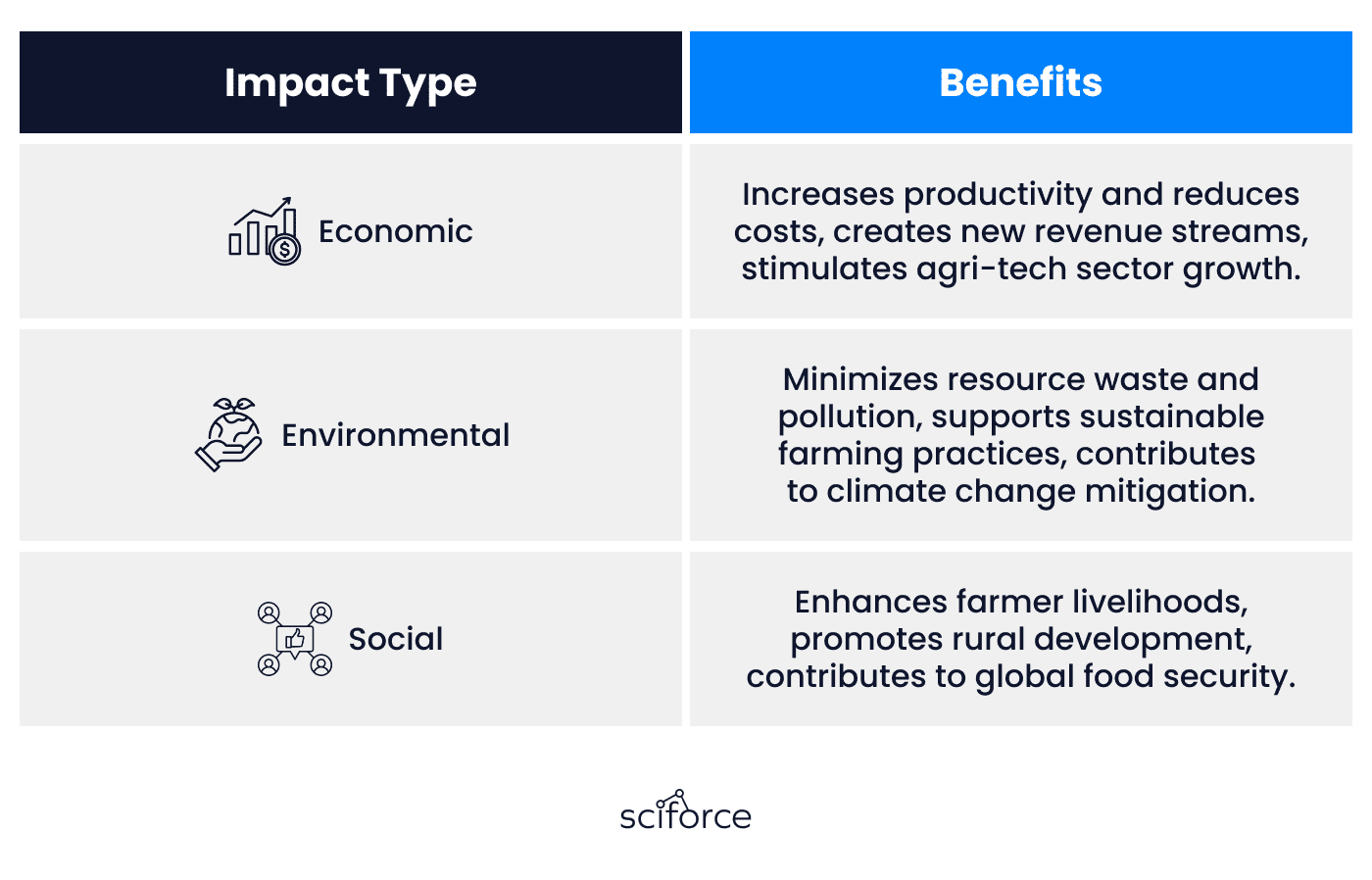
Summarizing the Impact of Precision Agriculture, let's take a look at the benefits it can bring.
Use cases of precision agriculture
In its early stages, precision agriculture was primarily used for larger operations that could support the IT infrastructure and technology resources to use its benefits. However, with the widespread of mobile apps, intelligent sensors, drones, and cloud computing, precision agriculture has become accessible for farming cooperatives and even small-scale family farms.
Some of the most popular uses of precision agriculture are the following:
Agricultural Mapping and Field Scouting: Drones with cameras can generate high-resolution maps of fields, which can help to identify problems, monitor crops, and predict yield potential.
Soil Sampling and Analysis: Mobile applications can collect data about soil composition, fertility, moisture levels, etc. This data can be used to make decisions concerning irrigation or other details of crop management.
Weather Monitoring: Hyperlocal weather information can guide users on when it is the best time to plant, how to water the plants, and when is the optimal time for harvesting.
Labor Management: Mobile apps with GPS can track the location and activity of field workers. This data can enhance workflows and ensure efficiency.
Equipment Management: Farming equipment can be very expensive, and precision agriculture can help farmers maintain equipment inventories by scheduling preventative maintenance and planning for necessary repairs.
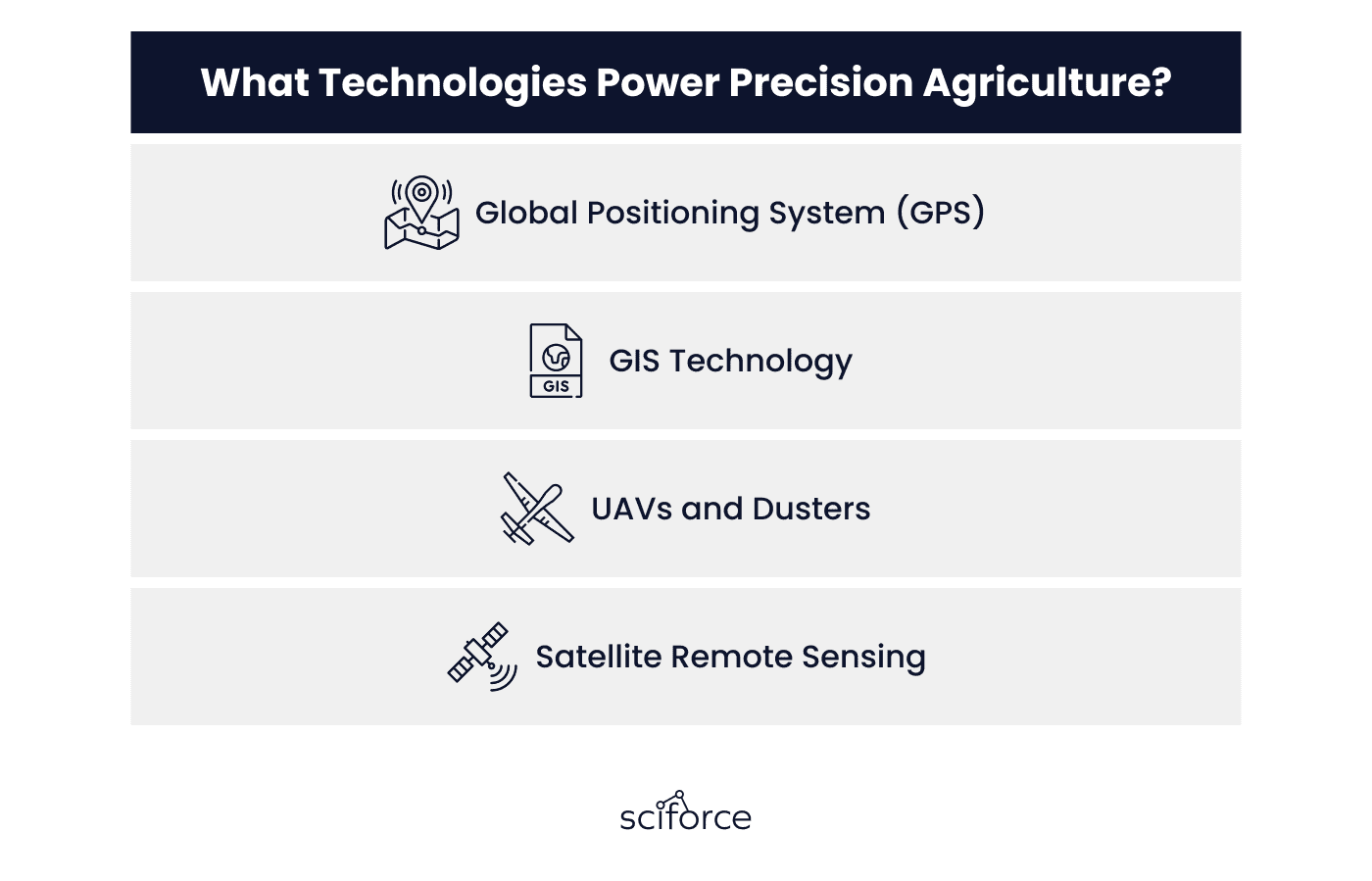
Let's start our exploration of precision farming technologies with one of the most famous tools - the Global Positioning System or GPS. Basically, GPS provides precise positioning information based on satellite signals, which is critical for many aspects of modern life. In the context of precision farming, it offers a powerful means of location-specific data collection and analysis, facilitating everything from field mapping and crop scouting to guided tractor movements and variable rate applications.
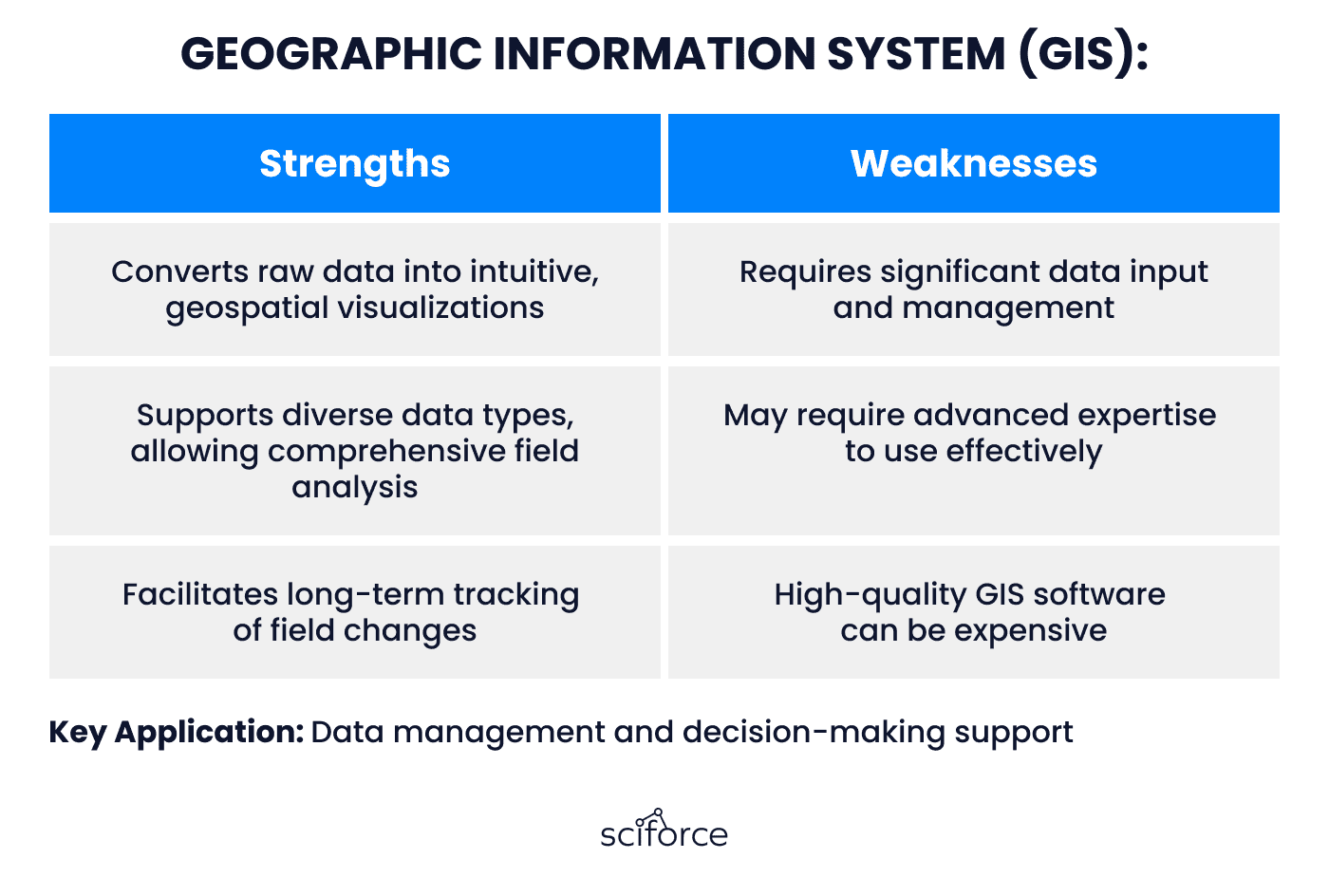
Next in our technological toolbox is the Geographic Information System or GIS. This system is designed to capture, store, manipulate, analyze, manage, and present all types of spatial or geographical data by creating maps. GIS technology is a valuable tool for agricultural management as it allows farmers to turn raw data into informative and easy-to-understand maps.
The usage of a Geographic Information System empowers farmers to access and examine historical data, such as regional soil survey maps and characteristics of traditionally cultivated crops. Satellite imagery and aerial photography supplement this information, providing further insights. A particularly useful function of GIS is its ability to scrutinize various farm management strategies through the comparison and alteration of different data layers.
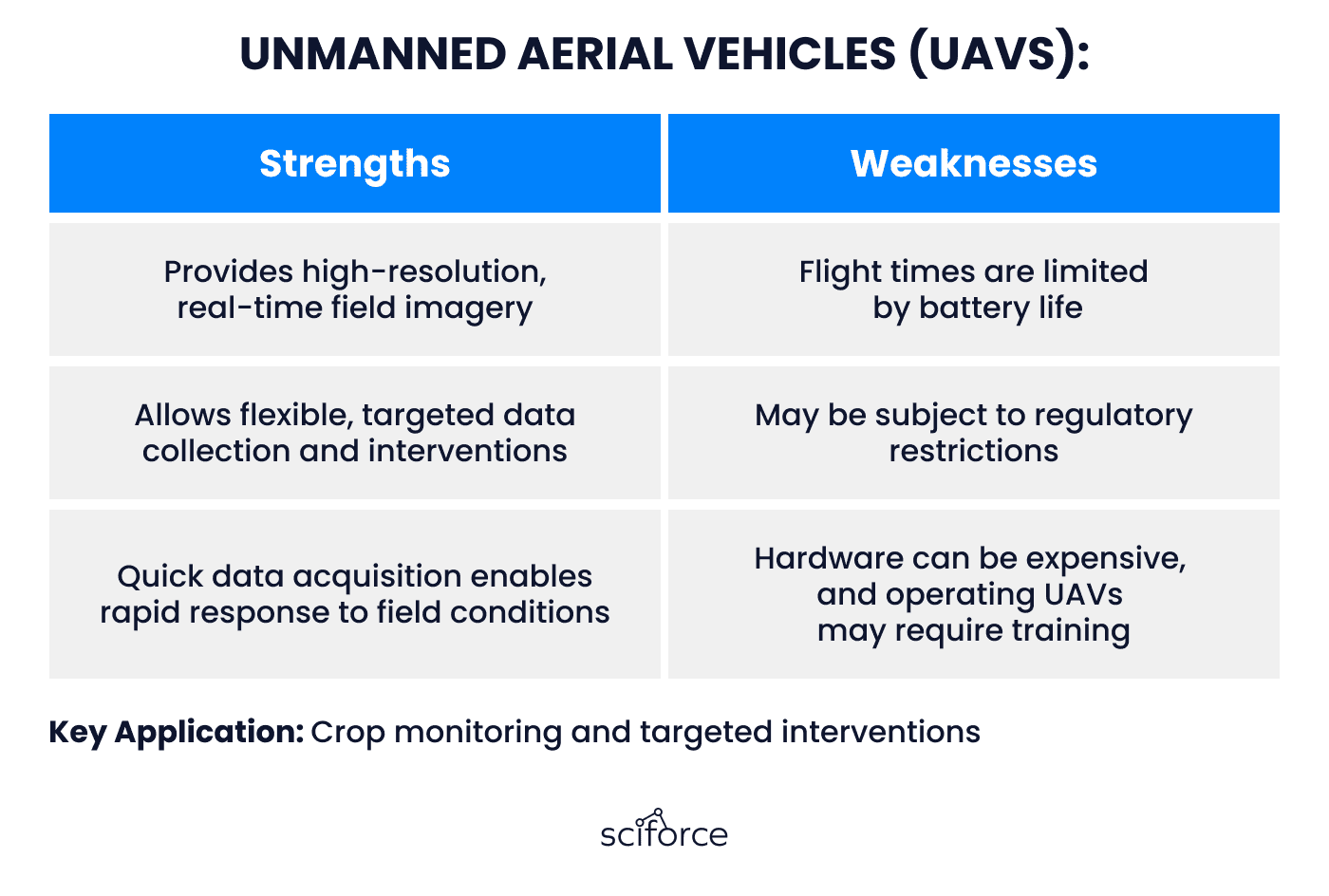
UAVs equipped with multispectral cameras can capture high-resolution imagery and data of farm fields. They're particularly useful for monitoring crop health, detecting pests and diseases, and spraying pesticides or fertilizers in a targeted manner.
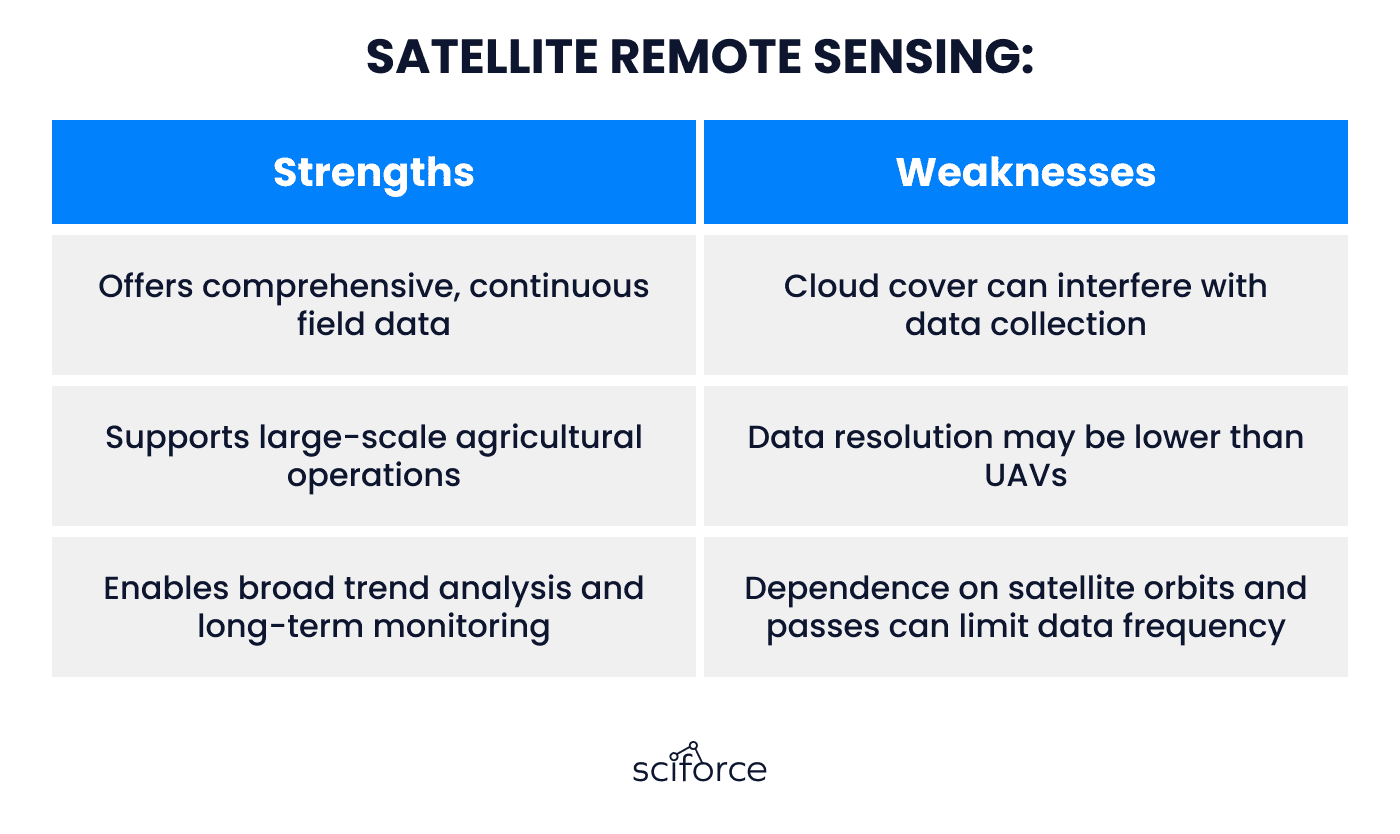
The advent of Satellite Remote Sensing has truly globalized Precision Agriculture. By capturing images of the Earth's surface, satellites can provide comprehensive and continuous data on weather patterns, soil conditions, and crop health. This technology is especially valuable for farmers who manage large territories.
While GPS, GIS, UAVs, and Satellite Remote Sensing are the backbone of precision agriculture, the field is constantly evolving with the development of other cutting-edge technologies. Machine learning and Artificial Intelligence, for instance, are often used for the analysis of the vast amounts of data generated by precision farming, leading to predictive models that guide farmers' decisions.
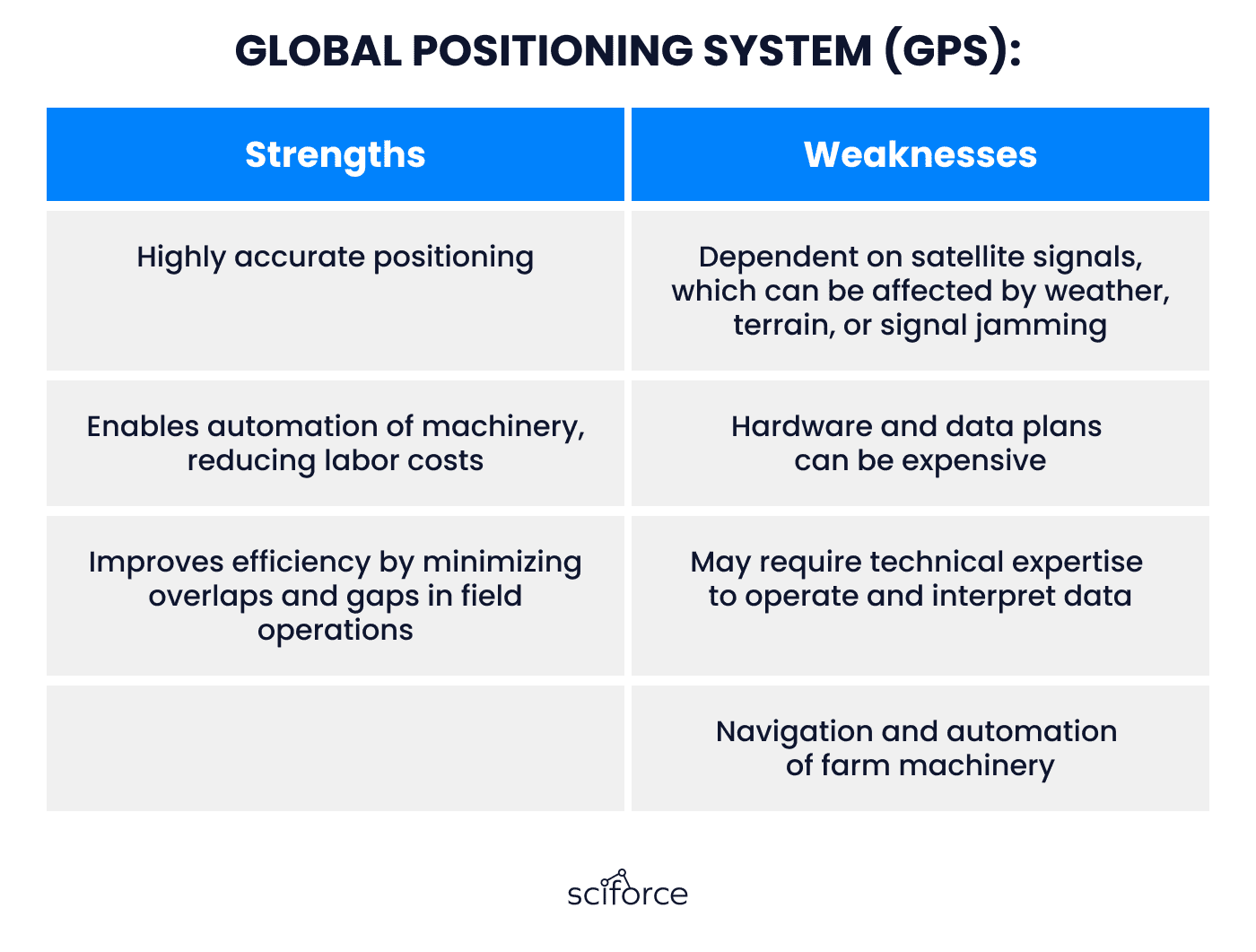
In order to fully understand the impact of different technologies enabling precision agriculture, it's essential to pay attention to their strengths and weaknesses. Here, we will compare GPS, GIS, UAVs, and Satellite Remote Sensing, highlighting how each tool fits into the broader precision agriculture ecosystem.
Our journey through the world of Precision Agriculture has revealed a fascinating convergence of technology and agriculture. GPS, GIS, UAVs, Satellite Remote Sensing, and many other technologies are bringing innovations to old practices of farming and transforming the industry. The usage of technologies in the agriculture field proves its economic profitability and environmental sustainability. Precision farming brings many great benefits today for many companies around the world. The main prospects of Precision Agriculture consist in its capacity to address one of our hardest challenges today - feeding a growing global population and preserving the health of our planet.