
Conversation design for generative AI is key in making artificial intelligence (AI) easier and more natural for people to use. In this field, blending creativity with technical skills transforms AI interactions to feel more like talking to a human than a machine.
Find out more with SciForce free checklist
Designers focus on making AI responses clear and relatable, using their knowledge of how language works. Their role is crucial in making advanced AI systems user-friendly, ensuring they fit smoothly into our daily lives.
This article explores Generative AI conversation design in artificial intelligence, emphasizing how designers make AI interactions more human-like and user-friendly by combining creative and technical skills, and a deep understanding of language.
Conversational AI is revolutionizing the way businesses operate and interact with customers. This technology, encompassing both text-based and voice-based conversational AI, is providing significant business benefits of conversational AI in the following industries:
Projected to become a significant market player, conversational AI is expected to reach a value of $15.7 billion by 2024, reflecting its widespread adoption and impact across these diverse industries.
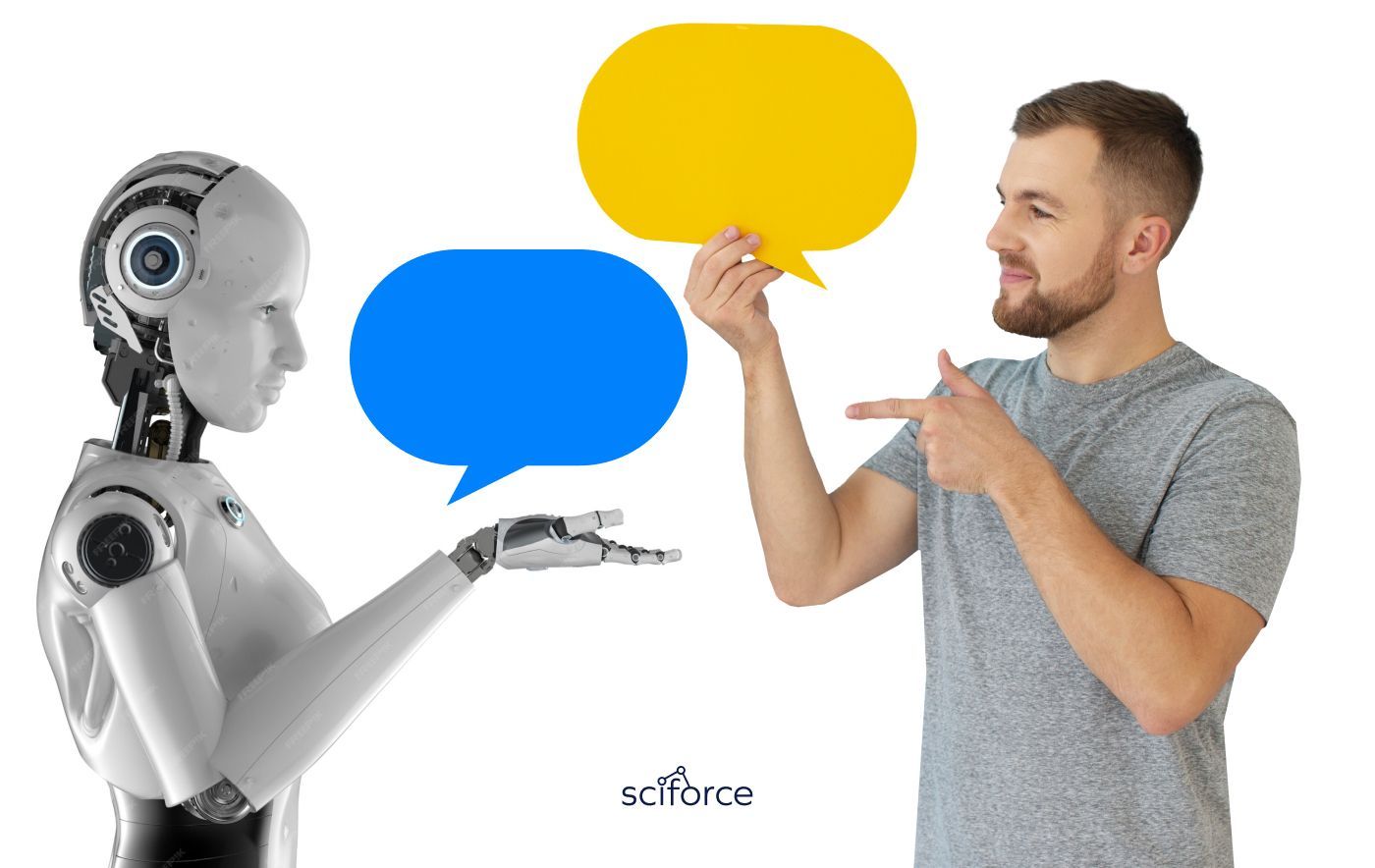
- Text-Based Conversational AI
Text-based AI, such as chatbots, serves various sectors, such as healthcare and retail. In healthcare, they can help in scheduling the appointment or collect information about symptoms, and give some simple health advice. In retail, a chatbot can answer questions about product characteristics and help the customer to make a purchase decision. Its use can cut customer service costs by up to 30%, handling up to 80% of routine customer inquiries. Conversational designers carefully design dialogue flows and responses to meet the specific needs of end users in each sector.
- Voice-Based Conversational AI in accessibility
Voice assistants, enhancing daily life through smart device control, task management, and accessible internet for visually impaired users, are vital in technologies aiding those with disabilities. Conversational designers focus on user-centric interaction flows, contributing to the technology's market growth, projected to reach $19.57 billion by 2030 with a 16.30% CAGR.
- Advanced Interactive Systems
Conversational designers use AI and machine learning to enable these systems to understand and adapt to individual user preferences. This keeps the interaction relevant, engaging, and effective in solving client queries.
In summary, Conversational AI is essential in driving technology forward, significantly enhancing user interactions and business efficiency, and proving vital in the AI industry development landscape.
Conversational AI design combines technical skills and human-centered AI interaction insights to make AI systems user-friendly and effective. It's essential for creating AI that's both functional and practical for everyday use, with conversational designers playing a key role in this process.
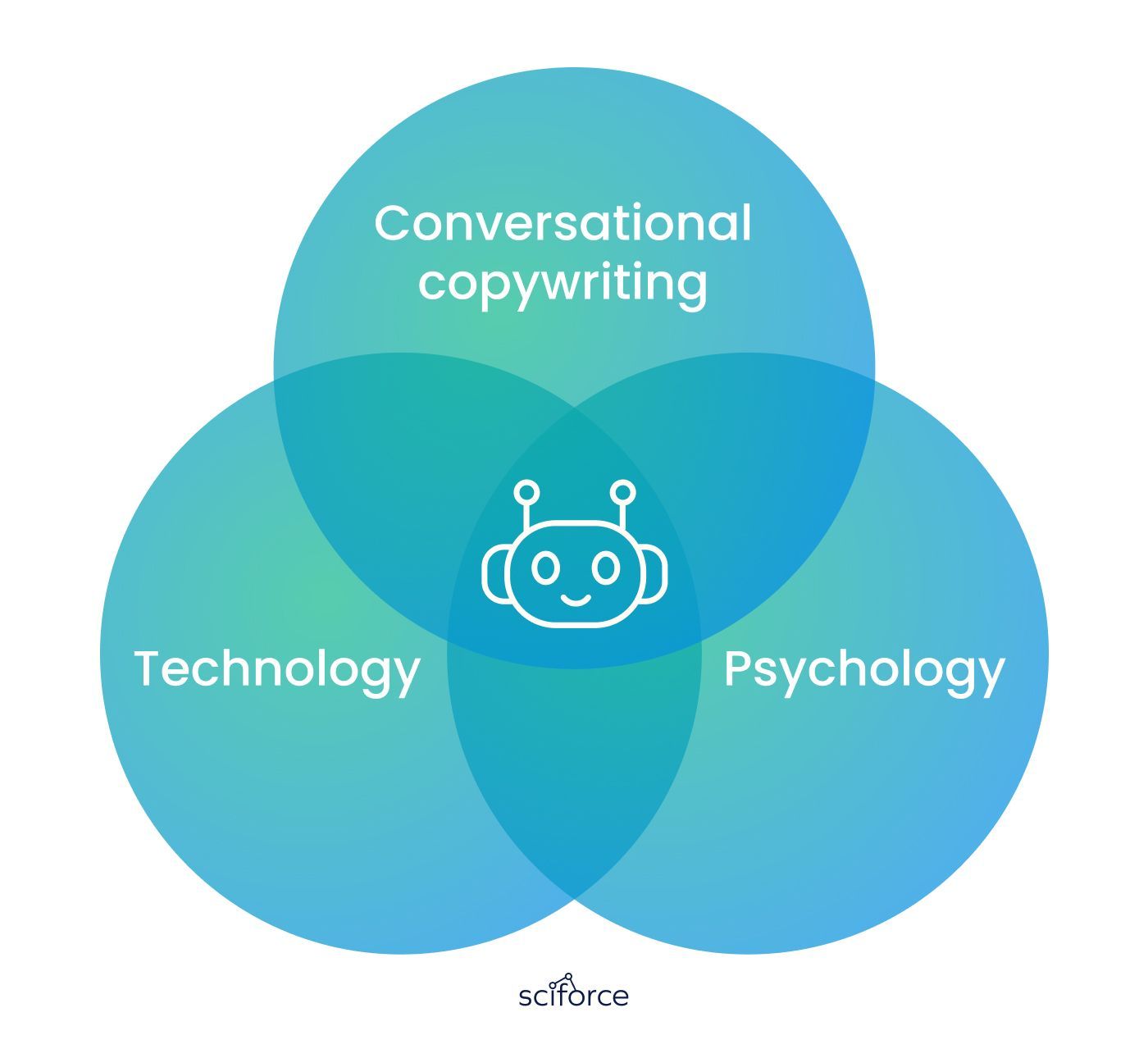
To develop effective conversation scripts for AI models, conversational designers need a wide range of technical skills:
In conversational design, programming skills, particularly in Python for AI algorithms and JavaScript for web integration, are crucial. Designers use these to develop and maintain AI's core functionalities, including natural language processing (NLP) and system integration across platforms.
Deep understanding of AI principles and machine learning algorithms is essential for developing conversational AI. Conversational designers train and refine the models with user data and feedback, tailoring AI replies to user preferences.
Expertise in Natural Language Processing (NLP) is key for enabling AI systems to understand and replicate human language. Conversational designers use NLP to develop AI that can interpret language variations, context, and sentiment, making conversations with users feel more natural and intuitive.
Data analysis, including managing large datasets is essential in conversational design. Designers analyze this data to gain insights into user behaviors, preferences, and interaction patterns. Such analysis is crucial for tailoring AI responses to be more user-focused.
User Interface Design is crucial for conversational designers to create intuitive and engaging interfaces. This involves designing the dialogue flow and user navigation for chatbots or AI systems, ensuring interactions are natural and easy to follow. Proficiency in API integration enables designers to access external data for more better AI personalization.
A deep understanding of psychology is crucial in conversational design, influencing how AI systems interact with users. This involves three key areas:
Empathy is essential in conversational design for understanding and anticipating user emotions and needs. For example, a designer using chatbot AI best practices, such as empathy can craft responses in a chatbot for a support helpline that not only provide solutions but also acknowledge and address the user's frustration or anxiety.
Understanding human behavior and psychology is key to crafting AI dialogues that are engaging and persuasive. Designers use this knowledge to influence user engagement and guide responses, designing natural, human-like AI conversations that are more effective in achieving interaction goals.
Conversational designers must understand and incorporate various cultural and social norms. This involves adapting AI responses based on user behavior, geography demographics, ensuring that interactions are linguistically accurate, culturally sensitive, and inclusive.
Conversational copywriting is a vital part of conversational design, focusing on crafting AI dialogues solving all client queries. Here the designer also shapes the tone of voice that will stick to brand identity and provide a more enjoyable user experience.
This involves structuring clear, concise, and context-relevant conversations. Designers structure dialogues to guide users naturally, tailoring content to fit the conversation's context and AI user journey design. This process aims to mimic natural human-like AI interaction, making AI conversations intuitive and engaging.
Developing an AI's tone and voice AI technology involves aligning it with the brand's identity and the preferences of the target audience. This includes choosing a style (professional, friendly, witty) and language (formal, casual, technical) that reflects the brand's identity and user expectations.
Interactive scripting for AI means creating dialogues that adapt to user input, like a chatbot shifting to empathetic responses for dissatisfaction or new product suggestions or loyalty rewards for positive feedback.
Conversational designer shapes and refines the model based on user feedback: rephrasing confusing responses or shortening lengthy instructions.
Conversational designers combine technical skills with knowledge into human-centered conversational AI behavior and copywriting proficiency. This is how effective AI communication systems are developed.
When clients need an AI developing or improving AI communication system, our skilled conversational designers already have a precise workflow to assist them:
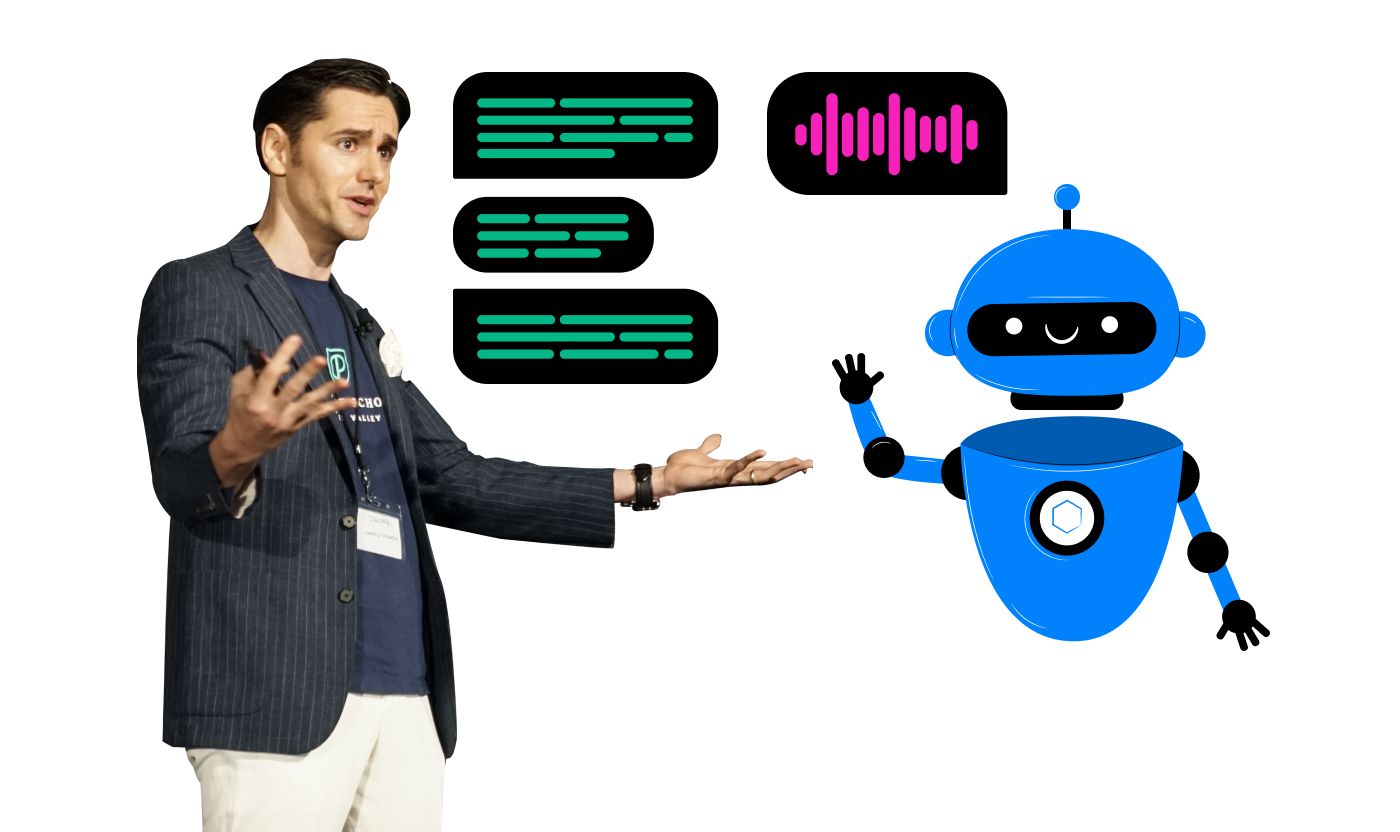
When we start a project to create or improve a conversational AI system, the first step is to build a strong foundation. Our goal is to fulfill the client's vision and turn it into a practical, well-defined plan. The key actions in involve:
These steps guide us in tracking the project's progress and success, ensuring the AI aligns with the client’s business strategy and meets technical quality standards.
This is an important stage for us to understand the target audience's request and current market trends to make a relevant and competitive product:
We use the gathered data to create user personas, each representing a distinct group with its demographics, behaviors, and needs. These personas help us tailor the AI design effectively, ensuring it aligns with the unique needs of the target audience.
In this phase, we customize the personalized AI interactions and style to match the client’s brand and their audience’s preferences:
Here we ensure that our future AI communication model not only resonates with users but matches the client's brand in every interaction.
This is where conversational design starts. Now, we design the AI's main conversation paths and alternative scenarios, ensuring a comprehensive and fluent user experience.
As a result, we get a conversational flow that seamlessly guides users towards their goals.
When the conversational flow is ready, we develop initial prototypes of the conversational AI and then conduct iterative testing with real users:
Real-time testing and refinements are our secret sauce to making the model even smarter with each iteration.
In this stage, we integrate the conversational AI with the client's existing infrastructure. This means adjusting AI to interact smoothly with existing software and hardware.
This process requires a joint effort between conversational designers and engineering teams to successfully merge AI into the current technological framework.
Here, we focus on regularly assessing and improving the AI system's efficiency, as well as staying updated with changing user needs and industry trends.
When working on client projects, we prioritize consistent, data-driven monitoring of the AI system. This method focuses on user needs and stays adaptable to changing user requirements and technology updates.
For each project, we regularly update the AI system in each project to keep pace with user needs and tech advancements.
In our client projects, our conversational designers not only set up the initial AI system but also keep it updated. They ensure the AI adapts to specific user needs and stays current with the latest technology, making sure it's always effective and relevant.

SciForce has a wide range of successful conversational AI projects, highlighting our skill in this area. Now we would like to tell you about a mobile app for people with speech disorders. We are particularly proud of it, because it's a perfect example of an inclusive AI that genuinely helps people.
With enterprise Conversational AI, SciForce designed a mobile app that helps people with speech disorders in their everyday life. This project started as a mobile app that helps people with disabilities to control their smart homes using voice commands.
Commonly, enterprise conversational AI solutions are not really good in recognizing the speech of people with speech disabilities. We managed to achieve high results through intensive training of the model with a diverse dataset of people with speech impairments’s voices.
Based on this model, we later designed a more advanced one that is capable of assisting with complex language tasks, like dictating letters, generating subtitles for video conferences or multi-lingual conversational AI.
The AI system's development used Pytorch for deep learning, scikit-learn for machine learning, Python and C++ for programming, and Kubernetes for application scaling.
Conversational AI, as demonstrated by SciForce's last projects, is a key driver in making technology more accessible and user-friendly. With technical expertise and an understanding of human psychology, conversational designers create advanced, user-centric AI systems.
Interested in conversational AI's potential? Reach out to SciForce to discover how conversational AI can transform your technological solutions.